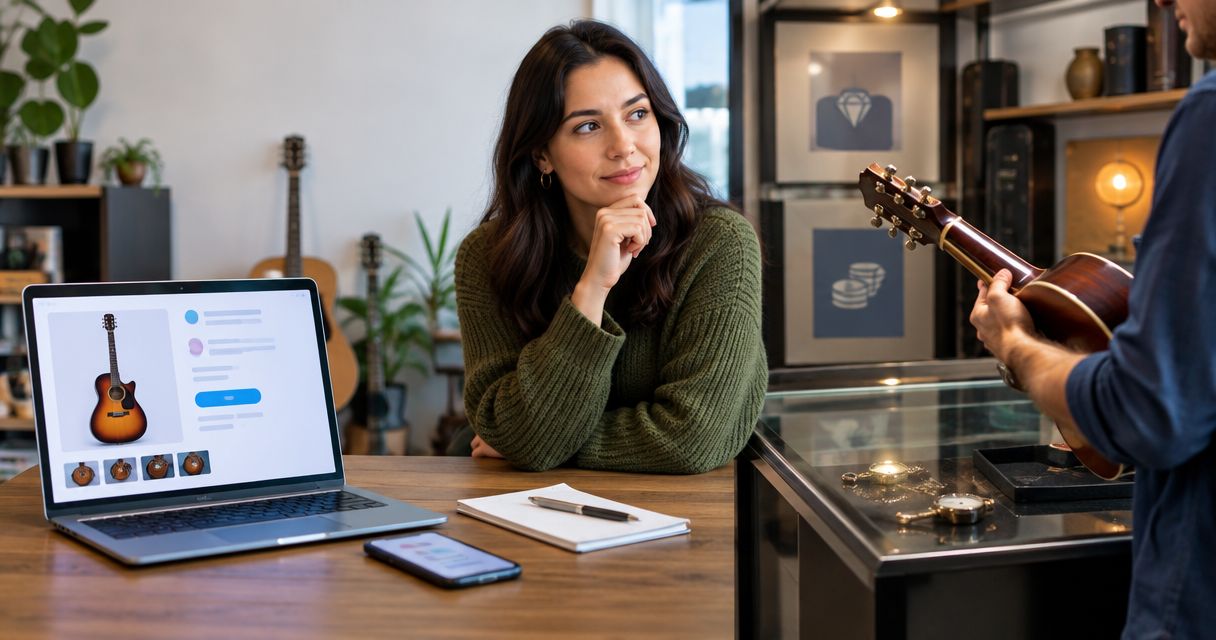
A music marketplace is the better choice when you want control over your instrument listing and can wait for a buyer; a pawn shop is the better fit when you want a direct offer without managing a listing. The trade-off is your time: online selling adds photography, messages, payment checks, and possibly shipping. In 2026, choose around your deadline and the work you can handle—not a promised payout.
- Sell instrument marketplace vs pawn shop: choose a marketplace for listing control, a pawn shop for a direct offer.
- OohYeah offers a music gear marketplace with zero seller commissions; selling still requires listing and buyer coordination.
- An outright pawn-shop sale transfers ownership; a pawn loan uses your instrument as collateral.
- Compare what you keep after selling expenses, not just the amount a buyer offers.
Why this matters
Your instrument is both equipment and an asset. Selling it means choosing who handles the resale work: you, through a marketplace, or a shop that buys it to resell.
OohYeah connects musicians, music stores, and producers buying and selling instruments and studio gear. Its zero seller commissions remove the seller commission from that decision, but they do not eliminate the work of preparing a listing or arranging a handoff.
For a 2026 gear clear-out, start with a hard question: do you need an offer now, or are you willing to manage the sale yourself? That answer matters more than the platform name.
Is selling on a marketplace better than a pawn shop?
A marketplace wins on control; a pawn shop wins on handing off the resale work. Neither route guarantees the strongest offer, and an online asking amount is not proof that an instrument will sell for it.
Use this comparison when choosing your selling route in 2026. Treat a pawn loan separately: borrowing against your guitar is not the same transaction as selling it.
| Route | Best for | Main advantage | Main drawback | What to confirm |
|---|---|---|---|---|
| Music marketplace sale | Sellers willing to manage a listing | You describe the gear and decide which offers to accept | You handle inquiries, condition disclosures, and fulfillment | Payment arrangements, applicable fees, and delivery responsibilities |
| Outright pawn-shop sale | Sellers seeking a direct purchase offer | You negotiate with the shop rather than finding the eventual buyer | Your immediate choice is the shop's offer, not an open listing | That the paperwork records a sale and the agreed payment |
| Pawn loan | Owners seeking borrowing rather than a permanent sale | The instrument serves as collateral | Keeping the instrument depends on meeting the loan terms | Finance charges, repayment deadline, and consequences of nonpayment |
A shop needs room to resell what it buys. A marketplace leaves you responsible for reaching the eventual buyer. That difference explains the trade-off without assuming either route always pays more.
If you are comparing offers, use completed sales for genuinely comparable gear where available. Active listings show what sellers request, not what buyers paid.
Music marketplace: best for control over the sale
Choose a music marketplace when you can explain the instrument clearly and stay involved until the handoff. You control the description, disclose modifications, answer technical questions, and decide whether an offer works for you.
That control is useful for gear whose details matter. A guitar with replacement pickups needs a different description from an unmodified example. A studio interface needs its exact model, included accessories, and tested functions—not just a flattering photograph.
OohYeah's music gear marketplace is best for musicians who want to list instruments and studio gear with zero seller commissions. The limitation is practical: you still need to prepare the listing, respond to buyers, and arrange the transaction.
Do not turn zero seller commissions into a claim that every part of a sale is free. Check the applicable payment and fulfillment terms, then account for packing materials, transport, or shipping you agree to cover.
A marketplace is also the wrong fit if you cannot monitor inquiries or safely complete the handoff. Posting an instrument is the start of the sale, not the finish.
Pawn-shop sale: best for avoiding listing work
Choose an outright pawn-shop sale when you prefer negotiating with a business over photographing gear, answering messages, and coordinating with individual buyers. Bring the instrument, its accessories, and enough information for the shop to identify it accurately.
The advantage is a simpler selling process. The shop evaluates the item and decides whether to make an offer; you decide whether to accept it. Acceptance and payment depend on the shop's requirements, so confirm those before traveling.
The drawback is that you are negotiating with a reseller. The shop's offer reflects its own buying decision, not a guarantee of what an end buyer would pay.
Ask directly whether the proposed transaction is an outright purchase or a loan. Read the paperwork before handing over the instrument. If you intend to sell permanently, do not sign a borrowing agreement by mistake.
Pawn loan: best for borrowing, not selling
A pawn loan uses your instrument as collateral. It belongs in this comparison because a pawn-shop visit can involve borrowing rather than an outright sale, but it solves a different problem.
The potential benefit is a contractual route to reclaiming your instrument by meeting the repayment terms. The drawback is the obligation attached to that route, including applicable finance charges and the risk of losing the collateral if you do not repay as required.
If you want to sell the instrument permanently, compare sale offers—not a sale offer against loan proceeds. Money received through a loan comes with repayment terms; money from an outright sale does not carry that same obligation.
Keep a copy of the agreement. Confirm the deadline, total repayment obligation, and local requirements before committing.
Why your selling outcome varies
Your selling route matters, but it does not replace an honest assessment of the instrument. Work through these factors before deciding where to sell:
- Condition: Working controls, structural damage, noisy electronics, and missing parts change what the buyer is considering. Disclose faults rather than letting the buyer discover them later.
- Identification: Exact model, version, and modifications make comparisons meaningful. Similar-looking instruments are not automatically equivalent.
- Your deadline: A listing requires a buyer to respond and complete the purchase. A shop can evaluate a direct purchase, but acceptance is not guaranteed.
- Fulfillment: A shipped guitar requires packing and carrier arrangements. A local handoff removes shipping work but adds meeting and transport coordination.
- Included equipment: Cases, power supplies, stands, pedals, and cables affect what the buyer receives. List each included item instead of assuming the photos explain it.
- Selling expenses: Seller commissions, applicable payment charges, packing, and transport affect your proceeds. Check each expense separately rather than treating the headline offer as the amount you keep.
These factors also explain why someone else's sale is not a dependable forecast for yours. Compare the actual gear, condition, and transaction—not just the model name.
How do I choose the right selling route?
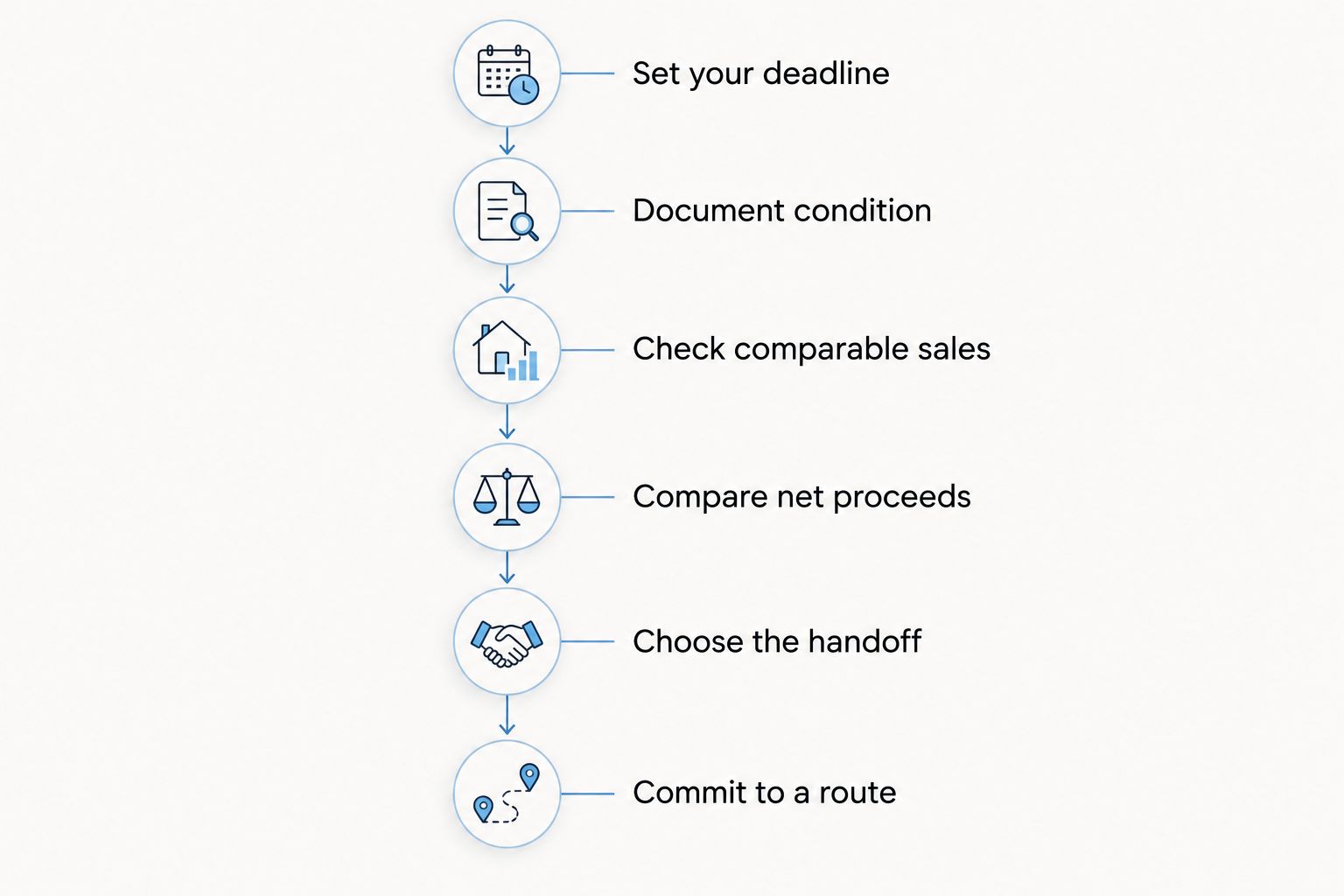
Use this sequence before accepting an offer or publishing a listing. For a 2026 sale, build the decision around current information about your instrument and the terms actually offered to you.
- Set your deadline. Decide when the sale needs to be completed. If the deadline is fixed, do not base your plan on an unconfirmed online buyer.
- Document condition. Record the exact model, modifications, included accessories, and known faults. Photograph the instrument before transporting or packing it.
- Check comparable sales. Look for completed transactions involving matching models and similar condition. Separate a seller's requested amount from an actual completed sale.
- Compare net proceeds. Subtract the selling expenses you would personally cover from each offer. Keep loan obligations outside this sale comparison.
- Choose the handoff. Decide whether you can manage shipping or a local exchange. Confirm payment and fulfillment responsibilities before agreeing.
- Commit to a route. Accept a documented shop purchase or create your marketplace account and list the gear. Update or remove listings promptly once the instrument sells.
Keep the comparison written down. A clear record stops a convenient offer from blurring together with an unconfirmed possibility, especially when you are selling gear to fund your next purchase.
What should I prepare before selling an instrument?
Prepare evidence that answers a buyer's practical questions. Clean the instrument appropriately, record its identifying details, and check its normal functions without attempting repairs you are not qualified to perform.
For a guitar, inspect the neck, hardware, controls, and output. For a keyboard, check the keys, controls, outputs, and included power supply. For studio gear, describe the connections and functions you actually tested; do not describe untested functions as working.
Photograph the whole item, identifying details, accessories, and damage. Use clear lighting. A close-up of a scratch is more useful than a description that calls everything normal wear.
Write down what is included and what is excluded. A case visible behind the instrument can create confusion if it is not part of the sale. For software or licenses, confirm transfer eligibility before promising anything to a buyer.
If you choose the marketplace route, create an account and publish a listing that answers these questions upfront. Keep the language plain: what it is, what works, what does not, and how the buyer will receive it.
List the gear you no longer use
Create an OohYeah account and list instruments or studio gear with zero seller commissions.
Will I get more money selling an instrument online?
Selling online does not guarantee higher proceeds. You choose which offers to accept, but the final outcome depends on the buyer, the instrument, and the expenses you cover.
Compare a real shop offer with a realistic online sale scenario, not the highest active listing you can find. Keep packing, transport, and your own workload in the comparison.
Can I sell a broken instrument instead of pawning it?
You can offer a broken instrument for sale with clear fault disclosures; finding a buyer is a separate question. Describe the symptoms and distinguish a confirmed diagnosis from your guess.
Do not promise an easy repair unless you have a sound basis for that statement. A buyer needs to know what is broken, what you tested, and what remains unknown.
Should I ship my instrument or arrange local pickup?
Local pickup removes the shipping task; shipping requires appropriate packing and agreed delivery responsibilities. Choose the method you can complete safely and accurately.
For bulky or fragile gear, plan the handoff before accepting an offer. Do not promise delivery arrangements you have not checked.
FAQ
Is selling an instrument on a marketplace better than a pawn shop?
A marketplace is better for sellers who want listing control and can manage buyer communication; a pawn shop is better for sellers seeking a direct purchase offer. Neither route guarantees higher proceeds.
Does a pawn shop buy instruments outright or only offer loans?
A pawn shop can offer an outright purchase or a collateral-backed loan, depending on the business and the item. Ask which transaction is being offered and read the agreement before signing.
Can I sell music gear with zero seller commissions?
OohYeah offers a music gear marketplace with zero seller commissions. Check applicable payment and fulfillment terms separately, and include any packing or transport expenses in your decision.
Is listing an instrument online a guarantee that it will sell?
Listing an instrument online does not guarantee a sale. Your description, the instrument's condition, buyer interest, and the transaction terms all matter.
What should I bring when asking a pawn shop to buy my guitar?
Bring the guitar, the accessories you intend to include, and accurate model and condition information. Ask the shop about identification and purchase requirements before visiting.
Should I repair my instrument before selling it?
Repair the instrument only after comparing the repair scope with your selling plan. Disclose existing faults, and do not assume a repair will increase your proceeds by more than its expense.
How do I compare a pawn-shop offer with an online sale?
Compare the shop's actual purchase offer with the proceeds you would keep from a completed online sale after expenses you cover. Account for the listing work, payment checks, and handoff rather than comparing headline amounts alone.
One last thing
Your best comparison starts before either offer: make a condition record. The same photographs, accessory list, and testing notes help you explain the instrument to a shop or an online buyer.
For your 2026 sale, keep that record through the handoff. Sell the gear you actually have—not the flawless version a vague description invites someone to imagine.