
Yes—you can negotiate the price of used music gear when the seller welcomes offers and the marketplace permits them. Agree on the instrument’s condition, included accessories, shipping responsibilities, and transaction terms before paying; a lower asking price does not resolve those details.
- Can you negotiate price on used gear marketplace listings? Yes, when the seller welcomes offers and platform rules permit negotiation.
- Compare matching models and documented condition before making an offer on used instruments or studio equipment.
- OohYeah serves musicians buying and selling gear; confirm each seller’s terms before negotiating.
- Keep the agreement documented and use the marketplace’s permitted transaction process.
Why this matters
Negotiate the deal, not just the listing amount. A guitar without its advertised case and an interface without its required power supply are different purchases from complete, working examples.
For your 2026 gear search, separate what you can verify from what the seller has merely described. Read the listing, inspect the photos, and ask about anything that changes whether the equipment will work in your setup. Start with the checks in is buying used studio equipment safe? before discussing an offer.
The goal is straightforward: buy equipment you understand, on terms both sides accept. A seller declining your offer is not a failed negotiation. It is a clear answer that lets you move on.
Can you negotiate prices on used gear marketplaces?
Yes, provided the seller is open to negotiation and the marketplace allows the method you use. An invitation to make an offer is permission to ask—not a promise that the seller will accept.
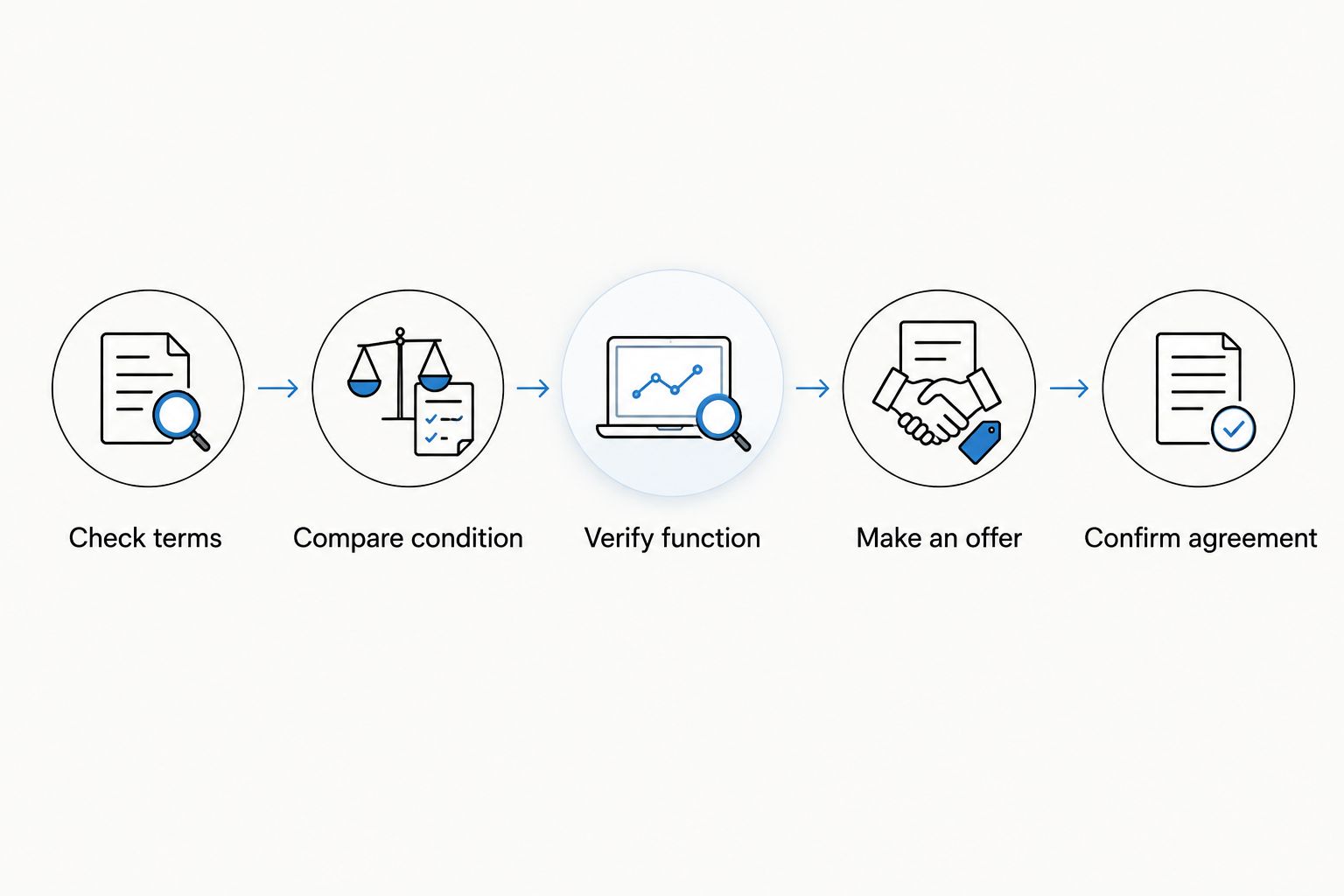
Use these 5 steps to turn a listing into a clear proposal.
1. Check terms
Look for language about offers, firm terms, collection, shipping, and included accessories. If the listing is unclear, ask whether the seller is considering offers before starting a detailed negotiation.
Use an offer feature only when it exists and its terms fit your intended purchase. Read whether submitting or accepting an offer creates an obligation. Do not assume a message and a formal offer have the same effect.
If the seller states that the asking amount is firm, respect it. Decide whether the listing meets your needs as written rather than treating that statement as an opening challenge.
2. Compare condition
As a practical starting point, review 3 comparable listings. Match the exact model, version, working condition, modifications, and included equipment rather than collecting examples that merely look similar.
For a 2026 comparison, prioritize current evidence. An old listing or an instrument with different electronics does not establish what the gear in front of you is worth. An asking amount also does not prove a completed sale.
Record the differences. A serviced amplifier with documentation is not equivalent to an untested amplifier, even if their cabinets look alike. Compare what you would actually receive.
3. Verify function
Ask questions tied to the equipment’s job. For a keyboard, ask about key response, controls, outputs, and its power supply. For an interface, confirm the exact model and check the manufacturer’s compatibility information for your computer and recording software.
Request clear photos or a demonstration when those would resolve uncertainty. A powered-on display shows that a unit powers on; it does not establish that every input, output, or control works.
Separate cosmetic wear from functional faults. Scratches and a noisy output need different conversations. Do not describe an untested fault as an easy repair unless you have evidence.
4. Make an offer
Send 1 opening message with the item, your proposed terms, and a short reason grounded in the listing. Keep it direct. Explain a missing accessory or documented condition difference without insulting the seller’s equipment.
State whether your proposal includes the listed accessories and whether you intend to collect or receive the item by shipment. Ask the seller to confirm any unresolved detail rather than assuming silence means agreement.
Do not promise immediate payment unless you are ready to complete the permitted checkout process. You are proposing a transaction, not winning an argument about what the seller should have listed.
5. Confirm agreement
Get 2 written confirmations before paying: what you are buying and how the transaction will happen. The first covers condition, included items, and disclosed faults. The second covers the agreed transaction terms, delivery or collection, and responsibilities.
Keep those details together in the marketplace’s permitted communication or transaction records. If the listing changes during negotiation, ask for the final description to match the agreement where the platform supports that.
An accepted offer is not a substitute for a clear description. Resolve contradictions before paying, not after the package arrives.
Which negotiation approach fits the listing?
Choose your approach from the listing’s actual terms. These are transaction situations, not promises about any marketplace’s features.
| Listing situation | Best for | Recommended approach | Benefit | Limitation |
|---|---|---|---|---|
| Seller explicitly invites offers | Buyers ready to propose clear terms | Make a condition-based offer through the permitted process | Starts with the seller’s stated willingness to negotiate | The seller can still decline |
| Seller states firm terms | Buyers who already accept the listing as written | Confirm the details, then buy or pass | Avoids an unwanted bargaining exchange | Leaves no stated room for negotiation |
| Seller offers a bundle | Buyers who need the included equipment | Confirm every included item before discussing the complete bundle | Keeps the conversation tied to the whole purchase | Unneeded extras do not become useful because they are bundled |
| Listing leaves condition unclear | Buyers prepared to investigate before committing | Request evidence before making an offer | Prevents guesses from becoming purchase assumptions | The seller’s response might not resolve the uncertainty |
For a 2026 purchase, choose the approach after reading the current listing—not from assumptions about how people used to sell on that marketplace.
If you only want part of a bundle, ask whether the seller will separate it. Do not assume the answer is yes, and do not submit an offer that silently excludes advertised equipment.
Why room to negotiate varies
A seller’s willingness to negotiate is specific to that listing. These factors give you useful questions to ask, not a formula for predicting acceptance:
- Stated terms: An invitation to make offers and a firm listing call for different approaches. Follow what the seller actually says.
- Documented condition: Disclosed wear, faults, and modifications change what you are evaluating. Name the specific issue instead of calling the item overpriced.
- Included equipment: A case, power supply, mounting hardware, or other accessory changes the contents of the transaction. Confirm what is included.
- Available evidence: Clear demonstrations and service records answer different questions from exterior photos. Request the evidence relevant to your intended use.
- Collection or shipping: Your ability to collect matters only if collection is permitted and the seller agrees. Never assume it earns a concession.
- Bundle scope: A proposal for an entire studio setup is different from an offer on a single component. Identify exactly what your proposal covers.
Ask what changes the transaction before asking the seller to change the terms. That keeps the conversation useful even when the seller declines your opening offer.
What should you say when making an offer on used gear?
Use a short message that establishes what you want, what you checked, and what remains unresolved. You do not need a story about your budget or a claim that another seller will accept less.
Build your message around this sequence:
- Identify the exact listing and confirm your interest.
- Ask any remaining condition or accessory question.
- State your proposed terms through the permitted process.
- Explain the relevant comparison or documented issue briefly.
- Ask whether the seller accepts or wants to counter.
Keep the tone respectful. A producer selling a compressor and a guitarist selling a pedal both need to understand the proposal without decoding a long negotiation script.
For 2026 listings that include software, verify whether any license is transferable with the rights holder. Physical possession of a device does not establish entitlement to every software item mentioned alongside it. Resolve that separately from the hardware discussion.
How much below asking should you offer on used music gear?
Base your offer on comparable equipment and verified condition, not a universal discount percentage. A fixed reduction ignores whether the listing already reflects missing accessories, modifications, or faults.
Set your own purchase limit before messaging. Include the equipment needed to make the item usable, any proposed inspection or repair, and the delivery arrangement. Do not turn an unknown repair into an assumed bargain.
If you cannot explain the offer with relevant evidence, improve your comparison first. The strongest proposal is specific enough that the seller can understand it even when they reject it.
Can you negotiate shipping or local pickup instead?
Yes, you can ask about shipping or collection arrangements if the seller and marketplace permit them. Get agreement before treating either arrangement as part of your offer.
Collection gives you an opportunity to agree on an inspection, but only if the seller permits testing and you arrange it beforehand. Bring the equipment necessary for the agreed checks; do not arrive expecting access to an entire studio.
For shipment, confirm the packing expectations and exactly what will be sent. A lower accepted offer does not answer whether a guitar travels in its advertised case or whether fragile accessories are packed separately.
Should you negotiate differently as a seller?
Decide what you will accept before replying. Separate your minimum acceptable terms from the information a buyer needs to evaluate the gear.
Write a listing that answers the obvious questions: exact model, working condition, modifications, known faults, included accessories, and the permitted delivery arrangements. Clear descriptions give buyers something concrete to discuss instead of forcing them to negotiate around uncertainty.
OohYeah is best for musicians who want a music-focused marketplace to buy and sell instruments and studio gear. Its broader marketplace also connects musicians with music professionals and gives fans ways to support independent artists.
OohYeah’s music gear marketplace emphasizes zero seller commissions. That does not determine what an individual buyer should offer or what a seller should accept; the equipment and agreed terms still need their own evaluation.
If you are preparing a 2026 listing, create an account on OohYeah and list your gear with a clear description. State whether you welcome offers, document faults, and make the included equipment unambiguous.
When should you stop negotiating?
Stop when the remaining disagreement affects your ability to trust or use the gear. A smaller gap between the asking amount and your offer does not resolve an unexplained fault or a contradictory description.
Walk away when the seller refuses a condition question essential to your purchase, changes the included equipment without agreement, or pressures you to bypass the marketplace’s rules. Do not exchange verification for urgency.
Also stop when the seller declines clearly. You can thank them and leave the conversation open without sending repeated offers. Keep searching for equipment that fits your setup and your purchase limit.
FAQ
Can you negotiate price on used gear marketplace listings?
Yes, when the seller welcomes offers and the marketplace permits negotiation. Confirm the condition, included equipment, and transaction terms before paying.
Is it rude to offer less for a used guitar?
A respectful offer is appropriate when the seller welcomes negotiation. Explain your proposal using the exact guitar’s condition and relevant comparisons, and respect firm terms.
How much should I offer below the asking amount?
Base your offer on comparable equipment and verified condition rather than a standard discount percentage. Account for missing equipment and unresolved faults before deciding your limit.
Should I ask questions before making an offer?
Yes, resolve questions that affect whether the gear meets your needs before making an offer. Confirm function, modifications, included accessories, and the proposed delivery arrangement.
Can I negotiate on a listing marked firm?
Treat a firm listing as a statement that the seller is not inviting negotiation. Ask necessary product questions, then decide whether to accept the stated terms or pass.
Does OohYeah sell instruments and studio equipment?
OohYeah is a marketplace where musicians, music stores, and producers can buy and sell instruments and studio gear. Check the individual listing and current platform terms before proposing a transaction.
Should I accept an offer before testing used studio gear?
Do not commit while essential questions about function remain unresolved. Agree on an inspection or request relevant evidence, and read the marketplace’s offer terms before submitting anything binding.
One last thing
Write down your deal-breaker before you write your offer. It might be an intermittent output, an unconfirmed modification, or a missing power supply that you cannot replace confidently.
Then read the seller’s reply against that requirement. If the reply does not resolve it, another counteroffer will not fix the problem. Buy the gear that meets the job—not the negotiation that feels like a win.