The cost to ship a used amp is shipment-specific: get a current carrier quote using the packed weight, outside box dimensions, and origin and destination ZIP codes. For a 2026 sale, budget separately for packing materials, packing labor, and any optional shipment coverage; a transport quote alone does not establish your total shipping expense.
- The cost to ship a used amp depends on the packed shipment, not the amp’s wattage or selling price.
- Measure the finished box and weigh everything inside it before requesting a carrier quote.
- Compare transport, packing, and coverage separately so your buyer knows what the shipping charge includes.
- OohYeah offers zero seller commissions for music gear sellers; shipping still needs its own budget.
How much does shipping a used amp cost?
Use a quote for your actual packed amp, not a generic amp-shipping estimate. A compact head, a speaker combo, and a large cabinet do not present the same shipment. Even identical amps can produce different quotes when the packaging, route, or delivery service changes.
Build your shipping budget from these separate parts:
| Budget component | What to establish | What to check |
|---|---|---|
| Transportation | Carrier quote for the packed shipment | Service level, destination, and applicable surcharges |
| Packing materials | Materials needed to protect the actual amp | Suitable box, cushioning, corner protection, and tape |
| Packing labor | Whether you pack it or hire a packing service | Whether labor and materials are quoted together |
| Shipment coverage | Coverage appropriate to the shipment | Eligibility, exclusions, documentation, and claim terms |
| Collection or delivery extras | Services required at either end | Pickup, signature, or special handling charges |
Keep those categories separate when comparing quotes. A counter-service quote that includes packing is not directly comparable with a transport-only label purchased online.
Why this matters
A shipping estimate becomes a problem when you promise it before measuring the box. Quote the finished shipment first, then agree with the buyer on who pays and what the charge covers.
OohYeah is a music gear marketplace for musicians, music stores, and producers buying and selling instruments and studio equipment. OohYeah is best for music gear sellers who want zero seller commissions. That removes a seller commission from the transaction, not the physical work or expense of shipping an amplifier.
Why the cost to ship a used amp varies
For a 2026 quote, give each carrier the same shipment details. Otherwise, you are comparing different jobs rather than different services.
- Packed weight: Include the amp, box, cushioning, and every accessory traveling inside. The amp’s published weight is not the shipment’s weight.
- Outside dimensions: Carriers can apply dimensional weight, which accounts for the space a package occupies rather than just its scale weight.
- Shipping route: Origin and destination affect the quote. Enter the actual delivery address rather than assuming a nearby city produces the same result.
- Service requirements: Delivery speed, collection arrangements, signatures, and special handling change what you are asking the carrier to do.
- Packing requirements: A box that fits is not automatically suitable. Fragile controls, cabinet construction, and existing packaging affect the preparation required.
- Coverage choices: Declared value and insurance are not interchangeable promises. Read the terms attached to the specific service before paying for either.
Wattage is not a useful shipping input. A power rating describes the amplifier, not its packed dimensions, shipping weight, or route.
How do you get an accurate amp shipping quote?
1. Identify exactly what the buyer is receiving
Write down the amp’s model, included accessories, and any separate components. A footswitch, power cable, cover, or speaker cable belongs in the packing plan if it is part of the sale.
Decide whether everything will travel in the same package. If you plan separate packages, obtain a quote for each one rather than treating the amp’s main box as the entire shipment.
2. Plan the packaging before measuring
Use the manufacturer’s shipping packaging when it is available, complete, and suitable for reuse. Otherwise, choose packaging appropriate to a heavy, damage-sensitive piece of equipment, following the carrier’s published requirements.
Protect the amp without placing pressure on knobs, switches, jacks, or grille cloth. Do not count loose accessories as cushioning. They need restraint so they cannot strike the cabinet during handling.
3. Record the finished measurements
Take 3 outside measurements in inches: length, width, and height. Measure the shipping box, not the wooden cabinet or the amp sitting inside its cover.
Record 1 packed weight in pounds after adding all cushioning and accessories. Use a suitable scale; guessing from how heavy the amp feels defeats the purpose of getting a shipment-specific quote.
4. Enter the complete route and service
Have 2 ZIP codes ready: the shipping origin and the delivery destination. Then provide the full addresses when the quoting process requests them, including the correct residential or business designation.
Compare the same delivery service and extras across quotes. If a buyer wants faster delivery or signature service, establish that before agreeing on the shipping charge.
5. Save the quote and confirm it before purchase
Keep the shipment details alongside the quote. Record the date, service, dimensions, weight, and selected extras so you can reproduce the result.
A saved 2026 estimate is still an estimate until you purchase the service under the carrier’s current terms. Recheck it if the buyer changes the destination or you change the packing plan.
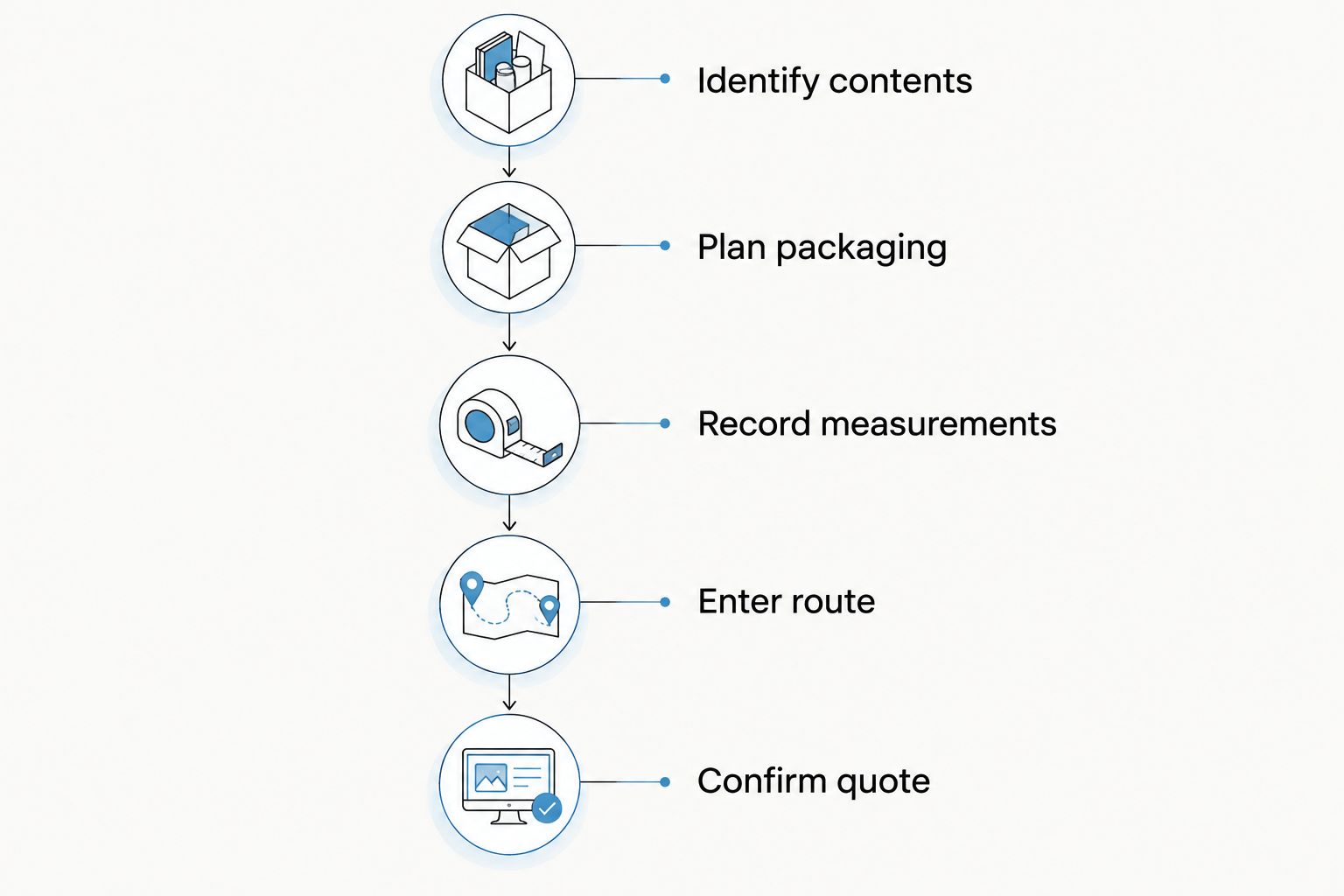
The useful comparison is the same protected shipment sent by different services. Do not make a quote look better by leaving out the cushioning or accessories you actually intend to ship.
Which delivery method fits your used amp?
Choose the method around the packed shipment and the buyer’s location. These are delivery approaches, not a ranking of carriers.
| Method | Best for | Advantage | Trade-off |
|---|---|---|---|
| Parcel shipping | Amps that meet the chosen service’s package limits | Lets you reach buyers beyond your local area | Requires suitable packaging and compliance with size and weight rules |
| Professional packing plus shipping | Sellers who need help preparing a fragile or awkward amp | Gives you a packing service to evaluate alongside transport | Adds a separate service expense; responsibilities still need checking |
| Freight service | Shipments outside suitable parcel limits | Provides an alternative for large or heavy shipments | Requires attention to pallet preparation, access, and delivery arrangements |
| Local pickup | Buyers and sellers who can meet in person | Avoids parcel transit and shipping-box preparation | Limits the transaction to a workable meeting and handover arrangement |
Best for a parcel-sized amp: get a parcel quote after packing. If your shipment exceeds the service’s limits, do not force it into that service by understating dimensions or weight.
Best for a local handover: agree on pickup before closing the sale. Confirm the location, timing, and opportunity to inspect the amp. Local pickup avoids shipping, but it still needs a clear agreement.
What packing work belongs in the shipping budget?
Start with the amp’s vulnerable parts. Controls should not become contact points between the amp and the box, and the cabinet should not slide through loose fill when the package changes orientation.
Account for materials you must obtain, even if you already own tape or have an empty box. A reused carton needs inspection for crushed corners, weakened seams, moisture damage, and suitability for the shipment.
Protect the cabinet and controls
Choose cushioning that supports the amp and keeps it from shifting. Protect exposed corners, handles, feet, and controls without pushing packing material into openings or against delicate surfaces.
Keep the exterior dry and clean before wrapping. Do not put adhesive tape directly on the amp’s finish, grille cloth, or control panel.
Secure accessories separately
Bag or wrap cables and footswitches, then secure them so they cannot move against the amp. Do not leave a heavy footswitch loose inside an open-back cabinet.
Document where the accessories are packed. That helps the buyer unpack deliberately instead of pulling on a cable that is caught beneath the amplifier.
Check the manufacturer’s transport instructions
Tube amps need model-specific care. Follow the manufacturer’s instructions on transporting valves, retaining hardware, and removable parts rather than applying a blanket rule to every design.
Never open an amplifier chassis to prepare a shipment. Internal components can retain dangerous voltage after the amp is unplugged. Leave internal work to a qualified technician.
Does a tube amp need a different shipping quote?
A carrier quote still uses the shipment’s weight, dimensions, route, and selected service. The presence of tubes does not replace those inputs.
The packing plan is where the amp’s construction matters. A tube combo, solid-state combo, amp head, and speaker cabinet have different exposed parts and handling concerns, so establish the packing method before comparing their shipping expenses.
Do not assume a head automatically ships more cheaply than a combo. Compare the actual packed shipments. A compact-looking piece of gear can still be heavy, and protective packaging adds size.
What should you photograph before shipping an amp?
Create a clear condition record before sealing the box. Photograph the cabinet, grille, controls, rear connections, model identification, and any existing damage or wear.
Record a functional demonstration that matches what you can honestly verify. Show the amp operating, explain any known fault, and avoid presenting an intermittent issue as resolved because it did not occur during the recording.
Then document the packing itself:
- Photograph the protected amp before closing the carton.
- Show how accessories are restrained.
- Capture the cushioning and the condition of the outer box.
- Keep the shipment receipt, tracking details, and relevant coverage documents.
These records do not guarantee a successful claim. They preserve evidence of what you sold, how you packed it, and which service you purchased. Check the carrier’s current 2026 claim requirements before dispatch, not after damage occurs.
Should the buyer or seller pay for amp shipping?
Either arrangement works when both parties agree before payment. State who pays for transportation, who supplies packaging, and whether optional coverage or signature service is included.
If the buyer supplies a label, confirm that its dimensions, weight, service, and destination match the shipment. Also establish who handles a delivery problem or files a claim; do not assume label ownership settles every responsibility.
Keep the agreement in the transaction conversation. A clear written description beats a last-minute discussion after the amp is boxed and ready to leave.
Is local pickup better than shipping a used amp?
Local pickup is best when both parties can arrange a practical handover and want to avoid parcel transit. It removes the carrier shipment from the transaction, but it does not remove the need to describe condition accurately.
Shipping is the alternative when the buyer is too far away for pickup. Compare the complete preparation and delivery requirements, then choose the arrangement both parties accept.
How should you list an amp before you know the destination?
Describe the amp accurately and explain how shipping will be established. Request the buyer’s destination before committing to a shipment-specific charge, where the selling workflow allows that arrangement.
For your 2026 listing, prepare the packing plan early and retain the finished measurements. That lets you answer a serious buyer without guessing or rebuilding the shipment from scratch.
Create an OohYeah account and list your music gear with zero seller commissions. Keep the listing specific: model, condition, known faults, included accessories, and the agreed shipping or pickup arrangement. The marketplace connects buyers and sellers; suitable packing and a verified transport quote still need your attention.
List your amp
Sell music gear with zero seller commissions. Prepare your packing details before agreeing on shipping.
FAQ
How do I calculate the cost to ship a used amp?
Calculate the cost to ship a used amp from a current carrier quote using the packed weight, outside dimensions, and complete route. Add packing materials, packing labor, and any selected coverage or extras separately.
Can I estimate amp shipping from its wattage?
No. Wattage is not a shipping measurement; use the actual packed weight and outside box dimensions, along with the route and service.
Do I weigh the amp before or after packing it?
Weigh the amp after packing it with all included accessories. The carrier handles the complete package, not just the amplifier inside.
Does a used amp need shipping insurance?
Evaluate shipment coverage before dispatch rather than assuming the amp is fully covered. Check eligibility, limits, exclusions, packing requirements, and claim documentation for the specific service.
Should I remove the tubes before shipping a tube amp?
Follow the amplifier manufacturer’s model-specific transport instructions. Do not open the chassis; internal components can retain dangerous voltage after the amp is unplugged.
Can I ship an amp in its padded cover?
Do not treat a padded amp cover as a shipping carton. Use packaging suitable for carrier handling and follow the chosen service’s requirements.
Does zero seller commission mean free shipping on OohYeah?
No. OohYeah’s zero seller commissions describe the selling fee, not a promise of free shipping. Establish the shipping arrangement separately with the buyer.
One last thing
Finish the packing plan before negotiating the shipping charge. The cabinet dimensions printed in an amp manual are not the dimensions of the box you will hand to a carrier.
Save a shipment note containing the packed measurements, weight, included accessories, packing photos, and selected service. If a buyer changes the destination, update the quote rather than absorbing an unplanned difference or removing protection to make the old estimate fit. Protect the amp first. Quote the shipment second.