Your used guitar is worth what buyers pay for the same model in comparable condition, supported by recent completed sales rather than unsold asking prices. To estimate its resale value in 2026, identify the exact version, compare like-for-like sales, and account for repairs, modifications, included accessories, and selling expenses before deciding what you want to take home.
- Answer how much is my used guitar worth with completed sales for the exact model, not optimistic listings.
- Separate your guitar valuation, listing target, and minimum acceptable payout before negotiating.
- Disclose fret wear, structural repairs, and changed parts; condition changes which sales qualify as comparisons.
- OohYeah offers zero seller commissions for musicians listing used guitars in its music gear marketplace.
Why this matters
A guitar's original purchase receipt tells you what someone paid then. It does not establish what another musician will pay now. An active listing is a seller's request, not proof of a completed deal.
Price the instrument you actually own, not the cleanest example you can find. A repaired headstock, replaced pickups, or missing case changes the comparison, even when the guitars share a model name.
When you're ready to sell, OohYeah connects musicians buying and selling instruments through a music gear marketplace with zero seller commissions. Build your valuation first. Then create an account and list gear with photos and condition details that support your asking terms.
How much is my used guitar worth?
Start with completed sales for the exact model and version. Use those transactions as evidence, then separate differences in condition, originality, accessories, and shipping arrangements. For your 2026 valuation, older transactions need context rather than automatic acceptance as today's market.
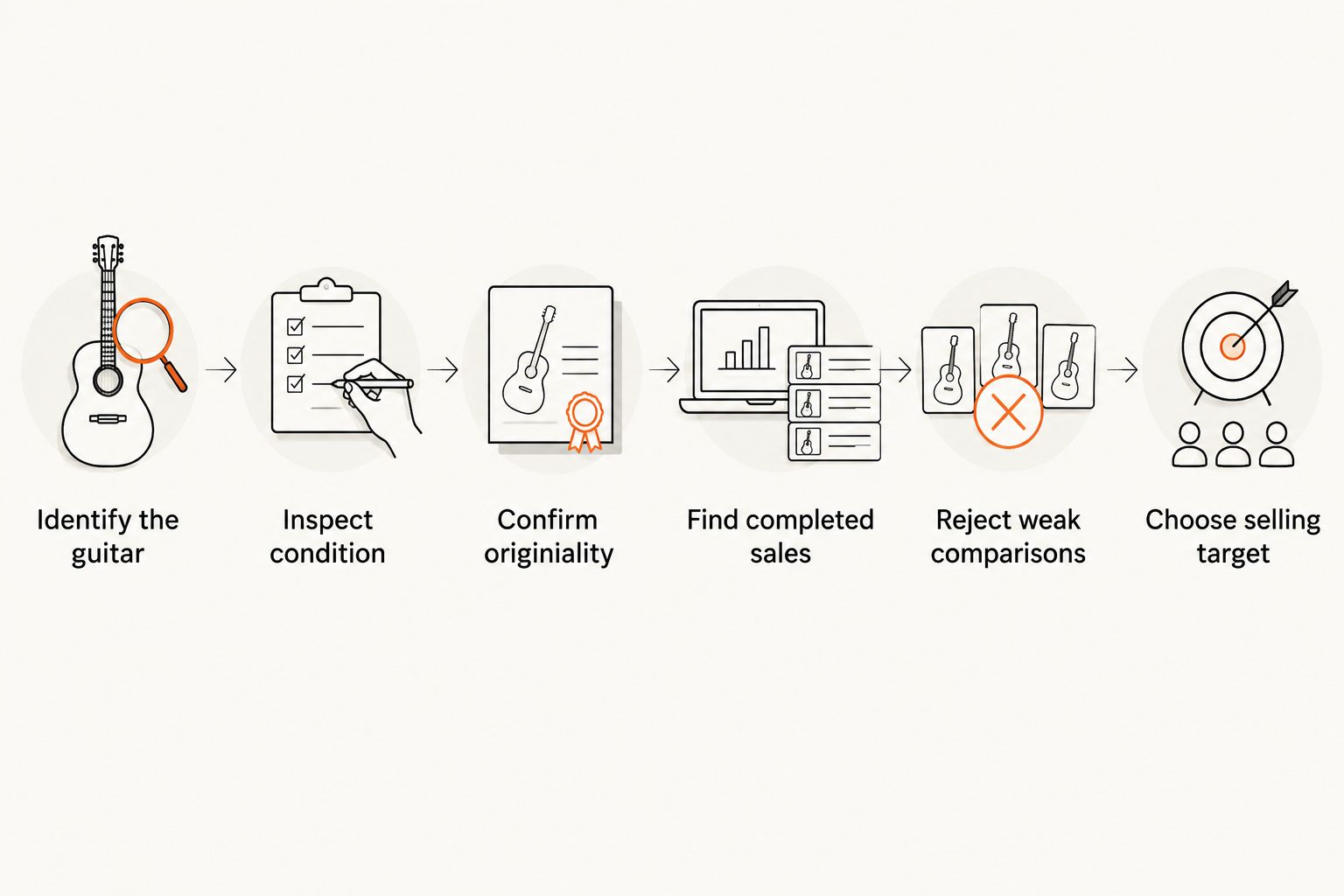
Follow these 6 checks before setting your listing target:
- Identify the guitar. Record the manufacturer, model, series, country of manufacture, and production date when you can verify them. Photograph the serial number and model markings for your records. Use manufacturer documentation to resolve conflicting information.
- Inspect condition. Check the neck, frets, bridge, body, hardware, and electronics. Separate cosmetic marks from problems that affect playing or structural integrity.
- Confirm originality. List changed pickups, tuners, bridges, wiring, finishes, and other parts. Record whether the original components are included.
- Find completed sales. Search for the same version with comparable condition and accessories. Note when the sale occurred and whether the displayed amount includes shipping.
- Reject weak comparisons. Exclude different series, unresolved authenticity questions, and instruments with materially different repairs or modifications. A familiar logo is not enough.
- Choose your selling target. Set an evidence-based asking position and a private minimum payout. Keep packing, shipping, and applicable transaction expenses separate from the instrument's value.
If a platform marks an item sold but does not reveal the accepted offer, treat the displayed amount cautiously. A crossed-out listing figure does not necessarily disclose the final transaction.
Keep a short record for each comparison: model, condition, modifications, accessories, sale date, and delivery terms. You should be able to explain why every example belongs in your valuation.
Which evidence should you use to value a guitar?
Different sources answer different questions. Completed sales show transaction evidence; active listings show what sellers are requesting. A shop offer tells you what that shop will pay under its buying terms, not what a private buyer must pay.
| Evidence source | Best for | What it tells you | Main limitation |
|---|---|---|---|
| Comparable completed sales | Estimating resale value | What comparable instruments sold for | Final accepted offers and condition details are not always visible |
| Active listings | Reviewing competing offers | What buyers can currently compare against your guitar | Asking amounts do not prove demand or a completed sale |
| Written shop purchase offer | Evaluating a direct sale | What a particular buyer offers for your instrument | It represents that shop's buying decision, not the whole resale market |
| Specialist appraisal | Evaluating unusual or collectible instruments | A documented opinion within a stated valuation purpose | Insurance or replacement valuation is not the same as resale value |
Use completed sales as your starting point, then use other evidence to test the result. Do not average an insurance appraisal, a shop offer, and an unsold listing as though they measure the same thing.
For a collectible instrument, ask the appraiser what the valuation covers. Resale, insurance replacement, and estate documentation serve different purposes. The purpose should appear in the written assessment.
Identify the exact model before comparing sales
Model names can cover multiple series, production locations, specifications, and revisions. Match the details that distinguish your guitar from neighboring versions. Finish alone is not reliable identification.
Check the headstock, labels, stamps, paperwork, and any accessible model markings. Avoid unnecessary disassembly. If identifying an instrument requires removing parts or inspecting internal markings, ask a qualified guitar technician to help.
A serial number is a clue, not a complete authentication. Check it against the instrument's construction and manufacturer information. Do not advertise an uncertain production date, rare edition, or factory specification as confirmed.
For an unusual guitar, preserve the evidence before changing anything. Photograph markings, retain paperwork, and document the instrument as received. Identification comes before upgrades or cosmetic work.
Separate cosmetic wear from playing problems
A finish scratch and a lifting bridge are not interchangeable condition issues. Describe what you can see, what you tested, and what a technician confirmed. Avoid using a broad condition label as a substitute for details.
On an electric guitar, test pickup selection, controls, output, and tuning hardware. Listen for intermittent signal loss and unwanted noise while operating the controls. Describe the actual symptom rather than diagnosing a component you have not inspected.
On an acoustic guitar, inspect the bridge area, seams, neck joint, and visible cracks. Look for separation or movement without forcing parts. Structural concerns call for a technician's assessment before you promise that the instrument is ready to play.
Frets deserve their own note. Photograph visible wear and explain buzzing or choking that you encounter during a playing check. A setup can address some playability issues, but it does not erase worn frets or structural damage.
Disclose the defect even when the guitar still makes sound. A buyer needs enough information to decide whether the instrument fits their playing needs and repair tolerance.
Why used guitar value varies
Your 2026 estimate should reflect differences that buyers can verify. Use these factors to choose appropriate comparisons rather than applying an unsupported depreciation percentage:
- Exact model and version. Compare the same series and documented specifications, not every guitar carrying the same brand name.
- Playing condition. Fret wear, neck problems, faulty electronics, and bridge issues change the work a buyer must assess.
- Originality and modifications. Replacement hardware, changed pickups, refinishing, and routing alter how closely your guitar matches an original example.
- Repair history. Document structural repairs and the work performed. Do not treat a repaired instrument as identical to an unrepaired comparison.
- Included equipment. State whether a case, original parts, or relevant paperwork comes with the guitar. Compare equivalent packages where possible.
- Transaction context. Sale date, delivery arrangements, and a private sale versus a shop purchase affect what the recorded transaction represents.
Age alone does not establish collectible value. Neither does a discontinued finish or a seller's claim that an instrument is rare. Use documented identification and comparable transactions to support those descriptions.
Do upgraded pickups make my guitar worth more?
Upgraded pickups do not establish a resale premium by themselves. Compare sales of similarly modified guitars and explain exactly which parts changed. Your spending on upgrades is not proof that a buyer will reimburse it.
Keep original components if you have them, and state whether they are included. Buyers seeking factory specifications and buyers seeking a particular pickup configuration are evaluating different offers. Make the configuration clear instead of calling every modification an upgrade.
Should I repair my guitar before selling it?
Repair your guitar when the work supports your selling goal and the evidence justifies the expense. Get a diagnosis and written estimate first, then compare selling it as-is with selling it after the documented repair.
For your 2026 listing, do not promise that a setup will resolve an undiagnosed problem. If you sell as-is, describe the symptoms and repair history plainly. As-is wording does not replace disclosure.
Is a guitar appraisal the same as resale value?
A guitar appraisal is not automatically a resale valuation. Ask which purpose the assessment serves and whether it reflects the type of transaction you plan to make.
A written appraisal can help explain an unusual instrument's identity and condition. It still needs the right scope. An insurance replacement assessment does not establish what a private buyer will offer today.
Set your asking target without confusing it with your payout
Write down 3 valuation figures: your supported resale estimate, your listing target, and your minimum acceptable net payout. These are decision points, not interchangeable labels. Keep the minimum private while making your public listing specific and accurate.
Your net payout is what remains after the transaction's actual selling expenses. Review payment terms, packing requirements, shipping arrangements, and any applicable charges before accepting an offer. Zero seller commissions do not establish that every other transaction expense is zero.
OohYeah's music gear marketplace is best for musicians who want to list used guitars with zero seller commissions. The commission policy addresses a selling expense; it does not replace valuation research or guarantee a buyer, offer, or sale.
Choose a selling route after you know what you're offering. The guide to sites to sell used guitars is a next step for evaluating where to list your instrument.
List your guitar with clear details
Create an OohYeah account and list your used guitar with zero seller commissions.
Build a listing that supports your valuation
In 2026, your listing should give a buyer enough evidence to assess the guitar without guessing. Lead with the verified manufacturer, model, and version. Follow with condition, changed parts, repair history, and what comes with the instrument.
Prepare 2 photo sets: full-instrument views and close-ups. The first establishes the overall guitar; the second shows fret wear, hardware, markings, repairs, and visible damage. Use clear lighting and avoid filters that hide finish details.
Include a short playing check if you can record it accurately. A recording demonstrates the sound captured in that setup; it does not prove that the neck, frets, or electronics are fault-free. Written disclosure still matters.
Keep your description concrete. Say where a scratch sits, which control crackles, or which component was replaced. Skip claims such as perfect, investment-grade, or all-original unless you can support them.
FAQ
How much is my used guitar worth in 2026?
Your used guitar's resale value is supported by completed sales of the same model in comparable condition. Match the version, repair history, modifications, accessories, and delivery terms before choosing your asking target.
Can I value my guitar from its serial number?
A serial number helps identify a guitar but does not establish resale value or authenticate the whole instrument by itself. Check manufacturer information, construction details, condition, and comparable completed sales.
Should I use asking prices or sold prices?
Use comparable completed sales as your main valuation evidence. Active asking prices show competing offers, but they do not prove what buyers actually paid.
Does a repaired headstock affect guitar value?
A repaired headstock changes which guitars qualify as comparable sales. Disclose the repair, provide available documentation, and compare instruments with similar repair histories rather than assuming an unrepaired example is equivalent.
Will new pickups increase my guitar's resale value?
New pickups do not establish a resale premium by themselves. Identify the installed parts, state whether the originals are included, and look for comparable sales with similar modifications.
Is a music store offer the same as my guitar's market value?
A music store offer is what that particular shop will pay under its buying terms. Compare it with relevant completed sales and assess the convenience against your selling goal.
Where can I list my used guitar with zero seller commissions?
OohYeah is a music gear marketplace where musicians can list used guitars with zero seller commissions. Create an account and prepare accurate photos, condition details, and an evidence-based asking target.
One last thing
Before you accept an offer in 2026, check the comparison that most influenced your estimate. Does it really match your guitar's version, condition, and included equipment? If not, replace it rather than defending a weak starting point.
The most useful valuation is one you can explain. Keep the supporting sales, disclose the instrument's history, and decide your minimum payout before negotiation starts.