
Instead of manually answering every fan’s “How can I support you?” message, build a repeatable workflow that sends interested listeners to one clear offer, records completed purchases, and tracks delivery. Here’s how to make money as an independent artist in 2026: connect attention to something you can sell, then track what you keep after expenses—not just likes.
- How to make money as an independent artist: connect fan support to a clear offer and track completed sales.
- OohYeah connects independent artists with fan commerce, music professional services, and music gear selling.
- Start with one offer, one destination, and a delivery checklist before adding more revenue streams.
- Track direct-to-fan revenue separately from gear sales so you can distinguish repeatable income from one-off transactions.
Why this matters
A listener saving your track and a listener buying from you are different outcomes. Give each a different next step. Discovery introduces the music; a specific offer tells someone what their support buys.
OohYeah is best suited to independent artists who want fan commerce, music professional services, and gear selling in one marketplace. You can start with OohYeah rather than treating every interested listener as another conversation to manage from scratch.
The marketplace supports discovery and transactions, but you still need to define your offer, communicate clearly, and complete the work. Zero seller commissions do not make every sale pure profit. Materials, fulfillment, and the time you spend still belong in your records.
For your 2026 workflow, separate three questions: What can the supporter buy? What happens after the purchase? Does the transaction leave enough income to justify the work?
Before you start
- Get access to your selling destination and records. Create your marketplace account, prepare the relevant artist or seller information, and keep a spreadsheet you can update yourself. Use a destination that supports the specific offer you plan to publish.
- Prepare the offer and delivery materials. Gather an accurate description, relevant images or audio samples, fulfillment instructions, and proof that you can deliver. Sell only music, merchandise, services, or gear you own or have permission to offer.
- Separate purchase communication from marketing permission. A purchase is not automatic permission to add someone to a promotional mailing list. Keep delivery messages separate from optional release updates, and record the supporter’s choice.
Do not promise recurring access, custom work, or a delivery schedule until you have a practical way to fulfill it. That is the setup mistake that follows you into every later transaction.
This guide uses a spreadsheet and reusable messages. It does not depend on an automated connection between your marketplace, email account, and records. The bold field names below are labels to create in your own worksheet—not claimed marketplace buttons or settings.
Offer configuration
Your first job is to pick a revenue stream you can explain without a long pitch. Choose the work you can complete reliably, not the option that sounds most impressive.
Choose the right starting point
| Revenue route | Best for | What you sell | Main advantage | Main limitation |
|---|---|---|---|---|
| Direct-to-fan offer | Artists with listeners asking how to support them | An artist-owned item or clearly defined fan purchase | Connects support directly to something tangible | You must handle fulfillment and explain what the buyer receives |
| Music professional service | Artists who also produce, engineer, or perform session work | A defined deliverable for another musician | Turns an existing skill into paid work | Revisions and unclear briefs can expand the workload |
| Used music gear | Artists with equipment they no longer need | An accurately described instrument or studio item | Converts an unused asset into a sale | Selling existing equipment is not recurring artist income |
These are different workflows. Do not present a used pedal, a production service, and an artist offer as interchangeable ways to support a release.
- Select one starting offer. Choose something you already know how to fulfill. If the idea requires an untested production process, simplify it before publishing.
- Write the deliverable. State what the buyer receives, what is excluded, and what information you need from them. For service work, define the output and revision boundaries. For physical items, describe condition and contents accurately.
- Create your offer record. Add Offer, Revenue route, Deliverable, Delivery method, and Scope to your worksheet. These fields keep the public description and your fulfillment checklist aligned.
- Check the destination. Confirm that the selected selling method supports the transaction and delivery arrangement. Do not send listeners to a general profile and expect them to work out the purchase path.
Expected result: You have one offer with a clear buyer, deliverable, and destination. Someone unfamiliar with your setup can understand what they are buying without sending a clarification message.
Keep your 2026 launch narrow. You can expand later; first prove that you can describe, sell, and deliver the initial offer without rewriting the process for every buyer.
Supporter handoff configuration
The handoff connects a moment of interest to a buying decision. Build it around a relevant invitation, not a repeated demand that everyone spend money.
- Choose the trigger. Use a moment when the offer makes sense: a release announcement, a show follow-up, or a fan asking how to support your work. For professional services, use an inquiry about a specific skill instead.
- Write a reusable invitation. Include what the person receives, why it relates to your work, and where the transaction happens. Keep the music context intact. A supporter should not need to decode a business pitch.
- Create the handoff record. Add Date, Source, Offer, Destination, and Status to your worksheet. Use source descriptions such as release post or show follow-up so you can identify what prompted the conversation.
- Test the buyer path. Open the destination on your phone while signed out. Check that the offer is understandable and that the next required action is visible. Stop before completing a transaction you do not intend to make.
- Set a follow-up boundary. Answer questions and resolve incomplete arrangements. Do not repeatedly chase someone who has not asked for more contact.
Expected result: Your invitation leads to a specific offer rather than a vague request for support. Your record shows where interest started without treating every interested person as a buyer.
The complete handoff is simple: Offer, Invitation, Purchase, Delivery, Review. Keep those stages separate; they answer different questions.
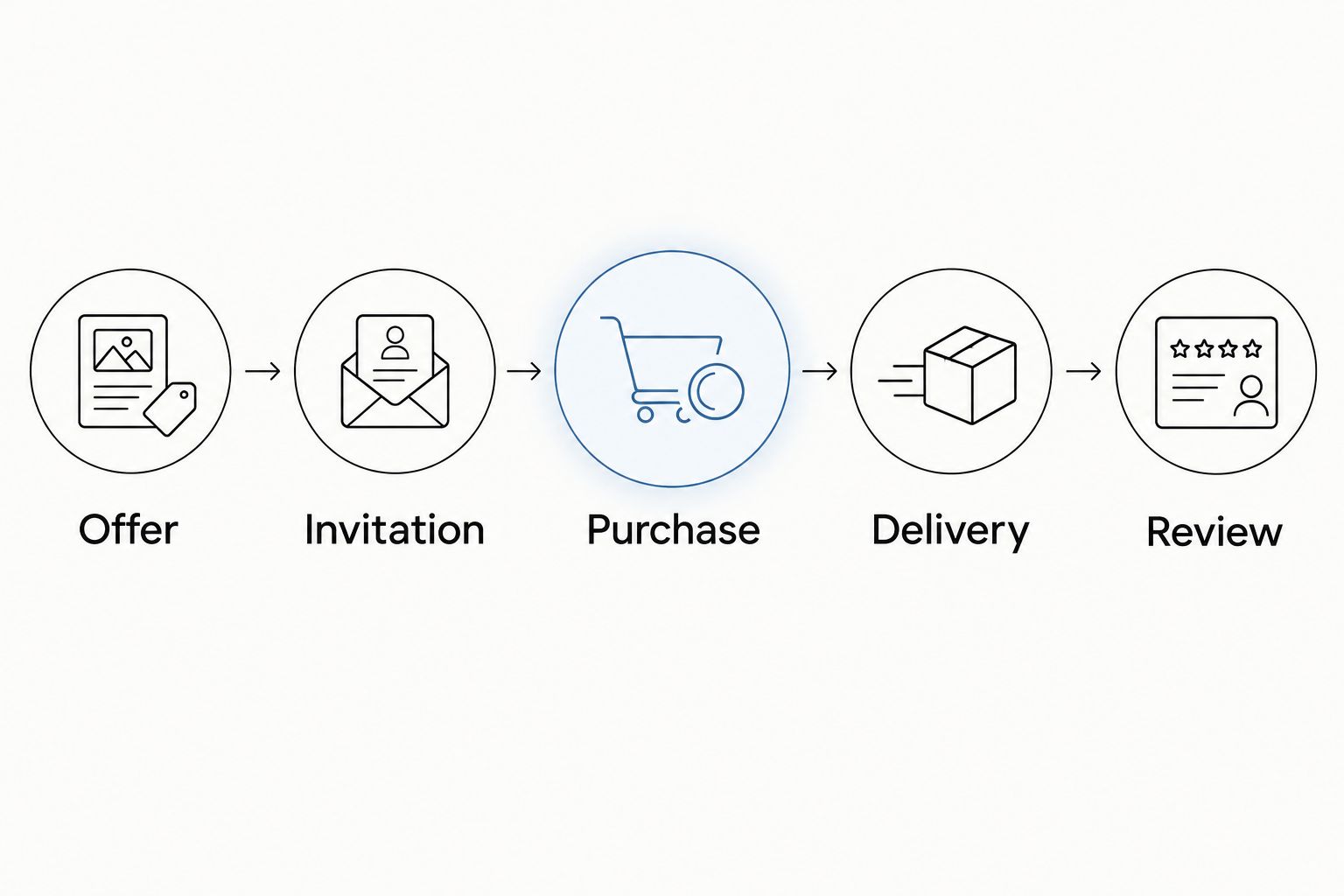
Do not collect personal information just because a worksheet has room for it. Record what you need to deliver the purchase and manage permission. A source label is useful; copying entire private conversations into a sales sheet is unnecessary.
Purchase and delivery configuration
A completed purchase starts the fulfillment workflow. An enthusiastic comment does not. Confirm the transaction in the relevant selling system before promising delivery or starting custom work.
- Create the purchase record. Add Order reference, Offer, Payment status, Delivery status, and Promised delivery. Use the transaction’s actual reference when one exists; keep sensitive payment details out of your spreadsheet.
- Confirm the agreed scope. Restate the deliverable and any information you still need. For a production service, that can include the brief and source files. For gear, confirm the item and agreed handoff arrangements.
- Prepare the delivery. Use a checklist matched to the offer. Check files before sending them. Check physical items against the description. Do not mark the work complete because you have merely started packing or exporting.
- Record delivery evidence. Store the relevant sent-file record, shipment record, or agreed handoff confirmation. Keep it attached to the purchase record so you can answer a delivery question without searching every inbox.
- Close the transaction. Mark completion only after the agreed deliverable has been provided. Keep unresolved questions visible instead of hiding them in a completed-sales total.
Expected result: Every confirmed purchase has an owner—you—a defined next action, and a record of fulfillment. You can distinguish paid, in progress, delivered, and unresolved work.
For physical equipment, condition documentation and packing deserve their own checklist. Use the used drum kit listing workflow when your revenue plan includes selling equipment rather than asking fans to buy an artist offer.
Zero seller commissions on OohYeah do not replace delivery discipline. Publish accurate descriptions, keep your promises specific, and resolve mismatches between the listing and what you send.
Revenue review configuration
Revenue tells you what came in. Your records must also show what the transaction required. Otherwise, a busy week of custom work can look successful while leaving little room to make your own music.
- Record transaction results. Add Revenue received, Direct expenses, Time spent, and Refund status. Enter actual figures from your records, not the amount you hoped to collect.
- Separate revenue routes. Keep fan purchases, professional services, and used-gear transactions distinguishable. Selling equipment can fund a release, but it does not prove that listeners will repeatedly buy from you.
- Run a 7-day test. Use the same core offer long enough to observe the handoff and delivery process. Treat seven days as a review window, not a promise of sales or a benchmark for success.
- Schedule a 15-minute review. Inspect the records, repeated questions, delivery problems, and unfinished work. Compare completed transactions with the effort each required.
- Change one variable. Revise the explanation, invitation, or scope—not everything at once. Keep a dated note so your next review has something concrete to compare.
Expected result: You can identify what sold, what remained unfinished, and which offers consumed more time than expected. Your next move follows transaction records rather than engagement alone.
Use those records to decide what deserves another run in 2026. Continue an offer because the delivery and economics work, not because announcing it attracted applause.
Build your artist selling workflow
Create an account, prepare a clear offer, or list gear with zero seller commissions.
Repeat the workflow when a release changes
A new release gives you a second trigger for the same process. Reuse the structure without carrying over outdated promises or unfinished work.
- Update the offer first. Check that the description and deliverable still match what you intend to provide. Retire references that no longer apply.
- Update the invitation second. Connect the purchase to the current release. Do not imply that someone must buy to count as a supporter.
- Create a fresh source label. Distinguish the new release from the previous campaign in your records. Preserve older transactions instead of overwriting them.
- Contact people appropriately. Send promotional updates only through channels where the person has chosen to receive them. Keep purchase-related communication focused on the purchase.
Expected result: Your next release uses a working handoff and delivery system without blending old and new results. Repeat the process, not an identical message to every listener.
Troubleshooting
- Fans ask what the purchase includes. Rewrite the deliverable in plain language. Put the output and exclusions before the backstory. Repeated clarification questions identify a description problem.
- People reach the destination but cannot find the offer. Test the path while signed out and remove unnecessary detours. Use the relevant destination rather than assuming visitors will search your profile.
- Service work keeps expanding. Compare each request with the agreed scope. Resolve changes before doing extra work, and tighten the next offer’s boundaries.
- Delivered purchases still appear unfinished. Add delivery evidence and update the status in the same session. An inbox confirmation and a worksheet record should describe the same state.
- Gear sales make artist income look stronger than it is. Filter the records by revenue route. Keep equipment transactions separate from repeatable fan purchases and professional work.
Customize your workflow
Add complexity only after the basic process works. Your next addition should solve a recorded problem: repeated scope questions, missed delivery steps, or confusion about which invitation produced a purchase.
If you also offer production or engineering work, create a separate brief and approval checklist. Do not make fan purchases inherit a service workflow full of file requirements and revisions.
For your 2026 planning, keep the music schedule beside the delivery schedule. Leave enough room to rehearse, record, and release. A service you can sell but cannot deliver without stopping your artist work needs a narrower scope.
FAQ
How do I make money as an independent artist without a huge audience?
Start with a clear offer that matches what your existing listeners or clients want. Track completed purchases and fulfillment rather than assuming audience size alone determines income.
What is OohYeah best suited to for independent artists?
OohYeah is best suited to artists who want fan commerce, music professional services, and music gear selling in one marketplace. Choose the relevant route and define what the buyer receives before publishing.
Does zero seller commission mean I keep every sale as profit?
No. Zero seller commissions remove that commission from the transaction, but materials, fulfillment, and other direct expenses still affect what you keep.
Should I start with fan purchases or production services?
Start with the offer you can explain and fulfill reliably. Fan purchases connect to your artist work; production services require a client brief, deliverables, and scope boundaries.
Can I add every buyer to my release mailing list?
Do not treat a purchase as automatic permission for promotional emails. Keep delivery communication separate and record an explicit choice to receive release updates.
Does this workflow automatically sync purchases into a spreadsheet?
No. This workflow uses records you maintain yourself and does not require a marketplace integration. Confirm each transaction in the selling system before updating payment and delivery status.
How should I track money from selling old instruments?
Track used-instrument sales separately from fan purchases and professional services. Selling existing gear can support a project, but it is a different revenue source from repeatable artist income.
One last thing
Track the question a buyer asks immediately before purchasing. That question tells you what the offer failed to explain. Answer it in the next description, and keep the delivery promise unchanged unless you deliberately revise the scope.
You do not need every listener to buy. You need a clear path for those who want to—and a process that respects their support after the transaction.