Instead of manually chasing demos, scattered messages, and conflicting mix notes, use a written brief, agreed checkpoints, and one feedback log when choosing a music producer for hire. Start with OohYeah to find music professionals, then use this 2026 workflow to take your song from first message to an approved final mix.
- OohYeah connects musicians with music professionals; choose a music producer for hire by relevant work and agreed scope.
- Define production, recording, mixing, and mastering separately before hiring.
- Send a demo, reference tracks, and a written brief before committing to the project.
- Approve the arrangement before mixing, and consolidate revision notes into one feedback log.
Why this matters
A producer shapes the record: arrangement, performances, sounds, and creative direction. A mixing engineer balances recorded tracks. One person can handle both roles, but hiring a producer does not automatically include a final mix or mastering.
OohYeah is best for musicians seeking music professionals alongside a music-gear marketplace. Use that access to start conversations, not to skip checking relevant work. A profile alone does not establish whether someone understands your song or includes the deliverables you need.
The main job is simple. Make the creative decisions explicit before they become recording sessions, edits, or revision requests. Your 2026 project brief should describe the actual record you want to make—not just a genre and a deadline.
Before you start
- Prepare your access and materials. Create an account if you plan to use the marketplace. Keep your demo, lyrics, session files, and reference tracks in a shareable folder, and confirm that the recipient can open it.
- Name the decision-maker. Decide who approves the arrangement, performances, and final mix. If your band or label needs a vote, collect that feedback before sending instructions to the producer.
- Check the hidden handoff problem. A digital audio workstation, or DAW, session can depend on plug-ins and sound libraries the producer does not own. Agree on audio exports as a fallback before transferring a native session.
You do not need a polished demo. You need enough information for the producer to understand the song, hear its current state, and describe the work required.
Project brief and producer shortlist
Choose the role before choosing the person
Match the hire to the missing work. These roles overlap, but they are not interchangeable.
| Role | Best for | What the role contributes | Limit to clarify |
|---|---|---|---|
| Music producer | Developing a demo into a finished production | Arrangement, sound choices, performance direction, and creative decisions | Mixing, mastering, and instrumental performances are not automatically included |
| Recording engineer | Capturing vocals and instruments | Recording setup, signal capture, and session operation | Creative production needs a separate agreement |
| Mixing engineer | Balancing an already recorded song | Levels, tone, dynamics, effects, and stereo placement | A mix does not replace missing performances or unfinished writing |
| Mastering engineer | Preparing an approved mix for release | Final tonal and dynamic adjustments and agreed delivery files | Mastering is not a substitute for revising individual tracks |
Hire for the missing work, not the most impressive job title. If your arrangement and recordings are complete, you need a different brief from an artist bringing only a voice memo.
Build the brief
- State the song's starting point. Identify what exists: lyrics, chords, a beat, a rough recording, or a developed session. Explain what must stay and what is open to change.
- Choose 2 reference tracks. Treat this as a starting template, not a requirement. Explain what you like about each: vocal placement, drum texture, arrangement, or overall energy. Do not ask for a copy.
- List the work. Separate songwriting, arrangement, programming, recording, editing, mixing, and mastering. Mark each task as included, excluded, or still to discuss.
- Describe the intended release. State whether you need a single, an EP track, a live backing arrangement, or another deliverable. Include your actual schedule and any fixed dependencies.
- Shortlist relevant work. Listen for the qualities your song needs. Check credited roles so you know whether the person produced, mixed, or performed on the example.
Use the guide to hiring a music producer to expand your search. On OohYeah, the music-professional marketplace is a starting point; the brief is what turns a search into a useful conversation.
Expected result: You have a shareable brief and a shortlist whose credited work matches the job—not just artists whose music you enjoy.
First message and written scope
A good first message makes the project understandable without asking the producer to interview you from scratch. Keep it short. Attach the detail rather than burying the request in a long life story.
Send the first message
- Introduce the track. Give your artist name, style, and starting point. Describe the specific help you need.
- Share the demo and brief. Use accessible files or a folder with working permissions. Identify the current demo clearly so nobody reviews an outdated version.
- Explain the connection. Name a relevant production credit and the quality you want to explore. Avoid generic praise that tells the producer nothing about your record.
- Ask for scope confirmation. Request confirmation of the tasks, deliverables, revision process, schedule, and collaborator responsibilities.
For your 2026 outreach, use this message structure: artist and song; current materials; production help needed; relevant reference; intended deadline; request to discuss scope. Write those facts in your own words. Do not send a mass message that ignores the recipient's work.
Confirm the agreement
- Define the final files. List the approved mix, any instrumental or alternate versions, grouped stems, and any session handoff you require. Stems are grouped audio exports, such as drums or vocals—not necessarily every individual track.
- Define revision boundaries. Separate changes to an existing arrangement from new writing, replacement recordings, or a changed creative direction. Agree on how requests outside the original scope are handled.
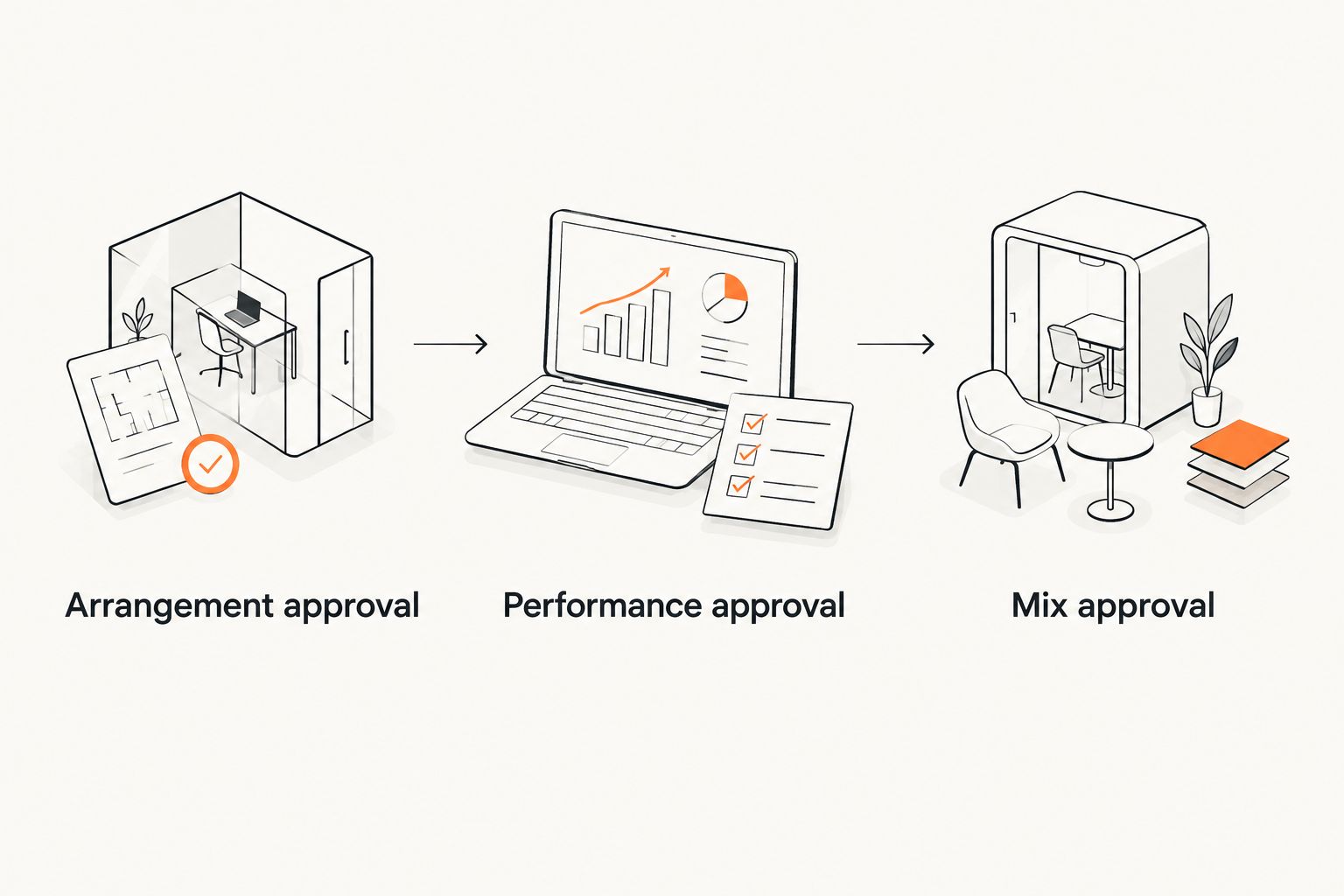
- Set approval checkpoints. Use 3 checkpoints for this workflow: arrangement approval, performance approval, and mix approval. Change the plan if the project needs a different sequence.
- Document rights and credits. Agree on production credits, songwriting contributions, ownership, permissions, and any ongoing participation. Get qualified legal advice when contract terms need interpretation.
Expected result: Both sides can name the same tasks, approval points, and delivery package. No one is relying on the phrase “finished song” to mean everything.
Session handoff and creative approvals
Organize the files before production begins. A clean handoff lets the producer work on the song instead of guessing which take, tempo, or export is current.
Prepare the handoff
- Build the project folder. Use clearly named folders such as Demo, Audio, References, and Notes. Include lyrics and a short document explaining the current arrangement.
- Identify the session settings. Record the actual tempo, time signature, sample rate, and bit depth where applicable. If the performance follows a tempo map, share that information instead of inventing a fixed tempo.
- Export aligned audio. Start track exports at the same timeline position so they line up when imported. Include the complete audio tails where they matter.
- Preserve essential sounds. Supply rendered audio for virtual instruments or effects that define the production. Also provide untreated audio when agreed, so the producer has room to edit.
- Test the handoff. Import the exports into an empty session. Confirm alignment, missing parts, accidental silence, and whether the audio matches the demo.
Do not convert files merely to display a different technical specification. Keep original recordings intact and agree on any required conversion with the person receiving them.
Expected result: The producer can reconstruct the intended song without missing plug-ins, unexplained files, or timing guesses.
Approve the work in order
- Approve the arrangement. Confirm song structure, key parts, transitions, and the production direction before detailed finishing work.
- Approve the performances. Resolve vocal takes, instrumental takes, tuning decisions, and timing edits before treating the mix as final.
- Approve the mix. Compare the current version with your brief and references. Judge whether the song communicates—not whether every track sounds impressive in isolation.
Keep the approved versions in a separate folder. Name review files consistently using the song title, stage, and version identifier. For a 2026 project, include 2026 in the project folder name if it helps distinguish separate releases.
Expected result: Every revision starts from an identifiable version, and the producer knows which creative decisions are settled.
Feedback log and final delivery
Send notes the producer can use
- Listen at a consistent level. Louder playback changes your impression. Compare versions without treating extra volume as proof of a better mix.
- Collect one set of notes. Gather band, artist, and label feedback before replying. Resolve contradictory requests yourself rather than asking the producer to arbitrate them.
- Locate each issue. Give the section or timestamp, describe what you hear, and explain the desired outcome. “The lead vocal disappears under the chorus guitars” is more useful than “make it professional.”
- Prioritize the notes. Separate required corrections from preferences. Ask about a possible solution without prescribing processing you do not understand.
- Confirm the version. Put the reviewed filename at the top of the feedback log. Keep approval decisions beside the corresponding revision notes.
Expected result: The producer receives one actionable response tied to the correct mix, not a stream of conflicting messages.
Check the delivery package
- Match files to the agreement. Confirm that each promised mix, alternate version, stem group, and session file is present.
- Listen from beginning to end. Check the opening, ending, edits, unwanted sounds, and any accidental missing parts. Do not approve a file based only on the chorus.
- Verify credits and next steps. Confirm the agreed credit wording and who handles mastering. Keep the production agreement and approval record with your release documents.
Expected result: You have an approved final mix and the agreed supporting files. If mastering is separate, you also have a clear handoff rather than an assumed release-ready master.
When you already have a finished recording
Use the shorter workflow when the writing, arrangement, and performances are complete. A mixing-only brief is best for artists who want balance and polish without reopening production. Its advantage is a narrower job; its limitation is that unfinished creative decisions remain your responsibility.
Send the recorded tracks, your rough mix, and relevant references. Identify what is intentional: distortion, printed effects, unusual panning, or an intimate vocal sound. State whether creative rearrangement is allowed.
Skip arrangement development only after everyone agrees the recording is ready. Keep file checks, consolidated feedback, and delivery approval. OohYeah lets musicians seek music professionals; choose the specific role that matches this narrower assignment.
Troubleshooting
- The producer cannot open the session. Confirm the DAW version and dependencies. Send agreed audio exports rather than assuming the recipient can recreate unavailable instruments or plug-ins.
- Imported tracks do not line up. Re-export from a shared timeline start. Check tempo information and compare the result with the rough mix before sending it again.
- The production misses your direction. Return to the brief and identify the exact mismatch: arrangement, instrumentation, performance, or mix balance. Resolve direction before requesting more finishing work.
- Revision notes contradict each other. Appoint one approver. Combine the feedback and settle disagreements before the next revision begins.
- The final mix arrives without expected extras. Check the written deliverables. Request included files explicitly; discuss additions as new scope rather than assuming they were promised.
Customize your workflow
Build your next project from this one. Keep the brief template, folder structure, and feedback log, then change the roles and deliverables to match the song. A producer-led recording needs different checkpoints from a mix-only job.
Add collaborators deliberately. Bring in a session player when the arrangement needs a performance you cannot supply. Separate production and mixing when you want distinct responsibilities, but document the handoff so neither person assumes the other will finish an unresolved task.
Find your next music professional
Use OohYeah to connect with music professionals, then agree on the work your song needs.
FAQ
How do I choose a music producer for hire?
Choose a music producer for hire whose credited work matches your song and whose proposed scope matches the work you need. Review relevant examples, share your demo, and confirm deliverables before committing.
Do I need a finished demo before contacting a producer?
No, you need a demo that communicates the song's current state. Explain which lyrics, arrangement choices, and performances are settled and which need development.
Does hiring a music producer include mixing and mastering?
Only when mixing and mastering are explicitly included in the agreement. Production, mixing, and mastering are separate responsibilities even when one person handles them all.
What files should I send to a remote music producer?
Send your demo, brief, references, and the session materials agreed with the producer. For multitrack audio, use aligned exports and document the actual session settings.
Can a music producer work with a different DAW?
Yes, agreed audio exports let a producer work without opening your native session. Confirm how virtual instruments, effects, tempo information, and any required editable files will transfer.
How many revisions should I request?
Agree on the revision process before production starts rather than assuming a standard allowance. Distinguish corrections within the approved direction from new writing, recording, or arrangement requests.
How do I know the final mix is approved?
Approve the final mix after a full listen and a check against the agreed brief and deliverables. Identify the approved filename in writing so the producer and your collaborators use the same version.
One last thing
Keep the rough mix. It records the musical intent that technical cleanup can accidentally change: a buried harmony, a distorted drum sound, or a vocal that feels close rather than polished. Include it in your 2026 handoff and explain which qualities must survive.