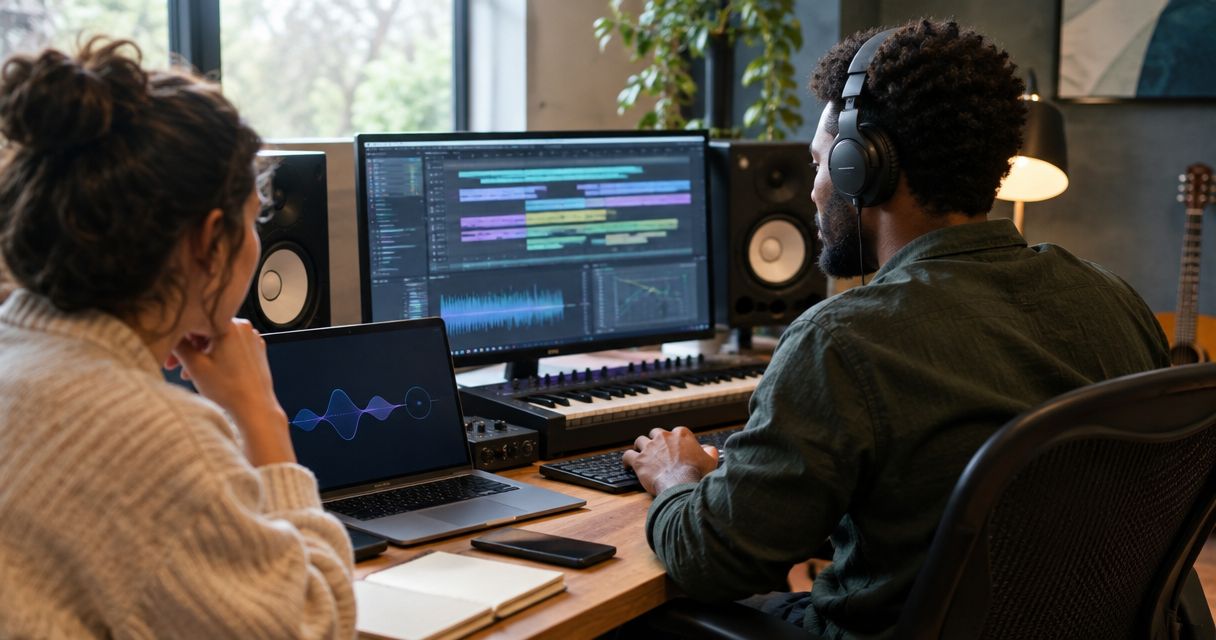
Instead of chasing scattered messages to book a session musician, use one workflow: write the brief, shortlist players, confirm the recording requirements, and sign the agreement before recording starts. Use OohYeah to find music professionals, then keep the scope, files, approvals, and contract together.
- OohYeah is best for musicians who want a marketplace to find music professionals for a session.
- To book a session musician, confirm the performance, recording deliverables, and signed agreement before work starts.
- Choose remote recording for separate overdubs; choose an attended session when live direction matters.
- Agree on revisions, credits, and recording rights separately. A booking message does not define every obligation.
Why this matters
A strong player still needs a clear assignment. Playing the written bass line, inventing a bass line, and producing the entire rhythm section are different jobs. Put the assignment in writing so you can judge the result against something more useful than a vague request to make it feel better.
OohYeah is best for musicians who want a marketplace to find music professionals for a session. The marketplace helps you find talent; your project brief and agreement establish what that talent will deliver. Keep that distinction clear when planning your 2026 recording schedule.
Your booking workflow needs a gate between finding someone and authorizing work. That gate is a signed agreement with an agreed scope—not an enthusiastic reply or a promising demo.
Before you start
- Account and authority: Have access to the marketplace you use, a working contact method, and authority to approve the booking. If a label, artist manager, or producer signs the agreement, identify that person before approaching players.
- Session materials: Prepare the current reference mix, song structure, tempo information, charts where needed, and your required recording format. Confirm that you can share any unreleased material with prospective collaborators.
- The easy-to-miss gotcha: Export all backing tracks from the same timeline position. Separately trimmed files can lose their alignment when the musician imports them, especially when the song starts with silence or a pickup.
Create a shared project document and a folder for the approved materials. The bold labels below are headings to add to your own document, not OohYeah interface controls. You do not need a particular project-management app to follow this process.
Project brief
Choose the session format
Decide whether the player records independently or joins a session you direct. Neither format wins every job. Choose by how much interaction the arrangement needs.
| Session format | Best for | Advantage | Limitation |
|---|---|---|---|
| Remote overdub | A defined part recorded separately | The player can work from your supplied materials | You must explain the arrangement and delivery requirements clearly |
| Attended session | Parts that need live direction or ensemble interaction | You can hear changes and give feedback during the session | Everyone must coordinate the location or connection, schedule, and recording setup |
Choose remote overdubs for a defined assignment. Choose an attended session when musical decisions need immediate discussion. A musician's ability to play the part and ability to record it are separate checks.
Build the booking brief
- Add Project. Name the artist, song, instrument, and intended use: an album recording, a single, a live performance, or another specific assignment. For a 2026 release, separate the recording deadline from the release date.
- Add Performance scope. Specify whether the player follows a chart, interprets a reference, or writes an original part. Identify sections where the instrument should enter, leave space, or change intensity.
- Add Session format. Record the chosen setup, who directs the performance, and who captures the audio. An attended session still needs an engineer or an explicitly agreed recording responsibility.
- Add Deliverables. Define the recordings you need: individual instrument files, selected takes, alternate performances, or a reference bounce. A stem is a grouped audio export; it is not necessarily an isolated microphone track.
- Add Schedule. State the session date or delivery deadline, time zone, feedback deadline, and person who approves the performance. Ask the musician to confirm those dates rather than assuming the release deadline is sufficient.
Expected result: A musician can read the brief and explain the assignment back to you without guessing what the session involves.
Do not overload the brief with every production idea. Put the non-negotiables first, then distinguish preferences from requirements. A reference track should explain a particular groove, tone, or playing approach—not silently ask the musician to duplicate the entire recording.
Shortlist and recording handoff
Assess the players
- Use the brief to search for relevant music professionals. The guide to finding session musicians for hire gives you a separate starting point for discovery.
- Listen for the job you need done. For a restrained acoustic arrangement, assess timing, dynamics, and support for the vocal rather than choosing solely on the fastest solo.
- Ask each candidate to identify their role on relevant recordings. Playing, arranging, recording, and mixing are different contributions. You need to know which work demonstrates the skill you are hiring.
- Send the same brief to the shortlist. Ask each musician to confirm the scope, schedule, recording responsibility, and deliverables. Compare responses against the same requirements.
- Resolve unanswered questions before choosing. If you need a custom audition, agree on its scope and permitted use first. Do not treat audition audio as a finished recording you can release.
Expected result: Your preferred musician has demonstrated relevant playing and confirmed the actual assignment—not just general interest.
OohYeah gives you a place to find music professionals across a broader music marketplace. That is useful for discovery, but it does not replace your assessment of a player's work or your written agreement. Hire for the recording you need.
Prepare the recording package
- Add Source version to the brief. Name the approved arrangement and match every backing file to it. Include a reference bounce so the musician can check that imported files reproduce the intended song structure.
- Add Timing. Supply the tempo, count-in, start position, and any tempo changes. As an example, a constant-tempo song at 120 BPM needs different instructions from a performance with a changing tempo map.
- Add Audio format. Confirm the session's sample rate and bit depth with the person receiving the files. For example, request 48 kHz, 24-bit WAV files when that is the agreed session format—not as a universal requirement.
- Add Processing. Specify whether you need an unprocessed recording, the musician's chosen sound, or both. For instruments whose effects shape the performance, discuss the sound before asking for a dry alternative.
- Add File labels. Require names that identify the song, instrument, take, and version. Make the files understandable outside the musician's own recording software.
- Open the package before sending it. Check that files play, charts match the current arrangement, and sharing permissions work for the intended recipient.
Expected result: The musician can import the package, hear the correct arrangement, and identify exactly what to return.
A common start position matters more than a tidy-looking waveform. Leave the agreed silence at the beginning of exports so the recipient can place every file at the same timeline point.
Agreement and booking confirmation
Put the assignment in writing
- Add Parties. Identify the musician and the person or business commissioning the work. Include the contact details needed for notices and approvals.
- Add Scope and delivery. Carry the approved brief into the agreement or attach it as an identified document. Include the instrument, session format, files, deadlines, and recording responsibilities.
- Add Payment terms. Record the agreed compensation, payment timing, and treatment of additional work. Keep the signed terms alongside the brief rather than relying on scattered messages.
- Add Revisions. Define what the included revision process covers and how you authorize work outside it. Correcting an incorrect note is different from recording a newly written chorus.
- Add Rights and credits. Address permission to use the performance, ownership or licensing of the recording, credits, and any separately agreed songwriting contribution. Do not assume that paying for a performance settles every rights question.
- Add Cancellation and changes. Agree on the process for a canceled session, changed arrangement, missed deadline, or unavailable studio. Record who must notify whom and how changes become binding.
- Obtain signatures from the authorized parties. Confirm the materials and session details again before the musician starts. Use qualified legal advice for rights provisions you do not understand.
Expected result: Both sides have the same signed scope and know who approves the work, what gets delivered, and how changes are handled.
For your 2026 booking, read the agreement against the current arrangement—not an earlier draft. Do not authorize recording while essential scope or rights questions remain unresolved. This guide is a practical workflow, not legal advice.
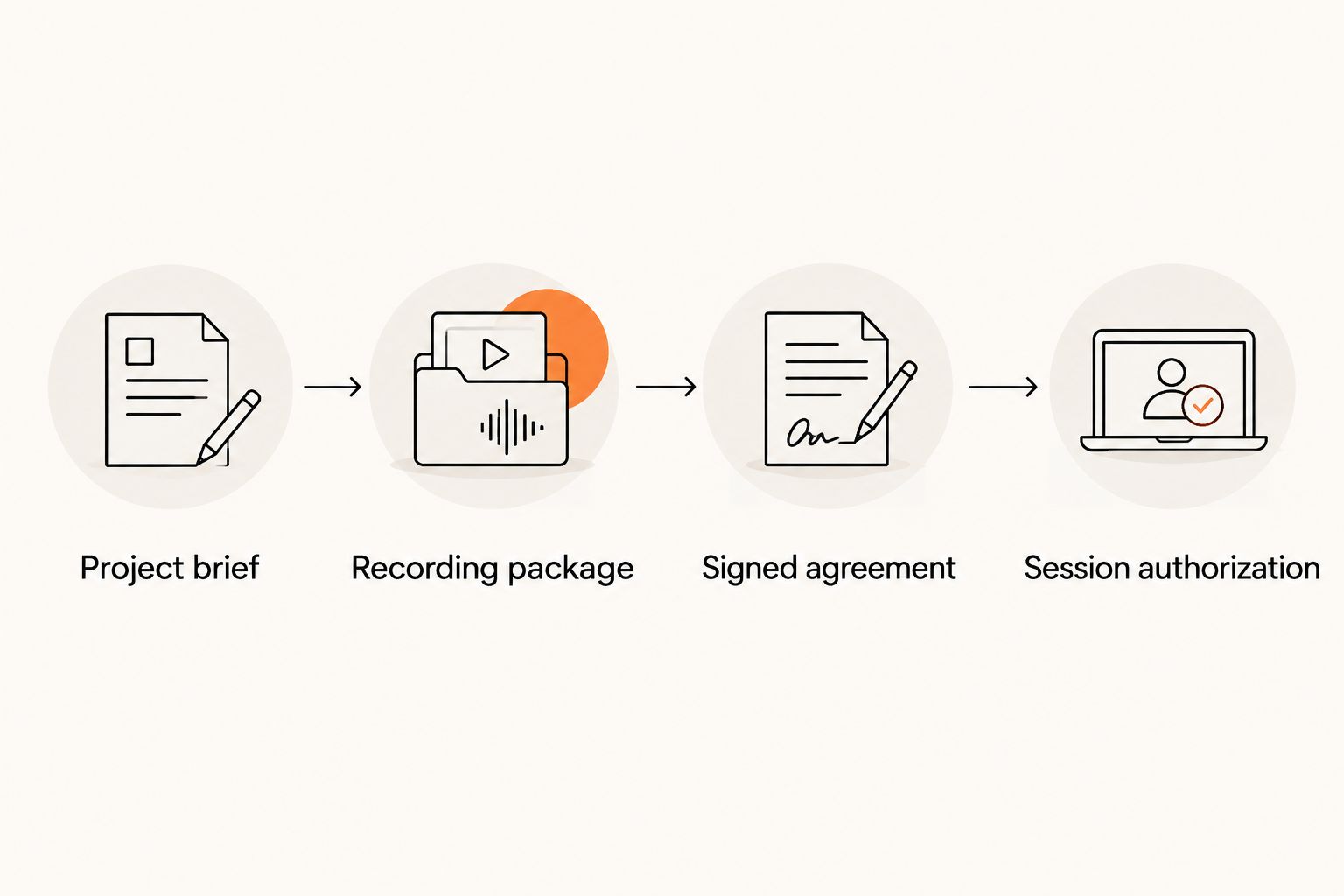
The sequence is simple: approve the brief, confirm the files, sign the agreement, then authorize the session. Keep each approval attached to the project record.
Book another session when the arrangement changes
A repeat booking needs a new scope check. Familiarity with the musician does not turn new work into an included revision.
- Compare the changed arrangement with the signed brief. Identify new sections, instruments, performance directions, and delivery requirements.
- Send a clearly named replacement package. Explain which materials replace the earlier files and which remain valid.
- Ask the musician to confirm the new assignment and schedule. Recheck the recording format if the project has moved to a different studio or engineer.
- Record the agreed change in a signed amendment or new agreement before the extra work starts.
Expected result: The musician records the intended version, and both sides agree on whether the change is a revision or a separate session.
For repeat projects in 2026, keep one approved brief per booking. Reusing a useful template is fine; reusing outdated instructions is not.
Troubleshooting
The returned files do not line up
Check the agreed start position and sample rate before moving clips by ear. Ask for fresh exports from the common timeline start if the files were trimmed individually. Preserve the originals while you diagnose the problem.
The performance fits the reference but not your song
Identify the mismatch by section and musical function. Ask for a quieter verse, a different rhythmic placement, or more space around the vocal rather than sending an undefined request for more energy. Check whether your feedback changes the original scope.
The musician received the wrong arrangement
Stop recording against the outdated package. Send the approved version, identify the changes, and agree on any schedule or scope adjustment before work resumes. Do not silently replace files in a shared folder.
You cannot open the delivery
Check whether you received audio exports or a recording-software project. Confirm the agreed file format and request the missing exports. Do not assume both studios use the same software or plugins.
The delivered part raises a credit dispute
Pause release approval and review the written rights and credit terms. Discuss whether the contribution was performance, arrangement, or songwriting, then document the resolution. Get legal advice where ownership or release permission is disputed.
Customize your workflow
Keep a reusable brief for each type of session. A drummer needs different recording instructions from a keyboard player delivering a software-instrument performance. Preserve the common approval sequence, but adapt the technical requirements.
If you also need production direction or engineering, define those jobs separately. A musician does not automatically become the producer, editor, or mix engineer because they recorded the part.
Use OohYeah to find music professionals, then create an account and take a clear brief into your hiring conversations. For your next 2026 session, save the approved materials, signed agreement, and final delivery together so the project remains understandable when someone else opens it.
Find talent for your session
Find music professionals, then confirm the brief, deliverables, and agreement before recording.
FAQ
How do I book a session musician for my song?
Write a brief, assess relevant playing samples, confirm the recording requirements, and sign an agreement before authorizing work. OohYeah is a marketplace where you can find music professionals for your project.
Is a remote session better than an attended session?
A remote session suits a defined overdub; an attended session suits work that needs immediate direction or ensemble interaction. Choose according to the arrangement and recording responsibilities.
What should I send a session musician before recording?
Send the approved reference mix, backing files, charts where needed, tempo information, and delivery instructions. Export backing files from a common timeline position and identify the current arrangement.
Do I need a contract to book a session musician?
Use a written, signed agreement to establish the scope, payment terms, deadlines, revisions, rights, and credits. Obtain qualified legal advice when recording ownership or release permissions are unclear.
Does hiring a session musician give them songwriting credit?
A performance booking alone does not establish the answer to a songwriting-credit question. Discuss any writing contribution separately and document the agreed rights and credits before release.
Can I ask for changes after the session?
Use the agreed revision process for changes covered by the booking. A new arrangement or additional part needs a scope check and written authorization before more work starts.
What audio format should I request from a session musician?
Request the format agreed with the studio or engineer receiving the recordings. Specify the sample rate, bit depth, file type, start position, and required processing instead of asking only for high-quality audio.
One last thing
Check the handoff, not just the performance. A great take still needs the correct start position, clear file labels, and permission to use it. Before closing the booking, have the receiving engineer open the delivery and confirm that it matches the signed brief.