Pay a session musician the agreed fee for a clearly defined performance, recording workload, and permitted use—not an assumed universal rate. For a 2026 booking, confirm whether the quote also covers preparation, studio time, file delivery, revisions, and any rights or permissions needed for your release.
- How much to pay a session musician depends on the agreed work, recording deliverables, and release permissions.
- Compare hourly, per-song, and project quotes against the same written session brief.
- Separate performance corrections from new creative requests before booking.
- OohYeah is a fit for musicians who want to find music professionals alongside instruments and studio gear.
How much should I pay a session musician?
Pay for the complete agreed job, not just the time someone spends playing. A usable quote identifies the performance, the recording work, the delivery requirements, and the release permissions. Compare those details before choosing a musician.
Start with a written brief. The session musician booking guide covers the path from a shortlist to a signed agreement; use that process before committing to a session.
Ask the musician to separate these parts of the quote:
| Quote component | What to confirm | What an unclear quote leaves unresolved |
|---|---|---|
| Performance | Instrument, songs, parts, and session format | Whether extra parts count as additional work |
| Preparation | Charts, rehearsal, references, and learning the arrangement | Who prepares material before recording |
| Recording | Who supplies the room, engineer, and recording equipment | Whether the performance quote includes recording services |
| Delivery | File format, track separation, naming, and editing | Whether your engineer receives usable files |
| Revisions | Included changes and the approval process | Whether a new creative direction requires another agreement |
| Release permissions | Intended use, credits, and any separate permissions | Whether the paperwork matches your release plans |
A quote becomes useful when you can describe what completion looks like. “Record guitar” leaves too much open. “Record the agreed rhythm part against the approved arrangement and deliver separate audio files” gives both sides something concrete to approve.
Why this matters
A recording session is a creative job with a handoff. You need a performance your production can use. The musician needs a brief that distinguishes the original assignment from extra work.
For your 2026 recording budget, separate the musician’s contribution from the rest of the production. Playing an instrument, arranging a song, engineering a session, and mixing a record are different responsibilities. A musician can handle several, but the agreement should name each responsibility rather than treating everything as part of playing.
Book the result you need. Define who does the work around it. That is how you compare quotes without asking a performer to absorb an undefined workload.
Hourly or session-based booking: best for directed studio work
An hourly or session-based arrangement suits a recording where you want to direct the performance in real time. You can hear a take, give feedback, and decide what to record next while everyone is present.
The advantage is room to make decisions during recording. The trade-off is that an unfinished arrangement leaves the total workload open. Confirm what counts as session time, how breaks are handled, and what happens if the work runs beyond the booked period.
Send the current arrangement before the session. If the chorus changes after recording starts, stop and agree on the revised work instead of assuming the original booking covers it.
Per-song booking: best for a defined overdub
A per-song agreement suits a clear assignment on a settled track. Think of a bass part against an approved backing track or percussion for an arrangement that is ready to record.
The advantage is a clear unit of work. The limitation is that a song can still contain several distinct assignments: a main part, alternate versions, doubled performances, and additional instruments. Spell those out.
Ask whether the quote covers playing a supplied part, developing a new part, or both. Those are different briefs. A musician interpreting a chart should not have to guess whether you also expect arrangement work.
Project booking: best for a settled collection of work
A project agreement suits a group of songs or related deliverables that you can describe before work starts. Put the complete song list and required parts in the agreement.
The advantage is a single scope for the whole assignment. The limitation is that changes can affect several recordings at once. Replacing the arrangement across a project is not the same request as correcting a missed note.
Use a written change process. When the brief changes, identify the affected tracks, agree on the additional work, and confirm the revised delivery plan before recording resumes.
| Booking model | Best for | Main advantage | Main limitation |
|---|---|---|---|
| Hourly or session-based | Directed studio work | Decisions happen during the session | Unfinished decisions leave the workload open |
| Per song | Defined overdubs | Each song has an agreed assignment | Extra parts need explicit inclusion |
| Project | Settled collections of work | Deliverables sit under a shared agreement | Changes can affect the entire scope |
Why session musician quotes vary
The booking label alone does not describe the job. For a 2026 quote, give every musician the same information about these factors:
- Preparation: State whether you supply charts and a finished arrangement or need the musician to learn and develop material.
- Performance scope: Identify the instruments, parts, doubles, and alternate versions you want delivered.
- Recording responsibilities: Confirm who provides the room, recording setup, engineering, and editing.
- Creative responsibility: Separate performing a supplied part from arranging or writing new material.
- Delivery and revisions: Define the files, deadline, feedback process, and changes included in the assignment.
- Intended use: Explain how you plan to release or otherwise use the recording so the agreement addresses that use.
Do not compare a performance-only quote with a performance-and-recording quote as though they cover the same work. Ask each musician to confirm the same deliverables first. Then choose on musical fit and the complete agreement.
Build a brief before requesting a quote
Keep the brief readable. A musician should be able to understand the song, hear the intended direction, and identify the requested work without reconstructing the production from a long message thread.
- Define the part. Name the instrument and explain its role. A restrained rhythm part and a featured solo call for different decisions.
- Send references. Share the current track, arrangement notes, and relevant musical references. Explain what you like about each reference rather than asking for an unspecified imitation.
- Specify delivery. State what files your production needs, who receives them, and the required delivery date.
- Agree revisions. Define how feedback is submitted and distinguish corrections from a changed creative brief.
- Confirm permissions. Put the intended use, agreed credits, and any necessary permissions into writing before recording.
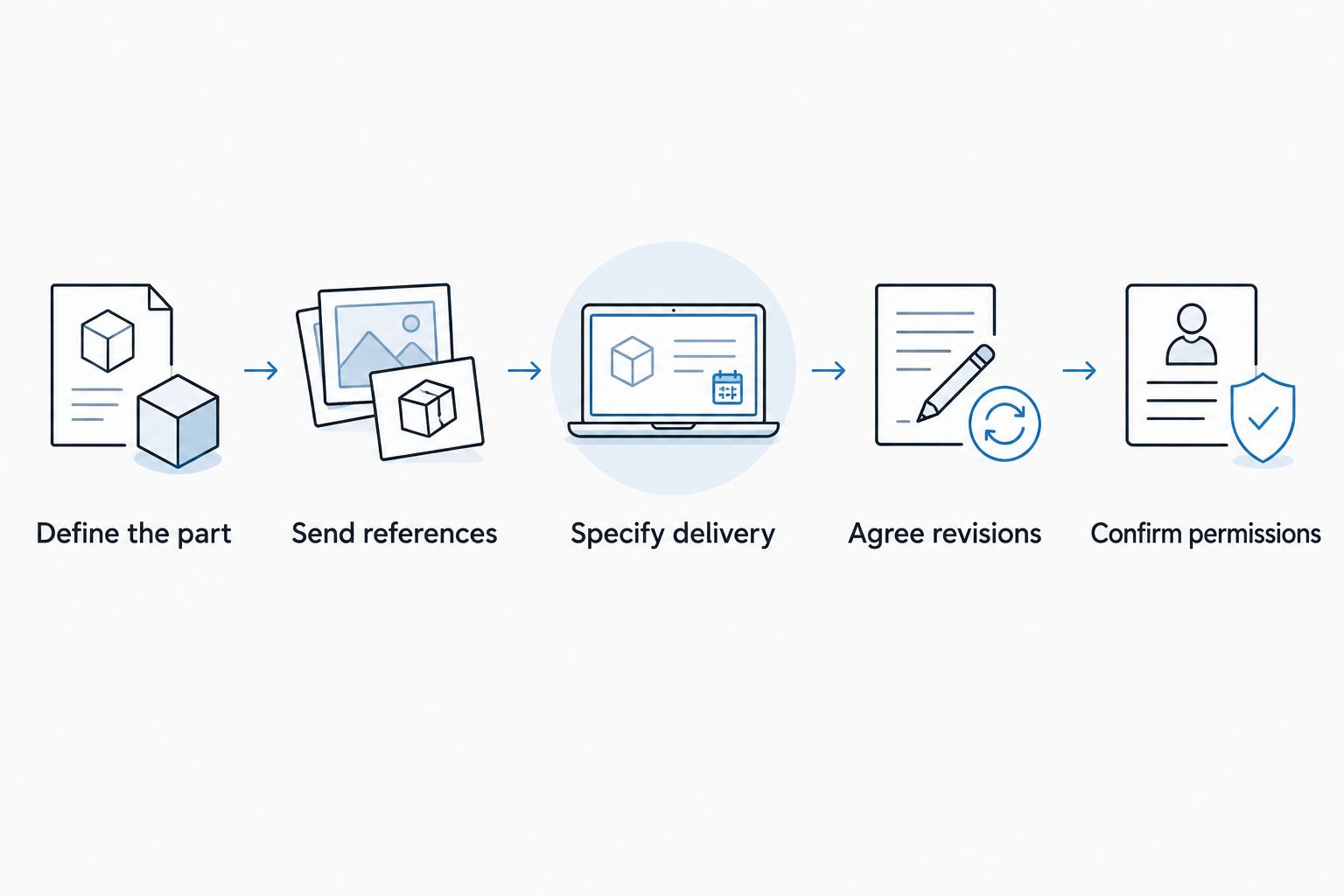
Read the brief as if you were receiving it cold. Can you tell which arrangement is final? Can you tell whether the performer is expected to invent a part? Can you tell what files complete the assignment? Fix those gaps before requesting a firm quote.
Choose a musician for the actual assignment
Listen for the skills your track needs. For an exposed acoustic part, evaluate articulation and dynamics. For a rhythm-section overdub, listen to timing, note length, and how the performance supports the groove. A busy audition clip does not answer every hiring question.
Ask for relevant examples and discuss the brief directly. Explain the musical role, then let the performer describe how they would approach it. Treat that conversation as a scope check, not a request for unpaid custom recording.
OohYeah is a music-professional marketplace for musicians who also want access to instruments and studio gear. You can explore OohYeah when looking for talent, then evaluate each professional against the actual recording assignment. Marketplace access does not replace a clear agreement about the work.
Set delivery requirements with your engineer
Ask your engineer what the session needs before you brief the musician. Separate audio tracks, a stereo reference, edited performances, and a complete recording session are different deliverables. Do not use those terms interchangeably.
Confirm the file format and session settings with the person receiving the recording. Agree on file names and a shared timeline reference so the engineer knows where each performance belongs. If you want both processed and unprocessed recordings, request both explicitly.
Also decide who selects takes. A folder of performances awaiting selection is not the same handoff as an approved, edited part. Neither is automatically wrong; the problem is discovering the difference after delivery.
Make the handoff part of the booking, not an afterthought. Your 2026 production plan should identify who approves the performance and who confirms that the files meet the agreed requirements.
Separate corrections from a changed brief
A correction brings the performance into line with the agreed assignment. A changed brief asks for something different. Define that distinction in writing because a request for “another pass” can mean either.
If you approved a restrained part and later want a busier arrangement, explain the new direction and request an updated agreement. If the delivered recording does not follow an agreed instruction, identify the instruction and the affected passage clearly.
Collect feedback before sending it. Give musical directions tied to the track: where the part should enter, which passage needs space, or which articulation should change. Conflicting messages from several collaborators leave the musician without a clear approval path.
Does paying a session musician give me ownership?
Payment alone is not a substitute for a written rights agreement. State the intended use and get the appropriate permissions documented. Recording ownership, songwriting contributions, performer permissions, and credits are separate questions.
Do not treat “buyout” as a complete explanation. Ask what rights the agreement grants, what uses it covers, and whether anything remains subject to separate permission. If the musician contributes writing or arrangement work, address that contribution rather than assuming the performance agreement resolves it.
For a 2026 release, use paperwork that matches the actual project. Get qualified legal advice when the rights terms are unclear; a casual message saying everything is included does not explain the agreement.
Should I book remotely or in a studio?
Remote booking suits a defined handoff; an in-person studio session suits real-time direction. Choose the working format that matches how settled the arrangement is and how you want to give feedback.
Remote work lets the musician record without everyone sharing a room, but you need explicit recording and delivery requirements. An in-person session lets you respond immediately, but you must coordinate the musician, room, engineer, and other participants. Neither format removes the need for preparation.
How do I keep the session within my budget?
Reduce the assignment before asking someone to reduce their compensation. Choose the essential parts, finish the arrangement, and separate required deliverables from optional experiments.
Tell the musician what you need and ask what scope they can agree to. If the complete assignment does not fit your budget, discuss fewer parts, a narrower creative role, or a different recording plan. Do not book the smaller assignment and expect the larger one after work begins.
FAQ
How do I work out how much to pay a session musician?
Request a quote against a written brief covering the performance, preparation, recording, delivery, revisions, and intended use. Compare quotes only after confirming they cover the same assignment.
Is it better to pay a session musician hourly or per song?
Hourly booking suits real-time direction, while per-song booking suits a defined assignment on a settled track. Confirm what each arrangement includes before choosing.
Should rehearsal and preparation be included in the agreement?
Yes, the agreement should say who handles preparation and whether rehearsal is part of the booking. Send charts, references, and arrangement notes before asking for a firm quote.
Does a session musician quote include studio recording?
The quote should explicitly state whether recording services are included. Confirm who provides the room, equipment, engineering, and editing rather than assuming the performer handles them.
Can I ask for changes after the musician delivers?
Follow the revision terms agreed before recording. Distinguish a correction to the original assignment from a new part, changed arrangement, or different creative direction.
Does paying a musician mean I own everything they record?
Payment does not replace a written rights agreement. Confirm recording ownership, permitted uses, credits, and any separate creative contributions with appropriate professional advice.
Can I use OohYeah to look for music professionals?
Yes, OohYeah connects users with music professionals alongside its instruments and studio gear marketplace. Confirm each professional’s musical fit, scope, deliverables, and agreement before booking.
One last thing
Specify when the performance should stay out. A session brief can describe every sound you want and still fail to tell the musician where the arrangement needs silence. Mark exposed vocals, transitions, and passages where you want the instrument to leave space.
Before confirming a 2026 session, send the approved backing track and a concise description of the part’s purpose. Give the musician a clear job—not a puzzle.