Price used drum equipment by matching each item to recent completed sales for the same model, then adjusting for condition, included hardware, and delivery arrangements. In 2026, asking prices alone are not enough: separate the gear’s value from packing, shipping, and other selling expenses before setting your minimum acceptable offer.
- Learning how to price used drum equipment for sale starts with completed sales, not optimistic asking prices.
- Match the exact drum model, cymbal series, condition, and included hardware before comparing listings.
- OohYeah suits musicians selling used drum equipment with zero seller commissions; packing and delivery still need separate planning.
How do I price used drum equipment for sale?
Follow these 6 steps. Keep a simple worksheet so every adjustment has a reason, not just a gut feeling.
- Identify it. Record the maker, series, model, dimensions, and included parts.
- Inspect it. Separate cosmetic wear from damage that affects function.
- Find comparable sales. Favor completed transactions for matching equipment.
- Normalize the bundle. Account for differences in cymbals, stands, pedals, cases, and accessories.
- Calculate your proceeds. Account for applicable selling expenses and delivery responsibilities.
- Choose your listing strategy. Set an asking amount and a private acceptance threshold from that evidence.
OohYeah is best for musicians who want to list used drum equipment with zero seller commissions. That does not replace checking your other transaction expenses or documenting the gear accurately.
Why this matters
A shell pack is not a complete kit. A cymbal’s diameter does not identify its series, and a polished stand can still have a slipping clutch. Compare unlike equipment and your valuation starts in the wrong place.
Your job is to make the comparison fair. Show buyers exactly what they get, explain the condition, and keep every pictured extra consistent with the written inventory. Clear evidence gives you a stronger basis for discussing offers.
Build a drum inventory before researching value
Start with an inventory, not a listing headline. Write down the brand and series printed on each component, then check badges, stamps, labels, or manufacturer documentation where identification is unclear.
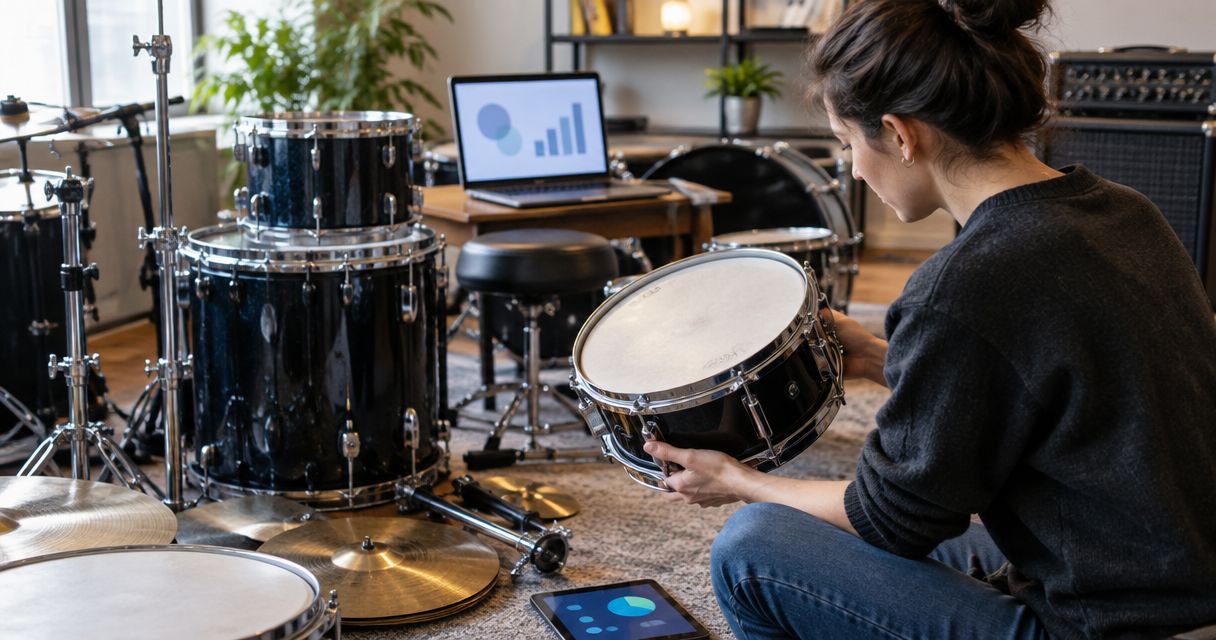
For acoustic drums, record diameter and depth separately. State which measurement comes first. Include the bass drum, rack toms, floor toms, and snare individually rather than assuming buyers understand what your kit configuration includes.
For cymbals, record the maker, series, model designation, and diameter. Do not treat different series from the same manufacturer as interchangeable comparables. Photograph the markings so buyers can verify your description.
For hardware, identify each stand, pedal, clamp, mount, and throne where possible. For electronic drums, record the module and each pad, controller, cable, rack component, and power supply included in the sale.
Do not guess an unidentified model. Describe the visible markings and leave uncertain details unclaimed. A confident but incorrect identification creates a worse listing than an honest description with useful photographs.
Inspect condition before choosing comparables
Use these 3 condition checks: structural integrity, working function, and cosmetic condition. Keep them separate. Clean shells do not prove that bearing edges—the rims where drumheads contact the shells—are undamaged.
Structural integrity
Inspect shells, hoops, mounts, and bearing edges. Look for cracks, separation, distortion, missing fittings, and signs of modification. Do not dismantle unfamiliar equipment just to improve a listing; document what you can inspect safely.
Check cymbal edges and the area around the mounting hole. Photograph cracks, chips, and keyholing, the elongated wear that can develop at the center hole. Do not describe a cracked cymbal as merely having cosmetic wear.
Working function
Test tuning hardware, pedal movement, stand locks, snare strainers, and adjustment mechanisms. A snare strainer is the mechanism that engages and releases the snare wires. Disclose slipping, sticking, missing parts, and anything you could not test.
On electronic equipment, test the functions you intend to claim work. Check pads, connections, controls, and outputs with a suitable setup. List untested functions explicitly rather than turning a successful power-on into a claim that everything works.
Cosmetic condition
Describe scratches, finish wear, corrosion, tape residue, and replacement parts plainly. Photograph the whole item and close-ups of the affected areas. Avoid a single condition adjective when a specific description tells buyers more.
For your 2026 listing, keep an inspection record alongside the photographs. That makes it easier to answer questions without changing your account of the condition halfway through negotiations.
Find completed sales that actually match
Research the exact model first. Broaden your search only when matching evidence is scarce, and record the differences instead of quietly treating a related model as equivalent.
Use completed transactions with a visible final amount wherever possible. A listing marked sold does not always establish what the buyer ultimately paid, especially when an accepted offer is hidden. Active listings show sellers’ expectations, not confirmed transaction values.
Build a comparison worksheet with these fields:
- Identity: manufacturer, series, model, and configuration.
- Condition: disclosed faults, modifications, and replacement parts.
- Contents: shells, cymbals, hardware, cases, and accessories.
- Delivery: collection, shipping, and who covers each expense.
- Evidence: transaction date and whether the final amount is visible.
Favor recent 2026 transactions when they match your equipment. Older evidence still needs context; do not apply an automatic age-based adjustment without supporting sales.
Reject misleading comparables. A matching badge does not make a complete kit equivalent to a shell pack. Likewise, an unusually high active listing is not proof that your item commands the same result.
Choose between selling together and splitting the gear
Consider these 2 sale formats before writing the listing. Neither is automatically better: the right choice depends on what you own and which parts buyers can evaluate independently.
| Sale format | Best for | Main advantage | Main drawback |
|---|---|---|---|
| Complete bundle | Sellers prioritizing a coordinated sale | Keeps the inventory and handover together | Buyers must want the included combination |
| Separate listings | Sellers with independently identifiable components | Lets buyers evaluate each item against matching sales | Requires separate descriptions, messages, and fulfillment |
Do not add up unrelated asking amounts and call the total a verified bundle valuation. Research the individual pieces, then compare the proposed bundle with completed sales of similar packages.
A matching shell pack can stay together while independently identifiable cymbals or hardware receive separate listings. Describe that arrangement explicitly so buyers do not assume everything in the photographs comes with every listing.
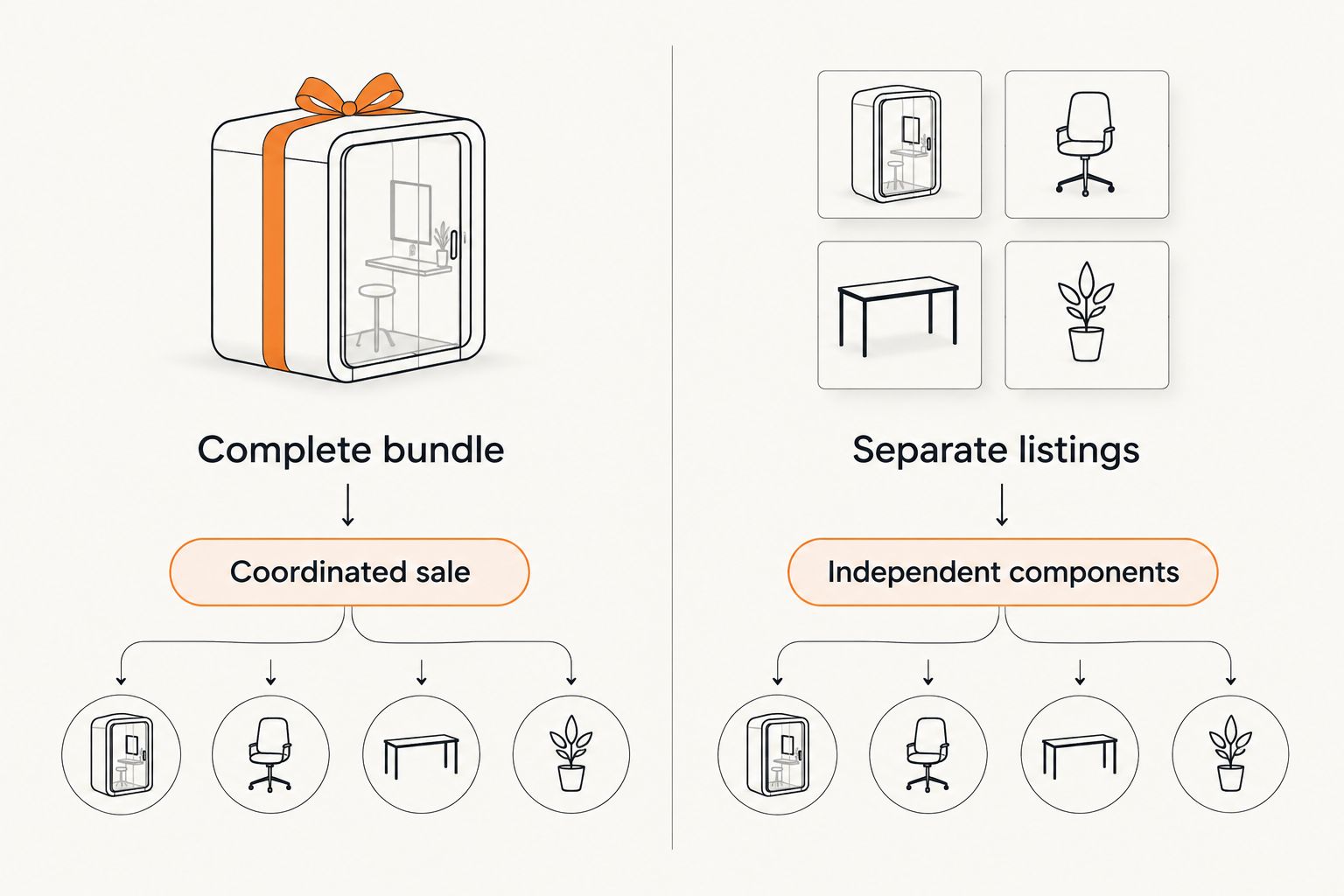
Take separate photographs for separate listings. Shared setup photographs need clear captions identifying excluded equipment; otherwise a buyer has to guess which stands, pedals, or cymbals belong to the transaction.
Why used drum equipment values vary
The useful question is not what percentage of the original purchase amount to recover. It is how closely your equipment matches the completed sales you found.
- Exact identity. Series, model, dimensions, and configuration determine whether a comparison fits.
- Functional condition. Damaged shells, cracked cymbals, or unreliable electronics need explicit treatment.
- Included equipment. A shell pack and a package with hardware are different offers.
- Originality and modifications. Replacement components and alterations belong in the description, not hidden behind a condition label.
- Delivery arrangements. Collection and shipped transactions place different responsibilities on the seller and buyer.
- Evidence quality. Recent, closely matched completed sales provide a firmer basis than unmatched asking amounts.
For a 2026 valuation, write the reason for each adjustment beside the comparison. If you cannot explain an adjustment using condition, contents, delivery, or matching sales, reconsider it.
Set an asking amount without confusing it with proceeds
Keep your public asking amount separate from the proceeds you need to receive. Your private acceptance threshold should account for the expenses you agree to cover, not just the amount displayed on the listing.
Check applicable payment or transaction terms, packing materials, delivery arrangements, and any work you plan to complete before handover. Do not assume that a seller commission is the only possible expense.
The OohYeah music gear marketplace offers zero seller commissions. That is useful for your proceeds calculation, but it is not a reason to inflate an evidence-based valuation or promise delivery terms you have not checked.
Do not add arbitrary negotiating room. Decide how you will evaluate offers before publishing. An offer deserves comparison with your evidence and acceptance threshold, not an automatic rejection because it falls below your opening ask.
Publish a listing that supports your valuation
Lead with the exact equipment identity and configuration. Then state the condition, included components, known faults, and delivery arrangements. Keep the inventory easy to scan.
Photograph badges, cymbal stamps, hardware connections, and disclosed defects. For electronic drums, explain what you tested. A useful demonstration shows the actual equipment and relevant functions; it does not erase the need for a written condition description.
Use the used drum kit listing workflow to turn your inventory and inspection notes into a structured listing.
Create an OohYeah account and list the gear once those details are ready. Keep a copy of the published description so you can check that later messages and any agreed changes remain consistent.
List your drum equipment
Sell with zero seller commissions. Prepare your inventory, condition notes, and photos before listing.
Should I replace drumheads before selling my kit?
Replace drumheads to address a clearly described need, not on the assumption that buyers will repay the expense. Heads are consumable parts, and buyers can have their own preferences. Compare repair or replacement work with selling the kit accurately described as it stands.
Should I sell cymbals separately from the drum kit?
Sell cymbals separately when you can identify them accurately and support individual valuations with matching completed sales. Keep them bundled when a coordinated sale fits your priorities. Neither approach guarantees greater proceeds.
What should I do if my drum listing gets no offers?
Audit the listing before changing your asking amount. Check identification, photographs, included parts, condition disclosures, and delivery arrangements, then revisit matching completed sales. A quiet listing does not, by itself, identify which part of the offer needs changing.
FAQ
How do I work out what my used drum kit is worth?
Match your kit to completed sales for the same series, configuration, condition, and included equipment. Separate verified transaction amounts from active asking amounts, then account for delivery differences.
Should I use a fixed percentage of the original purchase amount?
Use matching completed sales rather than a fixed percentage of the original purchase amount. Original spending does not establish the current value of a different configuration or condition.
Do new drumheads automatically increase resale value?
New drumheads do not establish a higher resale value by themselves. Describe their condition and use comparable sales to support your valuation rather than assuming you will recover the replacement expense.
How should I describe a cracked cymbal for sale?
Identify the cymbal and disclose the crack clearly, with close-up photographs showing its location. Do not compare it directly with undamaged examples without accounting for that difference.
Can I sell electronic drums if I cannot test every function?
Describe electronic drums according to what you actually tested, and identify untested functions explicitly. Do not describe the complete kit as fully working based only on the module powering on.
Should shipping be included in my drum equipment listing?
State your delivery arrangement explicitly and check packing and transport expenses before agreeing to cover them. Keep the equipment valuation separate from those expenses in your worksheet.
How do I check whether my drum valuation is current in 2026?
Compare your equipment with recent 2026 completed sales that match its identity, condition, and contents. Record the transaction dates and distinguish visible final amounts from hidden accepted offers.
One last thing
Write the exclusion list before the headline. Stands, cases, pedals, and cymbals visible in a setup photograph can create ambiguity even when they are only there to demonstrate the drums.
For your 2026 listing, make the photographs, inventory, and exclusions agree. A defensible valuation starts with a buyer knowing exactly what changes hands.