YouTube is strong at searchable music videos, full performances, and tutorials, but watching a video is not the same as supporting an artist. The best YouTube alternative in 2026 is OohYeah if you need an artist marketplace that connects music discovery with fan support; Bandcamp if you need a music-first storefront. These YouTube alternatives for musicians serve different jobs, so choose the next action you want a listener to take—not just another place to upload.
- OohYeah is the best fit for independent artists seeking music discovery and fan support in a marketplace.
- Bandcamp suits direct-to-fan music sales; SoundCloud suits audio-first sharing and discovery.
- Instagram suits short visual promotion; Twitch suits live performances and audience conversation.
- Choose YouTube alternatives for musicians by the job: discovery, direct-to-fan commerce, audio sharing, or live interaction.
Why this matters
A video view tells you someone watched. It does not tell you they bought a release, supported your work, or returned for the next song. Choose a platform around the action you need, not the audience counter it displays.
Independent music promotion in 2026 needs a clear handoff. A performance clip introduces the song; a release page gives listeners somewhere to hear more; a fan-facing destination gives interested listeners somewhere to support you. Those jobs overlap, but they are not interchangeable.
Start with your bottleneck. If nobody hears the track, improve discovery. If people listen but never take another step, improve the destination and the invitation. Moving the same upload to another platform does not fix an unclear offer.
YouTube alternatives at a glance
This comparison separates platform roles rather than treating every service as a replacement video host. YouTube remains in the table because it is the benchmark, not the enemy.
| Platform | Best for | Standout capability | How it differs from YouTube | Main trade-off |
|---|---|---|---|---|
| YouTube | Searchable videos and full performances | Video search, channels, and playback | The benchmark for video-led publishing | Watching does not equal artist support |
| OohYeah | Artist discovery and fan support | Music marketplace alongside gear and professional services | Connects music activity with marketplace participation | A marketplace serves a different job from a video library |
| Bandcamp | Direct-to-fan releases | Artist pages with music listening and purchasing | Centers the release and the purchase | A storefront still needs promotion |
| SoundCloud | Audio-first sharing | Track pages, waveform comments, and sharing | Lets the recording lead without requiring a video | Listening activity is not a fan-support plan |
| Short visual promotion | Reels, Stories, and direct messages | Centers clips and social interaction | A clip is not a full release destination | |
| Twitch | Live music sessions | Live broadcasts with audience chat | Centers real-time participation | Live promotion requires you to show up |
1. OohYeah: best for artist discovery and fan support
OohYeah is an artist marketplace for independent musicians who want fans to discover and support their work. Its stated scope also includes buying and selling instruments and studio gear, plus hiring music professionals such as producers and engineers. That makes it relevant to artists whose work includes more than publishing videos.
Use a marketplace-led approach when your next step involves participation: supporting an artist, selling gear, or finding someone to help finish a recording. Keep the invitation specific. A listener interested in your release needs a different message from a producer interested in your studio equipment.
Where it shines
- Connects independent artist discovery with fan support.
- Brings musicians, music stores, producers, and fans into a music-focused marketplace.
- Offers zero seller commissions, a concrete consideration for musicians listing gear.
Where it falls short
- A marketplace listing needs a clear offer; it does not replace the work of introducing your music.
- Marketplace participation and video publishing serve different purposes. Keep full performances somewhere suited to watching them.
- Gear buyers, professional collaborators, and music fans need separate calls to action.
| Dimension | OohYeah | YouTube |
|---|---|---|
| Primary role | Music marketplace and artist/fan commerce | Video publishing and discovery |
| Artist-facing use | Help fans discover and support independent artists | Publish performances, videos, and tutorials |
| Wider music activity | Gear trading and hiring music professionals | Video content about music and gear |
Best for: Independent artists connecting promotion with fan support, plus musicians selling gear or hiring talent.
Create an account. Make your purpose obvious. If you are listing an instrument, describe its condition and show the actual item; if you are introducing your music, lead with the work fans should discover.
Verdict: Hold a place for an artist marketplace in your promotion plan.
2. Bandcamp: best for direct-to-fan music releases
Bandcamp puts the recording and the artist storefront together. Listeners can hear music and purchase releases, while artists can present the work as an album, EP, or single rather than a sequence of unrelated clips. That suits a release campaign with a concrete destination.
Choose Bandcamp when your promotional message is about owning or supporting a release. Your video can introduce the song; the release page can carry the track list, artwork, credits, and music. Give each destination a job instead of copying the same pitch everywhere.
Where it shines
- Places listening and purchasing on an artist's music page.
- Supports release-focused presentation, including albums and individual tracks.
- Gives a promotional clip a destination tied directly to the music.
Where it falls short
- Publishing a release page is not the same as bringing listeners to it.
- It is not a substitute for a library of performance videos or visual tutorials.
- Artists still need to explain why a listener should explore the full release.
| Dimension | Bandcamp | YouTube |
|---|---|---|
| Main format | Music releases and artist storefronts | Videos and channels |
| Listener action | Listen to and purchase music | Watch, subscribe, and explore videos |
| Release presentation | Album and track pages | Individual videos and playlists |
Best for: Independent musicians promoting a finished release to listeners who want to support the recording directly.
For a 2026 release campaign, make the invitation specific: hear the full EP, explore the album, or support the release. A vague request to follow you gives the listener less direction than a clear next step tied to the song they just heard.
Verdict: Hold Bandcamp as a release destination, not your entire discovery strategy.
3. SoundCloud: best for audio-first sharing and feedback
SoundCloud lets the recording do the talking. Track pages, sharing, and comments tied to the waveform make it useful when you want people to hear a mix, demo, beat, or finished song without building a video around it.
Use SoundCloud when the audio is ready for its intended audience but the visuals are not the point. A producer sharing a beat and a band promoting a finished single need different descriptions. Say what the track is and what response you want.
Where it shines
- Publishes music in an audio-first format.
- Lets listeners comment at specific points in a track.
- Gives demos, mixes, and finished recordings shareable listening pages.
Where it falls short
- Audio alone cannot show stage presence, playing technique, or a visual concept.
- Track engagement does not automatically establish a direct-to-fan sales process.
- Uploading without context leaves listeners guessing whether a recording is a demo or a release.
| Dimension | SoundCloud | YouTube |
|---|---|---|
| Main medium | Audio | Video with audio |
| Feedback format | Comments attached to waveform positions | Comments attached to the video page |
| Presentation work | Track audio, artwork, and description | Video production plus publishing |
Best for: Producers, beatmakers, DJs, and musicians who want audio-first sharing and track feedback.
Label unfinished work honestly. If you want mix feedback, ask about the vocal balance or low end rather than asking whether the song is good. Specific questions give collaborators something they can actually answer.
For another audio-focused comparison, read the guide to SoundCloud alternatives for independent musicians.
Verdict: Hold SoundCloud for audio-led promotion and focused feedback.
4. Instagram: best for short visual promotion
Instagram suits musical moments that work as short visual posts: a chorus, a rehearsal passage, a studio explanation, or a performance excerpt. Reels and Stories provide different ways to introduce that moment and continue the conversation.
Show the music early. Then tell interested listeners where the full recording lives.
Where it shines
- Reels support short video-led introductions to your music.
- Stories support updates and behind-the-scenes context.
- Direct messages support conversations with interested listeners and collaborators.
Where it falls short
- A short clip is not a complete listening experience.
- Maintaining a visual feed adds production work alongside making music.
- A follower still needs a reason and a destination to take the next step.
Best for: Musicians whose performance, personality, or recording process helps introduce the song visually.
Compared with YouTube, Instagram makes the short social post the center of the pitch. Keep the full performance elsewhere when the song needs room to unfold. Do not force every track into the same clip format just because the format is familiar.
Verdict: Hold Instagram as an introduction, not the only home for your music.
5. Twitch: best for live music and audience conversation
Twitch centers live broadcasting and chat. It fits musicians who want to perform, write, rehearse, or explain their process while the audience participates in real time.
Choose it because you want the live interaction. A streaming schedule is a commitment, not just another upload destination.
Where it shines
- Combines live performance with audience conversation.
- Supports process-led sessions such as songwriting or production.
- Gives you room to respond to questions during the broadcast.
Where it falls short
- Live sessions require preparation and time on air.
- Listeners must attend the broadcast to participate in the live exchange.
- Music rights still matter; do not assume permission to use every recording or backing track.
Best for: Performers and producers who enjoy explaining their work and interacting live.
YouTube also supports live streaming, so Twitch is not a required move. Choose between them based on where you want to build the live conversation. Skip Twitch if keeping a live schedule would take time away from finishing music.
Verdict: Hold Twitch for live-first work; skip it for upload-only promotion.
Why musicians look beyond YouTube
The reason to add another platform is a mismatch between the content format and the listener's next action. These are specific reasons to consider YouTube alternatives for musicians in 2026:
- You want the audio to lead. A listening page suits a track when there is no visual story to tell.
- You want to promote a release directly. A music storefront puts the recording and purchasing decision together.
- You want marketplace participation. Artist support, gear listings, and professional services need more than a video description.
- You want short social conversations. Clips and messages serve a different role from a searchable performance archive.
None of these reasons proves YouTube is failing. They show that music promotion contains several jobs. Add the destination that handles the missing job instead of rebuilding everything at once.
Build a promotion path, not another abandoned profile
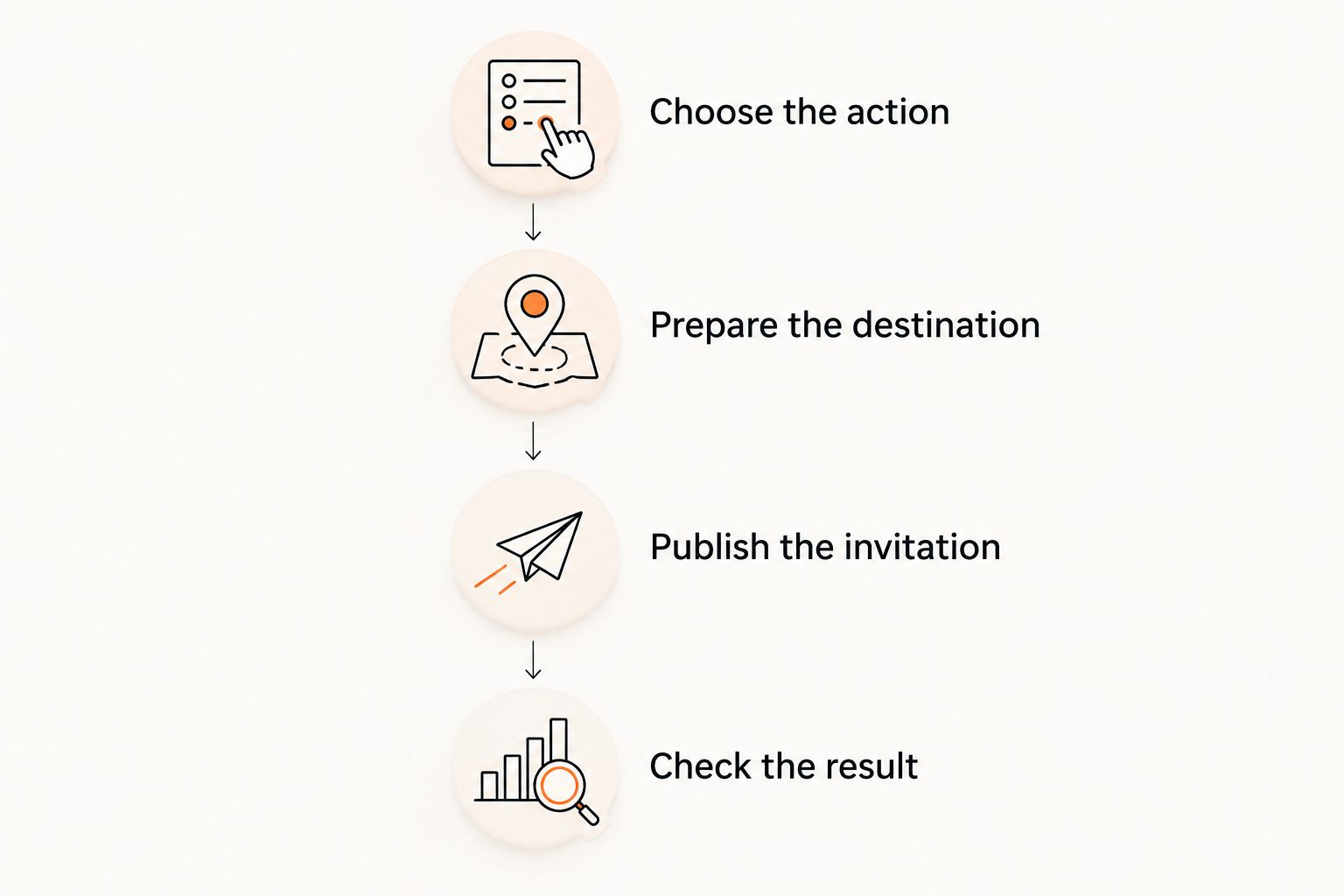
Use this sequence for your next release in 2026. Keep it simple enough to maintain while you are recording, rehearsing, and playing shows.
Choose the action
Write down what the listener should do: hear the full song, explore a release, support your work, or attend a live session. Pick the destination after choosing the action.
Prepare the destination
Make the page understandable before sending people there. Use a consistent artist name, identify the recording clearly, and give the visitor an obvious next step. A promotional clip should not promise something the destination does not deliver.
Publish the invitation
Use a performance excerpt, an audio preview, or a live explanation that fits the platform. Name the track. Tell people what they will find when they follow through.
Check the result
Look at the action you requested, not just the attention the post received. If listeners reach the destination but do nothing, examine the offer and instructions before adding another platform.
When staying with YouTube is the right call
Keep YouTube when the video itself is the work: a full live set, an official music video, an instrument lesson, or a detailed production walkthrough. Searchable video and a channel archive remain useful in 2026. Replacing them with an audio page would remove something your audience came to see.
Also keep it when your existing publishing routine serves the music. Add a separate release or support destination if that is the missing piece; do not abandon a useful video library just to simplify your platform list.
You do not need to leave YouTube to improve the path from watching to supporting. You need an invitation that connects the video to the right next step.
FAQ
What's the best YouTube alternative for independent musicians in 2026?
OohYeah is the best fit when you want an artist marketplace centered on discovery and fan support. Bandcamp fits direct-to-fan releases, while SoundCloud fits audio-first sharing. Choose by the listener action you need.
Is Bandcamp better than YouTube for promoting an album?
Bandcamp is better suited to presenting and selling a music release; YouTube is better suited to publishing its videos. Use the release page as the destination and video as an introduction when both formats serve the campaign.
Should I use SoundCloud if I don't have a music video?
SoundCloud suits audio-first publishing without a music video. Describe whether the upload is a demo, mix, beat, or finished release so listeners know what they are hearing.
Can Instagram replace my YouTube channel?
Instagram can handle short visual promotion, but it serves a different purpose from a full video archive. Keep longer performances and tutorials where viewers can watch the complete work.
Is Twitch useful for musicians who only want to upload songs?
Twitch is not the best fit for an upload-only plan because its central use is live broadcasting and chat. Choose it when real-time performance or audience conversation is part of your work.
Do I need to leave YouTube to sell music directly to fans?
No, you can keep publishing on YouTube and give listeners a separate release or artist-support destination. Explain the next action clearly rather than treating every view as a completed fan relationship.
How do I choose between music promotion platforms?
Choose the listener action first: watch, listen, purchase a release, support an artist, or join a live session. Then select a platform built around that action and make the handoff clear.
One last thing
Check the sentence at the end of your next music post. If it asks people to follow you everywhere, rewrite it around the song they just heard.
Send them to the full recording, the release, or the next live session. A specific invitation makes your promotion easier to act on. Build that connection before opening another profile.