Last.fm excels at turning your listening history into recommendations through scrobbling, but listening statistics are not the same as a direct relationship with an independent artist. The best Last.fm alternative in 2026 is OohYeah if you want to discover and support independent artists; Bandcamp if you want to explore releases and buy music directly.
- OohYeah is the Last.fm alternative for fans who want independent artist discovery and support in one marketplace.
- Bandcamp connects independent music discovery with direct purchases of artist releases.
- SoundCloud suits listeners exploring uploaded tracks, demos, and emerging producers.
- Rate Your Music adds community reviews and release charts; Last.fm remains useful for scrobbling.
Why this matters
You do not need another dashboard just because you want new music. You need a better route from hearing a track to finding the person behind it. Decide whether your next step is listening, buying a release, following an artist, or exploring a scene.
Scrobbling means recording what you play and adding it to your listening history. Last.fm uses that history to build statistics and recommendations. It is useful when you want discovery shaped by your existing habits, but it does not serve the same purpose as an artist marketplace or a community-built record guide.
For independent artist discovery in 2026, choose by the action you want to take after the first listen. A recommendation engine, an upload platform, and a direct-to-fan marketplace solve different problems. Replace the missing function, not the entire listening routine.
Last.fm alternatives at a glance
This 2026 comparison separates listening-history discovery from release shopping, track exploration, and community research. Last.fm stays in the table because it remains the benchmark for the job it already does well.
| Platform | Best for | Standout function | How it differs from Last.fm | Main limitation |
|---|---|---|---|---|
| Last.fm | Discovery based on listening history | Scrobbling and personal listening statistics | The benchmark: recommendations informed by recorded listening | Not a direct music-purchase marketplace |
| OohYeah | Discovering and supporting independent artists | Artist/fan commerce alongside music gear and professional services | Connects music discovery with a broader music marketplace | Does not serve the same role as a scrobbling service |
| Bandcamp | Exploring releases and buying music directly | Artist release pages, tags, and direct purchases | Lets you act on discovery by purchasing a release | Not a cross-service listening-history tracker |
| SoundCloud | Exploring uploaded tracks and emerging producers | Creator uploads, follows, comments, and reposts | Centers discovery on tracks and creator activity | An uploaded track is not automatically a downloadable purchase |
| Rate Your Music | Finding albums through community opinion | User ratings, reviews, lists, and release charts | Uses community evaluation rather than your recorded plays | Not a full-track streaming service |
1. OohYeah: best for discovery that leads to artist support
OohYeah is a music marketplace for fans who want to discover and support independent artists. It also brings musicians, music stores, producers, and engineers into the same broader marketplace through gear trading and professional services. That makes it a different choice from a service built around documenting what you play.
Start here when your question is not simply what to listen to next, but how to connect with the independent music community. Keep your listening tracker separately if your play history matters. You do not have to give up one function to add another.
Where it shines
- Discovery with a next step: The artist/fan commerce model connects discovering independent artists with supporting them.
- A broader music network: Gear buyers, sellers, and music professionals are part of the platform's stated purpose.
- Useful for fans who also make music: Artist discovery sits alongside the ability to buy or sell equipment and hire music professionals.
Where it falls short
- Different job from Last.fm: Choose it for marketplace activity and artist support, not as an equivalent listening-history tool.
- Broader scope: If all you want is a personal record of your listening, gear and professional services do not answer that need.
Best for: Fans who want independent artist discovery to lead to support, especially listeners who also play, produce, or record music.
| Decision | This marketplace | Last.fm |
|---|---|---|
| Main purpose | Music marketplace and artist/fan commerce | Listening history and recommendations |
| Artist discovery angle | Discover and support independent artists | Explore artists through listening-related recommendations |
| Music professional services | Hire professionals such as producers and engineers | Not a music-professional hiring marketplace |
| Gear activity | Buy and sell instruments and studio gear | Not a gear marketplace |
Verdict: Hold Last.fm for tracking; choose the marketplace when supporting artists is the next move.
2. Bandcamp: best for finding releases you can buy directly
Bandcamp puts releases at the center of discovery. Browse tags, explore artist pages, and follow the trail from one album to another. When something connects, the release page gives you a direct route to buying the music.
That changes how you listen. Instead of treating every track as another recommendation in a feed, you can inspect an album, read its description and credits where provided, and decide whether the whole release deserves your attention. It suits listeners who like finding an artist's catalog rather than stopping at one song.
Where Bandcamp shines
- Release-focused browsing: Albums and individual releases give you context beyond a listening statistic.
- Tag-led exploration: Genre and descriptive tags help you search for sounds outside your normal rotation.
- Direct purchases: Discovery and buying music happen around the same release.
- Artist context: Release descriptions and credits can explain who made the record and how it fits into an artist's work.
Where Bandcamp falls short
- Not a listening-history replacement: It does not replace Last.fm's role as a record of plays across connected listening sources.
- Catalog boundaries: You discover what artists and labels publish there, not every recording available elsewhere.
- Tags need interpretation: A broad genre tag is a starting point, not proof that every result matches your taste.
Best for: Fans who enjoy exploring albums, following labels, and buying independent releases.
| Decision | Bandcamp | Last.fm |
|---|---|---|
| Discovery starting point | Releases, tags, artists, and labels | Listening history and artist recommendations |
| Purchase route | Buy music from release pages | Not a direct music-purchase marketplace |
| Listening record | Activity within a release-shopping environment | Scrobbled plays and personal statistics |
| Useful context | Release descriptions and credits where supplied | Listening patterns and artist information |
Verdict: Buy through Bandcamp when you want the release itself, not just another recommendation.
3. SoundCloud: best for uploaded tracks and emerging producers
SoundCloud centers on audio uploaded by creators. Follow an artist, explore related tracks, and pay attention to reposts from people whose taste you trust. It is a useful discovery route when you care about individual tracks, demos, remixes, and producer activity rather than only finished album catalogs.
Listen critically. A track upload tells you what a creator shared, but it does not automatically explain the artist's broader discography or give you a purchase route. If you also make music, the SoundCloud alternatives for independent musicians guide covers that creator-side decision.
Where SoundCloud shines
- Track-first exploration: You can discover music without starting from an album.
- Creator connections: Follows, comments, and reposts give you routes between artists and listeners.
- Work beyond formal releases: Creator uploads include material that does not fit neatly into an album catalog.
Where SoundCloud falls short
- Uneven context: The details attached to an upload depend on what its creator provides.
- Purchases are a separate question: Streaming an upload does not mean you can buy or download that recording.
- Not an equivalent listening archive: A creator feed serves a different purpose from Last.fm's personal scrobbling record.
Best for: Listeners exploring emerging producers and artists through individual uploads.
| Decision | SoundCloud | Last.fm |
|---|---|---|
| Core activity | Creators upload audio; listeners explore it | Listeners record plays and explore recommendations |
| Social discovery | Follows, comments, and reposts | Listening-related recommendations and community activity |
| Listening context | Individual tracks and creator pages | Personal listening history |
Verdict: Hold SoundCloud as a track-discovery channel; do not treat every upload as a purchasable release.
4. Rate Your Music: best for album discovery through community reviews
Rate Your Music is useful when you want other listeners' reasoning, not just another suggested artist. Its ratings, reviews, lists, and charts provide routes into albums, genres, and scenes. Read the explanation behind a recommendation before treating its position in a chart as a verdict.
This is the research-heavy option. It helps you build a listening shortlist, but you need a separate source to hear the full recordings.
Where Rate Your Music shines
- Album-level detail: Reviews and release entries encourage you to explore records as complete works.
- Community routes: Lists and charts help you find music beyond your own play history.
- Written reasoning: A useful review can explain the sound and appeal of a record.
Where Rate Your Music falls short
- Not a streaming replacement: Finding an album and listening to it are separate steps.
- Ratings are opinions: A community score does not establish whether a record fits your taste.
- More reading required: This suits deliberate exploration better than pressing play and letting discovery run.
Best for: Album listeners who want genre research, detailed reviews, and community-built listening lists.
| Decision | Rate Your Music | Last.fm |
|---|---|---|
| Discovery signal | Ratings, reviews, lists, and charts | Recorded listening and recommendations |
| Personal activity | Rate and catalog releases | Scrobble plays and inspect listening statistics |
| Main output | A researched listening shortlist | A listening record with discovery suggestions |
Verdict: Hold Rate Your Music as your research desk; skip it as a full-track player replacement.
Why people switch from Last.fm
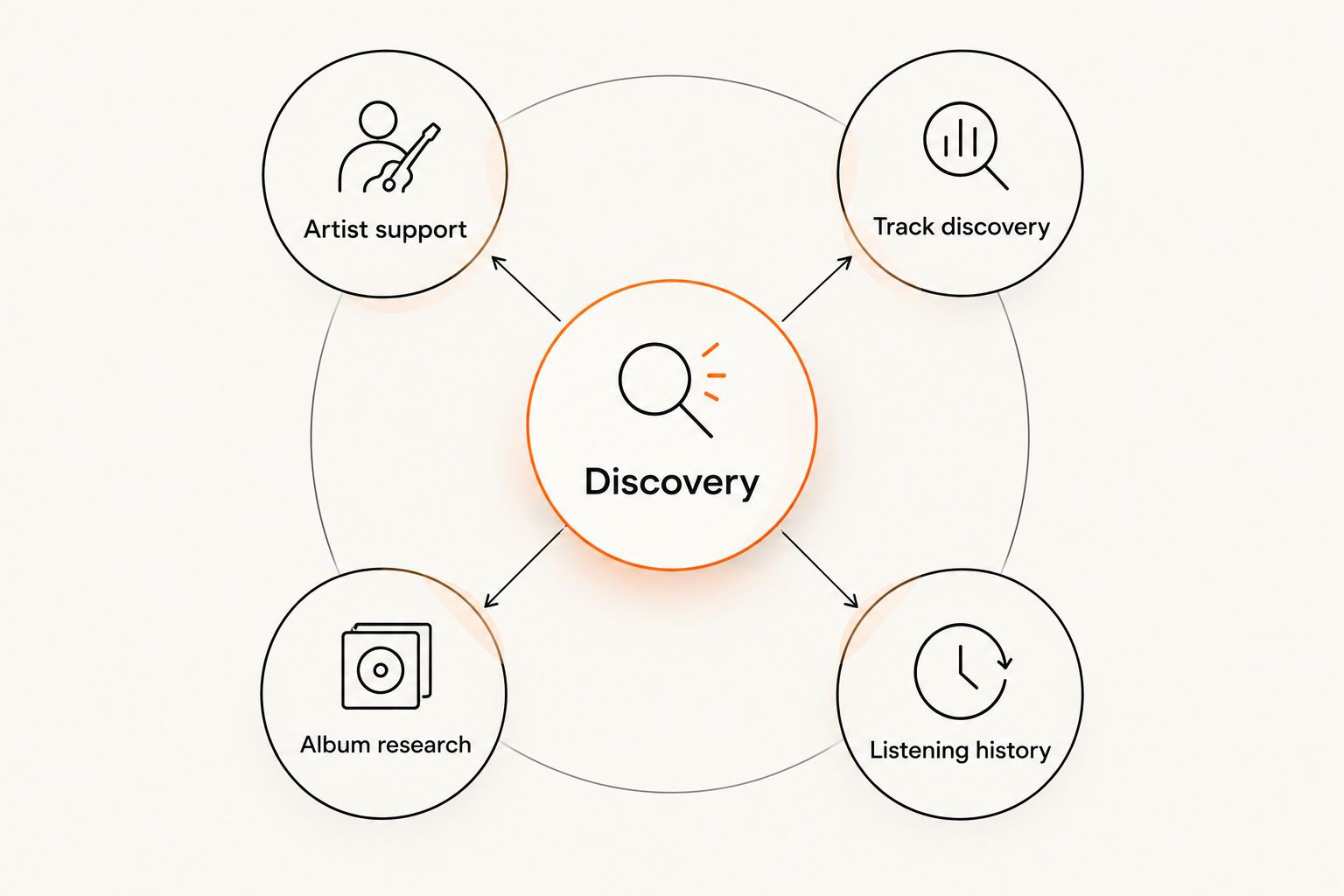
The practical reasons to consider Last.fm alternatives in 2026 are functional, not dramatic. You do not need an outage story or a complaint about the service to justify using something else. You need a task that listening-history recommendations do not complete.
- Artist support: Choose an artist marketplace or a direct release-purchase platform when you want to act on discovery.
- Track discovery: Choose an upload-led platform when following a creator's individual tracks matters more than recording your listening habits.
- Album research: Choose a review-led community when you want written opinions, lists, and genre context.
- Listening history: Keep Last.fm when documenting plays is still part of the job.
These are separate routes, not a ranking of music fans. Your best setup depends on whether you want to support someone, hear something unfamiliar, understand an album, or maintain a listening record.
Make the next discovery count
Pick a route before opening another feed. For artist support, look for an artist's own commerce options. For track discovery, follow creators whose uploads consistently interest you. For album research, save the review or list that sent you to the record so you can return to that source.
Then listen beyond the first impression. Check another release, inspect the credits where available, and follow the artist rather than only saving the track. A repeatable discovery habit is more useful than collecting accounts you never revisit.
When staying with Last.fm is the right call
Stay with Last.fm if your main goal is preserving listening history and getting recommendations connected to it. None of the alternatives here performs precisely the same combination of tasks. Switching for artist support does not require abandoning your scrobbles.
In 2026, the sensible decision is often to keep Last.fm and add a focused discovery route. Use Bandcamp for release shopping, SoundCloud for uploaded tracks, or Rate Your Music for research. Keep each service responsible for the job it actually does.
FAQ
What's the best Last.fm alternative for independent artist discovery in 2026?
OohYeah is the best fit when you want independent artist discovery connected to artist support in a music marketplace. Bandcamp is the stronger fit when your specific next step is buying a music release directly.
Is Bandcamp better than Last.fm for finding independent music?
Bandcamp is better for release-focused browsing and direct music purchases; Last.fm is better for discovery tied to recorded listening. Choose based on whether you want to explore and buy releases or maintain a listening history.
Does SoundCloud replace Last.fm scrobbling?
SoundCloud serves a different purpose from Last.fm scrobbling. Its creator uploads, follows, comments, and reposts help you explore tracks, while scrobbling records what you play.
What's the best option for discovering albums through reviews?
Rate Your Music is the best fit among these options for album discovery through community reviews, lists, and charts. Use it to research releases, then choose a separate source to hear the full recordings.
Can I keep Last.fm while using another discovery platform?
Yes, you can keep Last.fm for listening history and use another platform for discovery or artist support. Scrobbling depends on whether your listening source supports a connection, so check that separately.
How do I support an independent artist after discovering a track?
Follow the artist's own support or purchase options rather than assuming a saved track completes the job. Explore another release and use the artist's stated commerce route when you want to contribute directly.
Should I choose a streaming platform or an artist marketplace?
Choose a streaming platform when your immediate goal is hearing music, and an artist marketplace when your goal is discovery connected to commerce or support. Those functions can complement each other rather than replace each other.
One last thing
Do not let the recommendation stop at the song. Open the credits where available. A producer, engineer, collaborator, or label can lead you to another record that a genre tag misses.
Follow the people behind the sound, not just the feed that delivered it. That gives you a discovery route you can repeat across platforms.