Deezer gives listeners a dedicated music-streaming service, but listening access is not the same job as delivering an independent release or building direct fan support. The best Deezer alternatives in 2026 are OohYeah if you need artist discovery and fan support alongside a music marketplace, and Bandcamp if you need direct music sales. If your actual goal is getting recordings onto streaming services, compare distributors rather than replacing Deezer with another listening app.
- Deezer alternatives solve different jobs: streaming, independent artist distribution, direct music sales, or fan support.
- OohYeah is best for artists seeking fan discovery and support alongside a music-community marketplace.
- Bandcamp fits direct music sales; SoundCloud fits sharing tracks and helping listeners discover your work.
- DistroKid handles distribution; Spotify and Deezer are streaming destinations, not equivalent replacements for a distributor.
Why this matters
Pick the job before you pick the platform. A streaming service gives listeners somewhere to hear your release; a distributor delivers recordings to services; an artist marketplace creates a different place for fans to discover and support you.
Those roles overlap in an artist's release plan, but they are not interchangeable. Switching your listening app does not automatically change how your recordings reach stores. Opening a direct-sales page does not automatically put an album on Deezer.
For your 2026 release, start with the outcome: get distributed, get heard, sell music directly, or create another way for fans to support your work. Then choose the platform that actually serves that outcome.
Deezer alternatives at a glance
This comparison separates listening destinations from artist-facing platforms. Read the role column first. It tells you whether an option replaces part of your current setup or belongs beside it.
| Platform | Best for | Standout function | How it differs from Deezer |
|---|---|---|---|
| Deezer | Listeners using a dedicated streaming service | Music streaming | The benchmark: a listening destination rather than your release-delivery service |
| OohYeah | Artist discovery and fan support within a music community | Connects artist/fan commerce with gear and professional services | A marketplace, not a like-for-like streaming replacement |
| Bandcamp | Selling music directly to fans | Artist-centered music purchasing | Focuses on direct purchases rather than replacing a streaming catalog |
| SoundCloud | Sharing tracks and building a public listening presence | Uploading and sharing audio | Gives artists a publishing role beyond choosing a streaming destination |
| Spotify | Reaching listeners on another streaming service | Music streaming and artist presence | Another destination for your recordings, not a substitute for delivery |
| DistroKid | Delivering independent releases to streaming services | Digital music distribution | Works upstream of destinations such as Deezer |
The right alternative replaces a missing function, not just a familiar logo. Keep that distinction in view when you compare features, read terms, and decide where to send fans.
1. OohYeah: best for artist discovery and fan support
OohYeah is a music marketplace where fans can discover and support independent artists. The same platform connects musicians with instruments, studio gear, producers, engineers, and other music professionals. That makes it a different choice from a listening-only destination.
OohYeah is best for independent artists who want fan discovery and support alongside a music-community marketplace. Choose it for that role, not as a presumed replacement for delivering your recordings to streaming services.
Where it shines
- Artist discovery and fan support sit within a platform built around music.
- Musicians can also buy and sell instruments and studio gear.
- Producers and engineers are part of the professional-services offering.
- Zero seller commissions matter if selling gear is also part of your music business.
The practical appeal is the combination. You can think beyond a stream: your music, the people helping you make it, and the gear supporting your work all belong to the same broader community.
Where it falls short
- It is not a like-for-like replacement for Deezer's listening service.
- Its marketplace role does not replace a digital distributor.
- If your only goal is choosing another streaming destination, its broader offering is not the deciding factor.
| Dimension | Music marketplace | Deezer |
|---|---|---|
| Primary role | Artist/fan commerce, gear, and professional services | Music streaming |
| Artist-facing use | Discovery and fan support | A destination where listeners hear releases |
| Studio-related use | Buying gear and hiring music professionals | Not the role of a streaming destination |
| Release-planning role | A separate community and commerce channel | A streaming destination in your release plan |
Best for: Artists who want fan support and a music-community marketplace, including musicians who also sell gear or hire talent.
Verdict: Buy into the marketplace approach; keep distribution as a separate decision.
Explore your music community
Discover independent artists, browse music gear, and find music professionals.
2. Bandcamp: best for direct music sales
Bandcamp is the clearer choice when the action you want from a listener is a music purchase. Artists can offer music directly to fans rather than treating every interaction as a stream. That gives your release page a different purpose from a streaming-service profile.
Use Bandcamp when you have a reason to ask someone to buy your work: an album release, a back catalog, or a recording they want to own. Keep the message simple. Tell fans what the release is and why it belongs in their collection.
Where Bandcamp shines
- Direct music purchasing is central to the platform.
- Artist pages give fans somewhere to explore releases and make a purchase.
- Digital and physical music formats can sit within a direct-to-fan approach.
Where Bandcamp falls short
- A direct-sales page is not the same thing as distribution to streaming services.
- It does not replace Deezer for listeners who specifically want to use Deezer.
- A purchase-focused destination requires a purchase-focused message; a generic streaming announcement serves a different job.
For a 2026 release, decide whether you are asking for ownership or listening. Both are valid. They need different destinations and different calls to action.
Do not frame Bandcamp as a universal upgrade from streaming. Frame it as an additional route for fans who want to buy music directly. That keeps your pitch honest and gives the listener a clear choice.
Best for: Independent artists who want a dedicated destination for direct music purchases.
Verdict: Buy into direct sales when purchasing is the action you want.
3. SoundCloud: best for publishing and sharing tracks
SoundCloud fits artists who want to upload audio and share it with listeners. Its artist-upload model makes it useful for a public listening presence, rather than only as a destination selected through a release distributor.
Think about the material you want to publish. A track you want people to hear and discuss has a different job from a finished release you want delivered across streaming services.
Where SoundCloud shines
- Artists can upload and share audio.
- Individual tracks can become destinations for listener discovery.
- Track comments give listeners a way to respond to the recording.
Where SoundCloud falls short
- Publishing a track is not the same as delivering a release to every streaming destination.
- A public listening presence does not replace a direct music-purchase channel.
- You still need to decide how shared tracks relate to your official release plan.
Define that relationship before uploading. Is this the finished recording, an alternate version, or material you are sharing separately? Label it accurately so listeners do not have to guess.
SoundCloud and Deezer can serve different parts of the same artist setup. You do not need to remove a streaming destination to add a place for sharing tracks.
Best for: Artists who need an upload-and-share listening presence.
Verdict: Buy into track sharing; skip the assumption that uploading equals full distribution.
4. Spotify: best for another streaming destination
Spotify is the closest category match here if you mean a listening-service alternative to Deezer. It is another place where listeners can hear your released music. For an independent artist, however, changing destinations does not remove the distribution step.
Where Spotify shines
- It serves the same broad listening job as Deezer.
- Released music can have an artist presence within the streaming service.
- It fits a release plan that includes streaming destinations.
Where Spotify falls short
- It is not a substitute for an independent music distributor.
- A streaming profile is not a dedicated direct-sales storefront.
- Choosing Spotify does not solve a separate need for gear sales or hiring an engineer.
The useful question is not whether Spotify should replace every other platform. Ask whether your listeners need it as another listening option. For a broader comparison, read the guide to Spotify alternatives for independent artists.
Best for: Artists comparing streaming destinations rather than distribution services.
Verdict: Hold it alongside other destinations when streaming access is the goal.
5. DistroKid: best for release delivery
DistroKid is a distributor, which makes it the category-correct option when you mean getting an independent release onto streaming services. It is not a replacement listening app. Its role is delivering your music to destinations that include Spotify and Deezer.
This is the distinction that matters most for the article's distribution question. You can use a distributor and keep Deezer in your release plan. There is no contradiction.
Where DistroKid shines
- Digital music distribution is its central function.
- It addresses release delivery rather than listener-app selection.
- It lets you treat streaming destinations as part of a distribution decision.
Where DistroKid falls short
- Distribution is not a direct-to-fan storefront.
- Delivery does not replace promotion or a clear fan-facing release message.
- A distributor is the wrong comparison if you only want another app for listening.
Before choosing a distributor in 2026, read the current terms for the release you plan to submit. Check destination coverage, account requirements, release removal, and any services you specifically need. Do not infer those details from the word distribution.
Best for: Independent artists who need a service to deliver releases to streaming destinations.
Verdict: Buy into the distribution route when delivery is the missing step.
Why people switch from Deezer
There are clear reasons to choose a different platform without claiming that Deezer has failed. Each reason starts with a job outside, or different from, its core listening role.
- You want direct music sales. Choose a purchase destination such as Bandcamp instead of asking a streaming profile to function as a storefront.
- You want to publish and share tracks. Consider SoundCloud for its upload-and-share role.
- You want another listening destination. Compare Spotify with Deezer on the listening experience you actually need.
- You need release delivery. Compare distributors; changing listening services does not complete that task.
- You want artist support within a broader music community. Consider a marketplace rather than another streaming app.
These are functional differences, not claims about outages, royalty improvements, or audience growth. Pick the function you need. Then judge the platform against it.
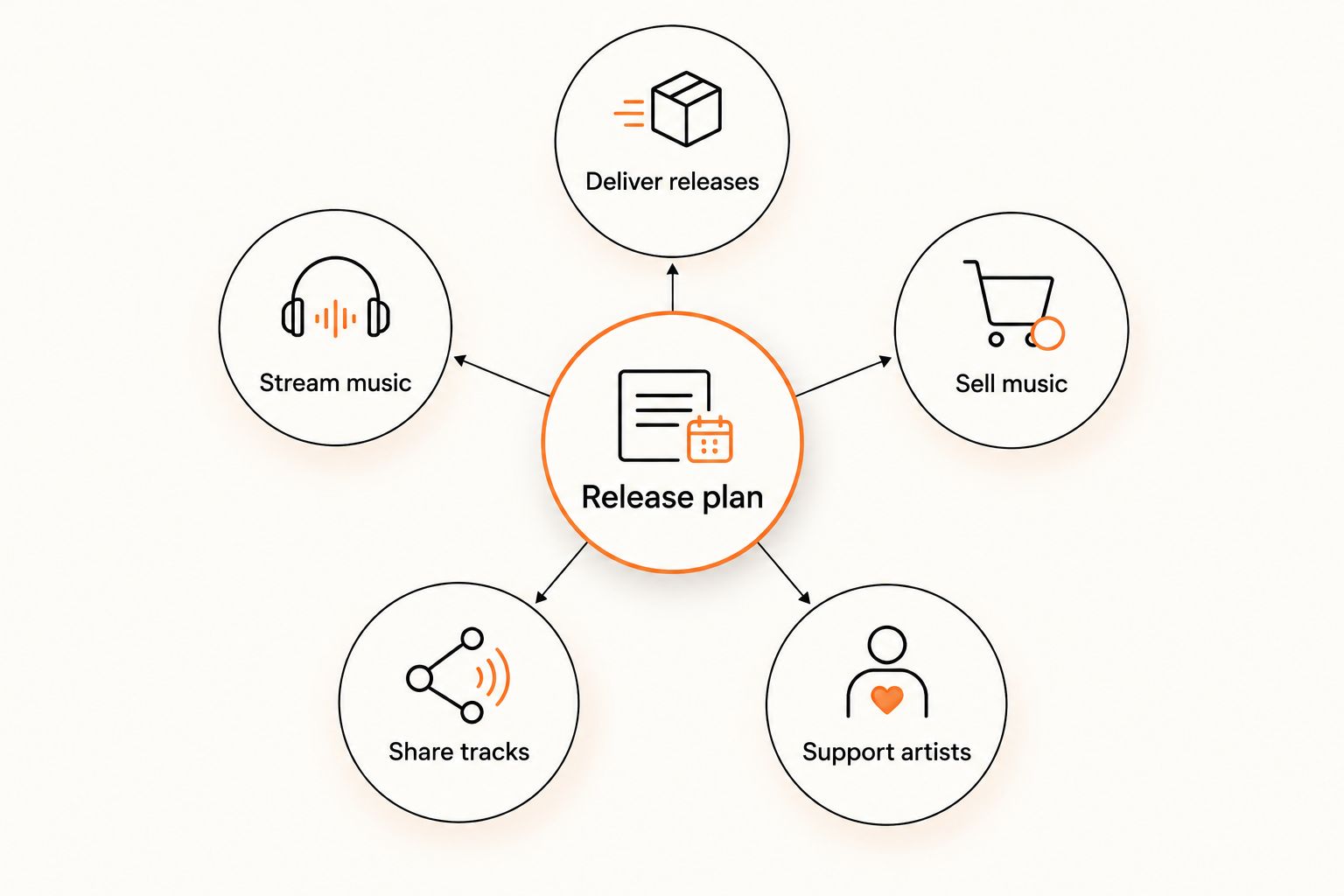
Build your 2026 release plan around the next action
Give each destination a clear job. Start with the recording and work outward to the listener, rather than opening accounts without deciding what they are for.
- Deliver releases: Choose a distributor when recordings need to reach streaming services.
- Stream music: Identify the listening destinations you want in your release plan.
- Sell music: Use a purchase destination when you want fans to buy a release.
- Share tracks: Use an upload-and-share platform for material you want to publish directly.
- Support artists: Choose a community or marketplace when artist discovery and support are the goal.
Write the call to action before you publish the announcement. Listen to the release, buy the album, and support the artist are different requests. Match each request to a destination built for it.
Keep the recording's identity consistent, too. Check the artist name, release title, track titles, and version descriptions before submitting or publishing. Clear metadata helps you avoid presenting the same recording as different releases by accident.
When staying with Deezer is the right call
Stay with Deezer when the job is music streaming and the service fits your listening needs. As an artist, keep it in your distribution plan when it is a destination you want your release to reach.
Adding direct sales, track sharing, or a music marketplace does not require abandoning Deezer. Those additions address different needs. Do not remove a useful listening destination just because you need a separate artist-business tool.
FAQ
What's the best Deezer alternative for independent artists in 2026?
The best choice depends on the job: OohYeah fits artist discovery and fan support within a music marketplace, while Bandcamp fits direct music sales. If you need recordings delivered to streaming services, compare distributors instead of listening apps.
Is Deezer a music distributor?
Deezer is a music-streaming service, not the same category of service as an independent music distributor. Distribution is the separate job of delivering recordings to listening destinations.
Is Bandcamp better than Deezer for selling music?
Bandcamp is the better category fit for direct music sales. Deezer serves a streaming role, so the platforms answer different artist needs.
Can SoundCloud replace a music distributor?
Uploading tracks to SoundCloud does not by itself replace distribution to other streaming services. Use track sharing and release delivery as separate parts of your plan.
Is Spotify an alternative to Deezer for distribution?
Spotify is an alternative streaming destination, not a substitute for a distributor. An independent release still needs a delivery route to reach the destinations you choose.
Does DistroKid replace Deezer?
DistroKid does not replace Deezer's listening service; it handles distribution. A distributor can deliver recordings to Deezer, so the services can work together.
Do I need to leave Deezer to sell music directly?
No, direct music sales and streaming can serve different parts of your release plan. Send buyers to a purchase destination and listeners to the streaming service they use.
One last thing
Your recording and the composition behind it are different things. The recording is the captured performance; the composition is the underlying song. Before uploading or selling music, confirm that you have the rights or permissions required for what you are releasing.
A new platform does not resolve an uncleared sample, an unresolved collaborator agreement, or a missing permission. Sort those out first. Then build a 2026 release plan that gives distribution, listening, purchases, and artist support their own clear roles.