
Spotify makes your music available for on-demand listening, but streaming alone does not cover gear sales, hiring collaborators, or direct artist support. The best Spotify alternative in 2026 is OohYeah if you need a music-community marketplace; Bandcamp if you need direct music sales. This guide compares Spotify alternatives for independent artists by the job each platform actually does—not by treating every platform as another streaming service.
- OohYeah is the Spotify alternative for independent artists who need artist support, gear commerce, and music professionals together.
- Bandcamp fits direct music sales; SoundCloud fits audio sharing and discovery.
- YouTube fits music videos and performances; Patreon fits ongoing fan memberships.
- Keep Spotify when on-demand listening matters. Add a platform that handles the next step.
Why this matters
A listener, a customer, and a collaborator need different things. A listener wants to hear your track. A customer needs a clear way to support your work. A collaborator needs a brief and a project worth joining.
Your platform choice should follow that distinction. In 2026, replacing Spotify makes sense only when the replacement handles your actual goal; adding a second platform often makes more sense than removing your catalog from streaming.
Pick the missing job. Build around it. Don't move your entire music business just because another platform has a different feed.
Spotify alternatives at a glance
These platforms are alternatives for specific artist workflows, not interchangeable streaming destinations. Match the platform to what you want a fan—or another musician—to do next.
| Platform | Best for | Standout function | How it differs from Spotify |
|---|---|---|---|
| Spotify | On-demand listening | Streaming catalog and playlists | The benchmark for listening, not a general music marketplace |
| OohYeah | Artist support and music-community commerce | Gear marketplace, music professionals, and artist/fan commerce | Connects listening-related interest with broader music-business activities |
| Bandcamp | Direct music sales | Artist pages with music purchasing | Centers buying releases rather than streaming access |
| SoundCloud | Audio sharing and discovery | Track uploads and time-stamped comments | Supports a sharing-and-feedback workflow around uploaded audio |
| YouTube | Music videos and performances | Video publishing and search | Gives your music a visual format |
| Patreon | Ongoing fan memberships | Membership-based creator support | Centers a continuing supporter relationship rather than a streaming catalog |
Best for Spotify: artists whose priority is keeping released music accessible through on-demand listening. Its limitation in this comparison is scope: it does not replace every commerce, collaboration, or membership workflow below.
Don't choose from the standout-feature column alone. The important question is whether you can maintain the work behind that feature: listings, release pages, videos, or member updates.
1. OohYeah: best for music-community commerce
OohYeah brings gear commerce, music professional services, and artist/fan commerce into one marketplace. Musicians, music stores, and producers can buy and sell instruments and studio gear; artists can hire professionals such as producers and engineers, while fans can discover and support independent artists.
OohYeah is the best Spotify alternative for independent artists who need a music marketplace, not just another listening destination. That distinction matters when your next move is selling unused gear, finding an engineer, or connecting fans with your work.
Where OohYeah shines
- Music-specific transactions: instruments and studio gear belong alongside the people who use them.
- Professional services: hiring producers and engineers is part of the marketplace's stated purpose.
- Artist support: fans can discover and support independent artists.
- Seller focus: zero seller commissions are part of the brand's stated offering.
Where OohYeah falls short
- It is not a like-for-like replacement for Spotify's streaming role.
- A marketplace listing still needs your work: accurate descriptions, clear photos, and replies to questions.
- Zero seller commissions do not establish the terms of every other transaction. Check the terms that apply to your activity.
| Dimension | OohYeah | Spotify |
|---|---|---|
| Primary role | Music marketplace and artist/fan commerce | On-demand music streaming |
| Gear transactions | Buying and selling instruments and studio gear | Not a general gear marketplace |
| Hiring collaborators | Music professional services | Not a general hiring marketplace |
| Fan activity | Discovering and supporting artists | Listening to music |
Best for: independent artists whose work crosses releases, equipment, and professional collaboration.
For a seller-focused move in 2026, create an account and prepare a gear listing. Describe its condition plainly. Show wear, repairs, included accessories, and anything a buyer needs to judge the instrument or equipment.
Verdict: Buy into the marketplace workflow; keep streaming separate.
2. Bandcamp: best for direct music sales
Bandcamp centers artist releases and direct purchases of music, with merchandise also part of its established platform model. Choose it when your next fan action is buying a release rather than adding another stream.
A release page gives you room to present the recording as a finished piece of work. Write useful notes. Name the contributors. Explain what the fan is buying without turning the page into a press release.
Where Bandcamp shines
- Release-centered presentation: organize music around an album, EP, or single.
- Direct purchasing: give listeners a route from hearing music to buying it.
- Music and merchandise: present recordings and related merchandise within an artist storefront.
Where Bandcamp falls short
- Publishing a release page does not guarantee that new listeners will find it.
- Physical merchandise brings fulfillment work: packing, shipping, and customer communication.
- Direct sales require a purchase decision. They serve a different purpose from casual streaming.
| Dimension | Bandcamp | Spotify |
|---|---|---|
| Main fan action | Buy a release or merchandise | Stream music |
| Release presentation | Artist-controlled release pages | Catalog presentation for listening |
| Physical merchandise | Storefront selling workflow | Not its core streaming function |
Best for: artists with finished releases and fans ready to buy music directly.
For your 2026 release plan, decide what belongs on the purchase page before announcing it. Check the audio, artwork, credits, descriptions, and fulfillment arrangements for anything physical. The page should answer buying questions without forcing fans to message you first.
Verdict: Buy into direct sales when buying a release is the goal.
3. SoundCloud: best for sharing audio and getting feedback
SoundCloud is built around uploaded audio, sharing, and listening. Its time-stamped comments let listeners respond to particular moments in a track, which makes it useful when the conversation concerns the music itself.
Choose this workflow when you want to share a mix, a track, or other audio and invite a response. Label the upload clearly so nobody mistakes a work in progress for a finished master.
Where SoundCloud shines
- Audio-first publishing: share tracks without making a video.
- Specific feedback: time-stamped comments connect reactions to moments in the audio.
- Sharing: give collaborators and listeners a common track to discuss.
Where SoundCloud falls short
- Comments are reactions, not a substitute for an agreed production brief.
- Posting audio does not guarantee discovery or useful feedback.
- An audio-sharing workflow does not replace a dedicated merchandise or membership plan.
| Dimension | SoundCloud | Spotify |
|---|---|---|
| Publishing focus | Uploaded audio and sharing | Released music in a streaming catalog |
| Listener response | Comments tied to track moments | Listening and playlist activity |
| Practical use | Share audio and discuss it | Make released music accessible for streaming |
Best for: producers and independent artists who want an audio-sharing and feedback destination.
Ask a specific question when you share. Request feedback on the vocal balance or arrangement rather than asking whether the track is good. Keep revision decisions with the people responsible for the record.
Verdict: Buy into audio sharing; skip it as a complete artist-business replacement.
4. YouTube: best for music videos and performances
YouTube gives your music a visual format. Music videos, live performances, and production demonstrations can show something an audio-only track cannot: how you perform, play, or build a recording.
Choose a format you can repeat. A clear performance is more useful than a complicated video concept you never finish.
Where YouTube shines
- Visible performance: show playing technique, stage presence, or a live arrangement.
- Video search: publish around a song, performance, or practical music topic.
- Flexible formats: use performances, official videos, or studio explanations.
Where YouTube falls short
- Video adds filming and editing work to the recording process.
- Views do not automatically become purchases or ongoing support.
- Covers and third-party material require attention to rights and platform rules.
| Dimension | YouTube | Spotify |
|---|---|---|
| Core format | Video | Primarily audio listening |
| Artist presentation | Performance and visual storytelling | Recorded tracks and artist profile |
| Production workload | Audio plus visual production | Audio release preparation |
Best for: artists whose performance, teaching, or production process is part of the appeal.
Verdict: Buy into video when the visuals add something worth seeing.
5. Patreon: best for ongoing fan memberships
Patreon supports a membership-based relationship between creators and supporters. It fits artists who can offer continuing updates or member content, rather than treating every release as a separate transaction.
Decide what you can deliver before inviting anyone to join. The commitment is the point—and the constraint.
Where Patreon shines
- Continuing support: organize fan support around a membership.
- Member content: give supporters a defined reason to stay involved.
- Ongoing communication: build updates into your creative routine.
Where Patreon falls short
- Memberships create continuing expectations.
- Irregular publishing makes a promised content schedule harder to maintain.
- A membership page is not a replacement for making your released music easy to hear.
| Dimension | Patreon | Spotify |
|---|---|---|
| Main relationship | Creator and member | Artist and listener |
| Fan commitment | Ongoing membership | Listening access |
| Artist workload | Member updates and promised benefits | Music releases and catalog management |
Best for: artists with an engaged audience and a sustainable member-content plan.
Verdict: Buy into memberships only when you can maintain the commitment.
Why people switch from Spotify
The practical reasons to choose another platform concern different jobs, not an invented claim that Spotify is broken. Use these distinctions to decide whether you need a replacement or an addition.
- Direct sales: choose Bandcamp when you want a fan to buy a release.
- Music commerce: choose a marketplace when the task involves gear, professional services, or artist support.
- Audio feedback: choose SoundCloud when discussion around uploaded audio matters.
- Visual performance: choose YouTube when seeing the performance adds value.
- Fan memberships: choose Patreon when supporters want a continuing relationship.
A playlist placement and a gear transaction are not competing outcomes. Neither are a stream and a membership. Measure each channel against its intended job instead of demanding that one platform handle everything.
Build your 2026 platform plan
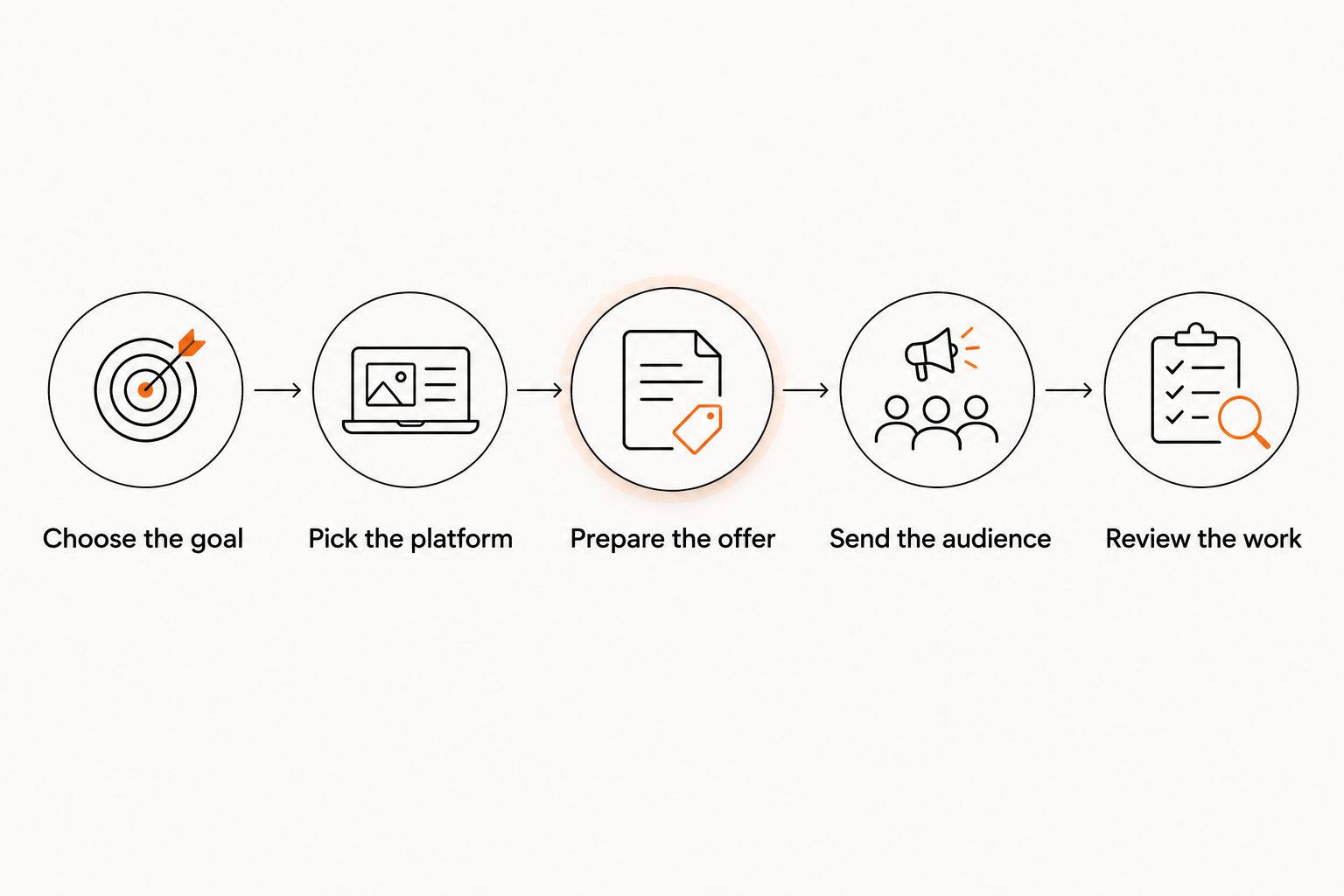
Follow this sequence before creating another profile:
- Choose the goal. Name the next action: listen, buy, support, or collaborate.
- Pick the platform. Match that action to a platform's actual purpose.
- Prepare the offer. Finish the release page, listing, video, or membership promise.
- Send the audience. Tell fans exactly what they will find and what to do.
- Review the work. Keep the channel only if you can maintain its requirements.
Don't launch every option at once. A neglected storefront, unanswered gear inquiry, or unfinished member promise creates work without completing the job you opened it for.
If selling gear is the next move, start with one accurate listing rather than an unfinished inventory. Photograph the actual item. State faults clearly. Make the buyer's decision easier.
Put your next music move to work
Buy or sell gear, find music professionals, and connect with independent artists on OohYeah.
When staying with Spotify is the right call
Stay with Spotify when your priority is on-demand listening and your audience already uses it to hear your releases. Adding a direct-sales or support channel does not require abandoning that listening destination.
For a 2026 release, assign clear roles: streaming for listening, a purchase page for buying, and a membership page only if you have a continuing offer. Explain those roles in your artist communications. Don't make fans guess which destination serves which purpose.
Hold Spotify for listening. Add the missing business function elsewhere. That is a more precise decision than switching platforms because another one offers a feature you do not plan to use.
FAQ
What's the best Spotify alternative for independent artists in 2026?
OohYeah is the best fit for independent artists who need music-community commerce, gear transactions, and music professionals. Bandcamp fits direct music sales, while YouTube fits visual performances.
Is Bandcamp better than Spotify for selling music?
Bandcamp is the better fit for direct music purchases. Spotify serves on-demand listening, so the platforms handle different fan actions rather than the same sales workflow.
Should I remove my music from Spotify?
Keep your music on Spotify when on-demand listening remains part of your release plan. Add a separate sales or support destination when you need a function beyond streaming.
Is SoundCloud a good place to share unfinished tracks?
SoundCloud fits sharing audio and gathering comments around specific moments in a track. Clearly label unfinished work and ask focused questions so feedback addresses the decisions you need to make.
Can YouTube replace Spotify for an independent artist?
YouTube can serve as your main video destination, but it does not make an audio-streaming plan unnecessary. Choose it when performances, music videos, or production explanations are central to your work.
When should an independent musician use Patreon?
Use Patreon when you have supporters who want an ongoing membership and you can maintain the promised content. Define the commitment before inviting fans to join.
How do I choose between selling releases and offering memberships?
Choose direct release sales when you want fans to buy a finished recording; choose memberships when you can deliver continuing value. Keep the offer clear enough that a fan understands the commitment before taking action.
One last thing
Don't send every fan to the same destination. Someone asking where to hear your single needs a listening link; someone asking how to support you needs the relevant purchase or support destination.
Before your next announcement, finish this sentence: After hearing this track, I want you to… If the answer is unclear, fix the offer before adding another platform. Your next move starts with that decision—not another profile.