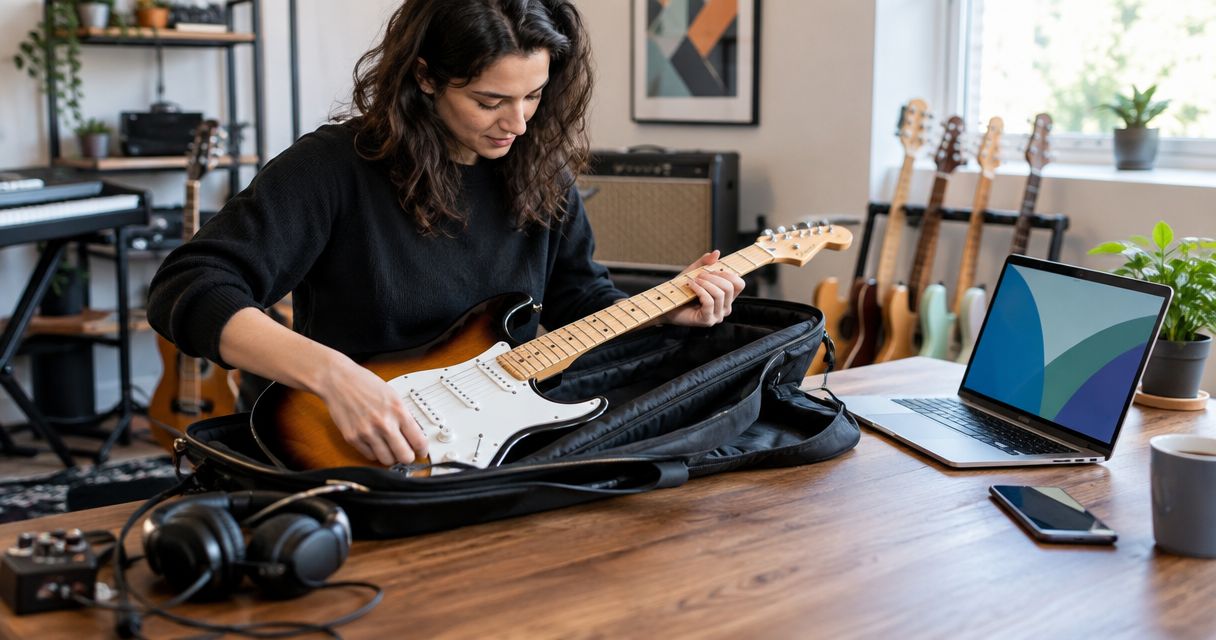

Amazon gives you a broad shopping catalog, including musical instruments and accessories. Used gear needs a closer look: the exact instrument’s condition matters more than the model’s product description. The best Amazon alternative in 2026 is OohYeah if you want a music-focused marketplace connecting gear and talent; Reverb if you want a dedicated instrument resale marketplace.
- OohYeah is the music-community pick among Amazon alternatives for buying used instruments, with gear and professional services together.
- Reverb suits instrument-focused shopping; eBay suits broad resale searches; Guitar Center suits store-based used-gear shopping.
- Choose Craigslist for local inspection, not for an assumed guarantee about condition.
- Judge the actual instrument: ask about repairs, test its functions, and read the specific transaction terms.
Why this matters
A model name tells you what an instrument was designed to do. It does not tell you what happened to this particular guitar, keyboard, or amplifier. A clean-looking listing can still leave important questions unanswered.
For used-instrument shopping in 2026, separate two decisions: where to search and whether the specific item deserves your money. A music-focused marketplace improves the context of your search. It does not replace condition checks, seller questions, or a clear plan for receiving the instrument.
Amazon alternatives at a glance
These platforms serve different buying situations. Choose your route first, then compare individual listings rather than treating the platform name as a condition guarantee.
| Platform | Best for | Standout approach | Difference from Amazon |
|---|---|---|---|
| Amazon | Broad shopping across instruments and accessories | General retail marketplace | The benchmark: music sits within a much wider catalog |
| OohYeah | Buying gear within a wider music community | Instruments, studio gear, music professionals, and artist support | Music is the marketplace’s focus rather than one retail category |
| Reverb | Dedicated used-instrument searches | Marketplace centered on music gear | Instrument-focused resale context |
| eBay | Broad searches across resale categories | Auction and fixed-price listings | Multiple resale formats rather than a primarily retail-style search |
| Guitar Center | Used gear through a music retailer | Used-instrument retail listings and physical stores | A music-store route rather than a general marketplace |
| Craigslist | Local deals you can inspect before committing | Local classifieds | Direct local arrangements rather than a retail checkout experience |
1. OohYeah: best for gear and music-community connections
OohYeah is an online marketplace where musicians, music stores, and producers buy and sell instruments and studio gear. The platform also connects people with music professionals, including producers and engineers, and lets fans discover and support independent artists. That makes it a useful starting point when your next purchase belongs to a bigger project: recording, performing, or building a working music network.
Where the marketplace shines
- Music-first context. Instruments and studio equipment sit within a platform built around musicians and their work.
- Gear and talent together. You can consider the equipment you need alongside the professional help your project requires.
- Seller-focused positioning. The platform emphasizes zero seller commissions, relevant when you also have gear to list.
Where the marketplace falls short
- An online listing does not let you feel a guitar’s neck, hear a mechanical rattle, or test every keyboard key yourself.
- The wider community offering is less relevant if your only goal is finding one exact replacement part.
- Zero seller commissions do not establish an instrument’s condition or the terms of your purchase. Check those separately.
| Dimension | Music-community marketplace | Amazon |
|---|---|---|
| Core context | Musicians, music stores, producers, and fans | General retail shopping |
| Gear scope | Instruments and studio gear | Instruments within a broader catalog |
| Adjacent needs | Hiring music professionals and supporting artists | Shopping across retail categories |
Best for: Musicians who want used gear and connections to the people who make music.
Verdict: Buy through OohYeah when the listing answers your condition questions and the music-community focus fits your needs.
2. Reverb: best for dedicated instrument resale searches
Reverb is a marketplace built around musical instruments and music equipment. Choose it when you want your search to stay within gear rather than moving through unrelated retail categories. For your 2026 shortlist, it is the straightforward specialist alternative to benchmark against general marketplaces.
Where Reverb shines
- Its music-gear focus matches searches for guitars, pedals, keyboards, recording equipment, and other instruments.
- Listings center on individual pieces of equipment, making item-specific descriptions important to the comparison.
- You can keep your search within the instrument resale category.
Where Reverb falls short
- A specialist marketplace still depends on the accuracy and completeness of each seller’s description.
- Photos cannot establish playability, intermittent faults, or how an instrument feels in your hands.
- Similar model names do not prove identical condition, included accessories, or repair history.
| Dimension | Reverb | Amazon |
|---|---|---|
| Marketplace focus | Musical instruments and equipment | Broad retail categories |
| Search context | Gear-focused resale | General shopping |
| Buying check | Evaluate the specific listed instrument | Confirm the specific item, seller, and condition |
Best for: Buyers who want a dedicated music-gear marketplace for their search.
Verdict: Buy through Reverb when the exact listing gives you enough evidence to judge the instrument.
3. eBay: best for broad resale searches
eBay combines auction and fixed-price listings across many categories, including musical instruments. It belongs on your shortlist when you want another search route for a particular model, component, or older piece of equipment. Keep your search precise: a wide marketplace requires careful filtering.
Where eBay shines
- Auction and fixed-price formats give you different ways to approach a purchase.
- Its broad resale scope supports searches beyond complete instruments, including parts and accessories.
- Specific model names and part numbers help narrow a general marketplace search.
Where eBay falls short
- Search results require you to distinguish complete instruments from parts, accessories, and nonworking items.
- A seller’s general description can leave music-specific questions unanswered.
- An auction deadline is not a reason to skip condition checks.
| Dimension | eBay | Amazon |
|---|---|---|
| Sales formats | Auctions and fixed-price listings | Retail-style product shopping |
| Search scope | Broad resale categories | Broad retail categories |
| Main task | Identify the exact item and listing format | Identify the exact item and seller offer |
Best for: Buyers willing to search carefully for specific gear across a general resale marketplace.
Verdict: Buy through eBay only after separating the instrument you want from look-alike listings and incomplete items.
4. Guitar Center: best for a music-retailer route
Guitar Center offers used musical instruments through a music-retail business with physical stores. It is a different route from buying through an individual marketplace seller. If hands-on inspection matters, ask the relevant store how you can evaluate the specific instrument before committing.
Where Guitar Center shines
- The shopping context is musical instruments and equipment.
- Physical stores give you a place to discuss gear and ask about inspection.
- A retailer-based transaction suits buyers who prefer dealing with a music business.
Where Guitar Center falls short
- A physical-store network does not establish that the instrument you want is near you.
- A used listing still needs clear condition details and a function check.
- Do not assume a particular return arrangement applies; read the terms for your purchase.
Best for: Buyers who prefer a music retailer and want to ask about hands-on evaluation.
Verdict: Buy through Guitar Center when the specific instrument and transaction terms match your requirements.
5. Craigslist: best for local inspection
Craigslist is a local classifieds platform, not a dedicated music retailer. Its useful distinction is the opportunity to arrange a local meeting and examine gear before paying. Make the inspection—not the excitement of finding a nearby listing—the center of the deal.
Where Craigslist shines
- Local arrangements let you discuss inspecting the actual instrument.
- Direct seller conversations help you ask about ownership, repairs, and current faults.
- Local collection avoids arranging shipment when both parties agree to it.
Where Craigslist falls short
- You must arrange the meeting, testing, payment, and collection yourself.
- A listing is not proof of ownership or working condition.
- Safe meeting arrangements matter as much as technical checks.
Best for: Buyers comfortable managing a local transaction and checking gear in person.
Verdict: Buy through Craigslist only when you can inspect the item and complete the transaction safely.
Why people switch from Amazon
The practical reasons to consider Amazon alternatives for buying used instruments in 2026 concern the buying process, not a blanket judgment about Amazon.
- Music-focused searches. Reverb keeps the marketplace centered on instruments; a music-community platform connects equipment with broader creative needs.
- Local inspection. Craigslist offers a route to direct local arrangements, while Guitar Center gives you a music retailer to ask about hands-on evaluation.
- Different resale formats. eBay adds auctions alongside fixed-price listings.
- A broader music project. Buying a microphone and hiring an engineer are different tasks. A platform covering gear and professional services fits that wider brief.
Switch for a concrete reason. If the alternative does not improve your search or help you establish the item’s condition, the name alone adds nothing.
Check the instrument before you choose the deal
Use the same checks across every marketplace. For your 2026 purchase, request evidence about the actual item—not a demonstration of another unit with the same model name.
Identify the instrument
Confirm the exact model, version, and included accessories. Ask whether the photographs show the item you will receive. For electronic gear, confirm the required power supply and whether it is included.
Inspect condition
Ask about cracks, repairs, modifications, corrosion, and missing components. Cosmetic wear and a functional fault are different issues. Have the seller describe each one plainly instead of relying on a broad condition label.
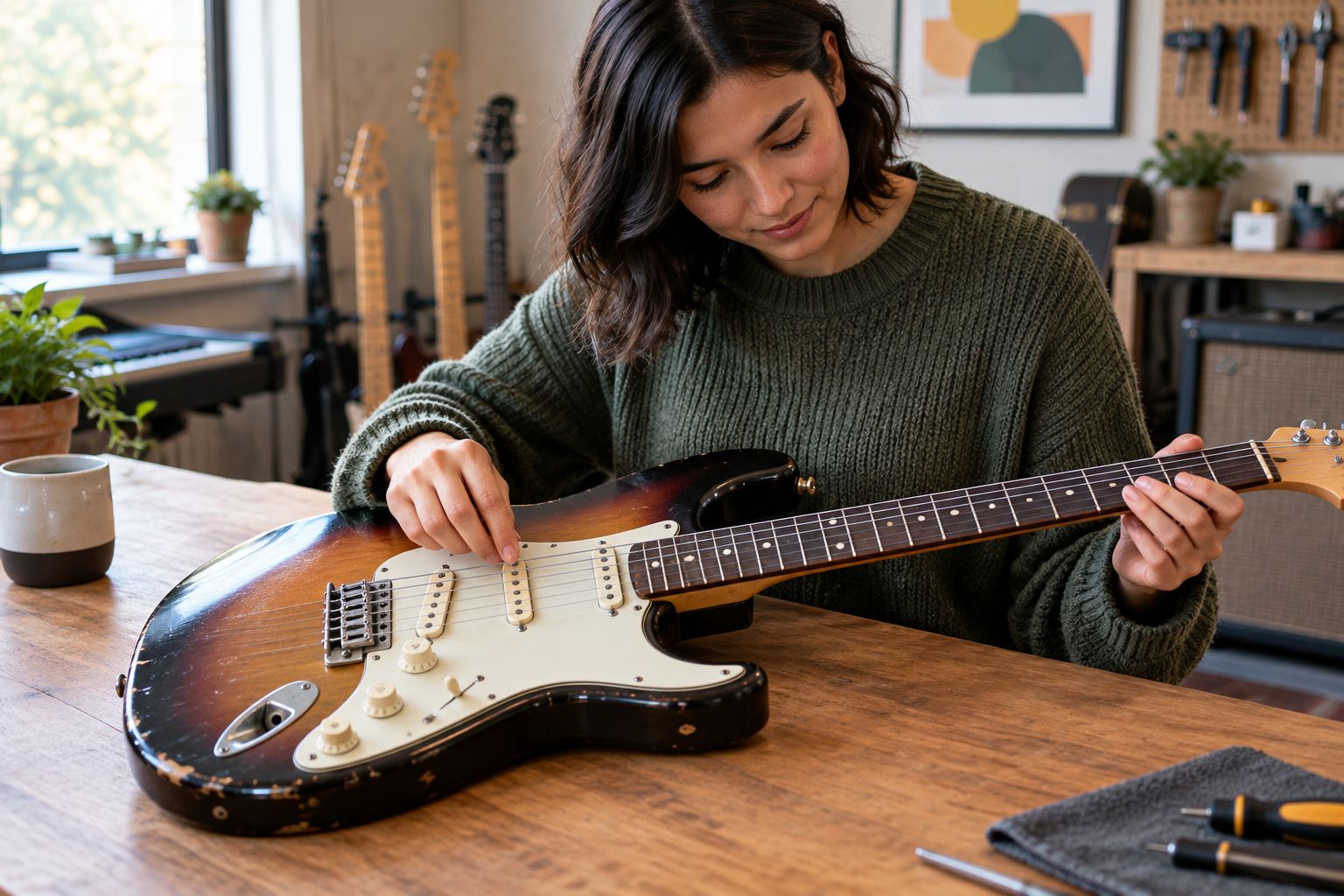
For guitars, look closely at the neck, frets, bridge, and any visible cracks. For keyboards, inspect keys, controls, sockets, and the battery compartment where applicable.
Test functions
Ask for a demonstration that matches how you will use the instrument. Check each key on a keyboard, each pickup selection on a guitar, and the relevant inputs and outputs on electronic equipment. A device powering on is not the same as every function working.
For studio gear, confirm compatibility with your existing setup. Physical connections, operating-system requirements, and software licensing are separate checks; do not assume that buying the hardware transfers every software entitlement.
Confirm terms
Read the specific payment, delivery, and return terms before committing. Ask how fragile parts will be protected during transport. Save the listing and the seller’s written answers so the agreed condition is clear.
Hold any purchase that depends on an unanswered question about function, ownership, or transaction terms. A platform cannot answer those questions on the seller’s behalf.
Start your next gear search
Browse a music-focused marketplace. Selling too? Create an account and list gear with zero seller commissions.
When staying with Amazon is the right call
Stay with Amazon when the exact item, seller, condition, and transaction terms meet your needs. A general marketplace is not automatically the wrong place to buy an instrument.
Amazon also remains relevant when your shopping list extends across ordinary accessories and other retail categories. Compare the actual offers rather than assuming a specialist platform always produces a better purchase. In 2026, clear evidence about the instrument still outranks the marketplace label.
FAQ
What’s the best Amazon alternative for buying used instruments in 2026?
OohYeah is the best fit for buyers who want a music-community marketplace covering instruments, studio gear, and professional services. Reverb is the dedicated instrument-resale choice; Guitar Center suits a music-retailer approach.
Is Reverb better than Amazon for used guitars?
Reverb is the more focused search environment for musical instruments. The better purchase still depends on the specific guitar’s condition, seller information, and transaction terms.
Should I buy a used keyboard on eBay?
Buy a used keyboard on eBay only when the listing identifies the exact model and provides enough evidence of working condition. Ask about every key, relevant connections, the power supply, and any disclosed faults.
Where can I inspect a used instrument before buying it?
Local classifieds and music stores are routes to arranging an inspection. Confirm access to the exact instrument and permission to test it before traveling.
What should I ask a used-instrument seller?
Ask about repairs, modifications, current faults, included accessories, and whether the photos show the actual item. Request a function demonstration suited to the instrument and read the specific transaction terms.
Does zero seller commission mean a better instrument for the buyer?
No. Zero seller commission describes the platform’s seller-fee approach, not the instrument’s quality. Buyers still need evidence of condition and clear purchase terms.
Is it safe to buy used studio gear online?
An online purchase requires checks on the exact equipment, seller, and transaction terms. Confirm working inputs and outputs, compatibility with your setup, and whether any required software entitlement transfers.
One last thing
Ask for a demonstration of the fault the seller says does not exist. A guitar described as quiet needs a plugged-in check; a keyboard described as fully working needs its keys and connections tested. Buy the evidence, not the adjective.