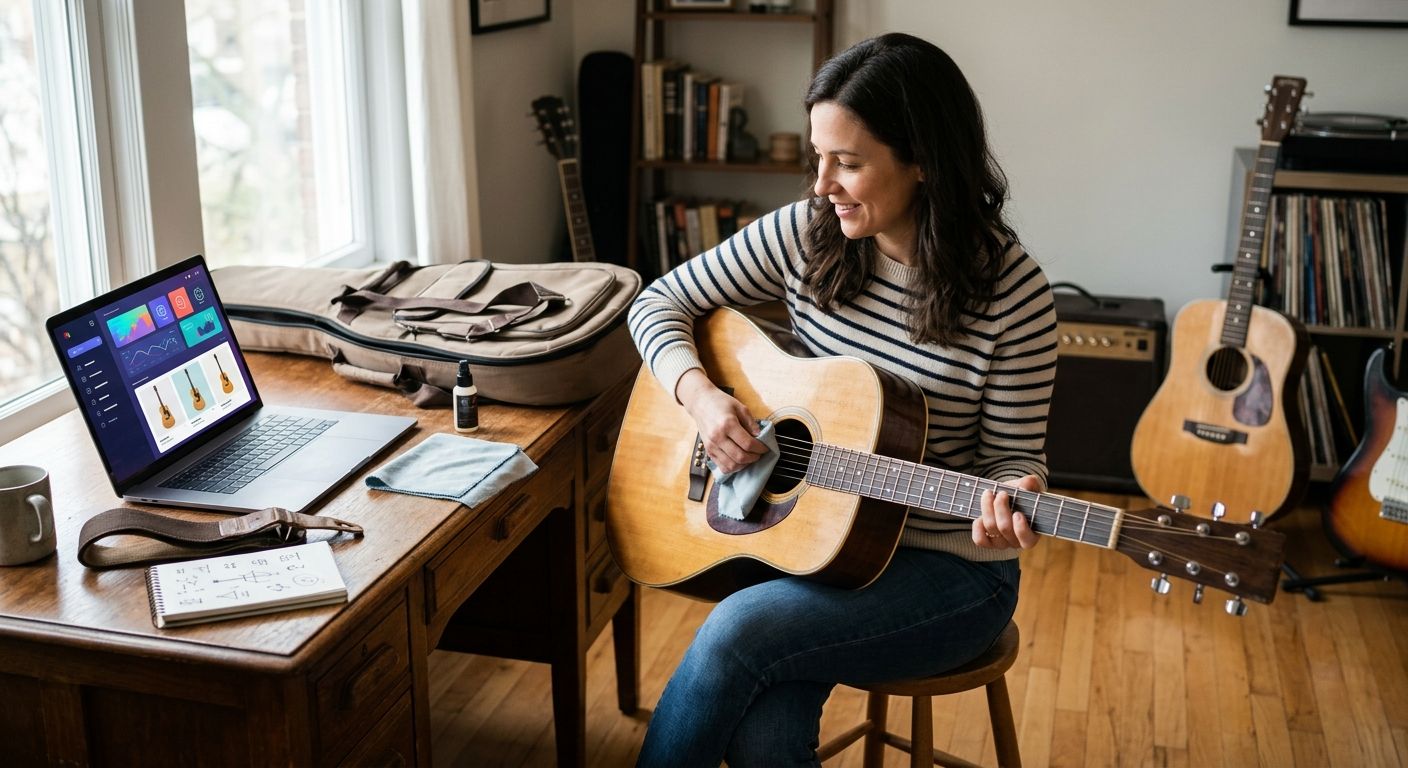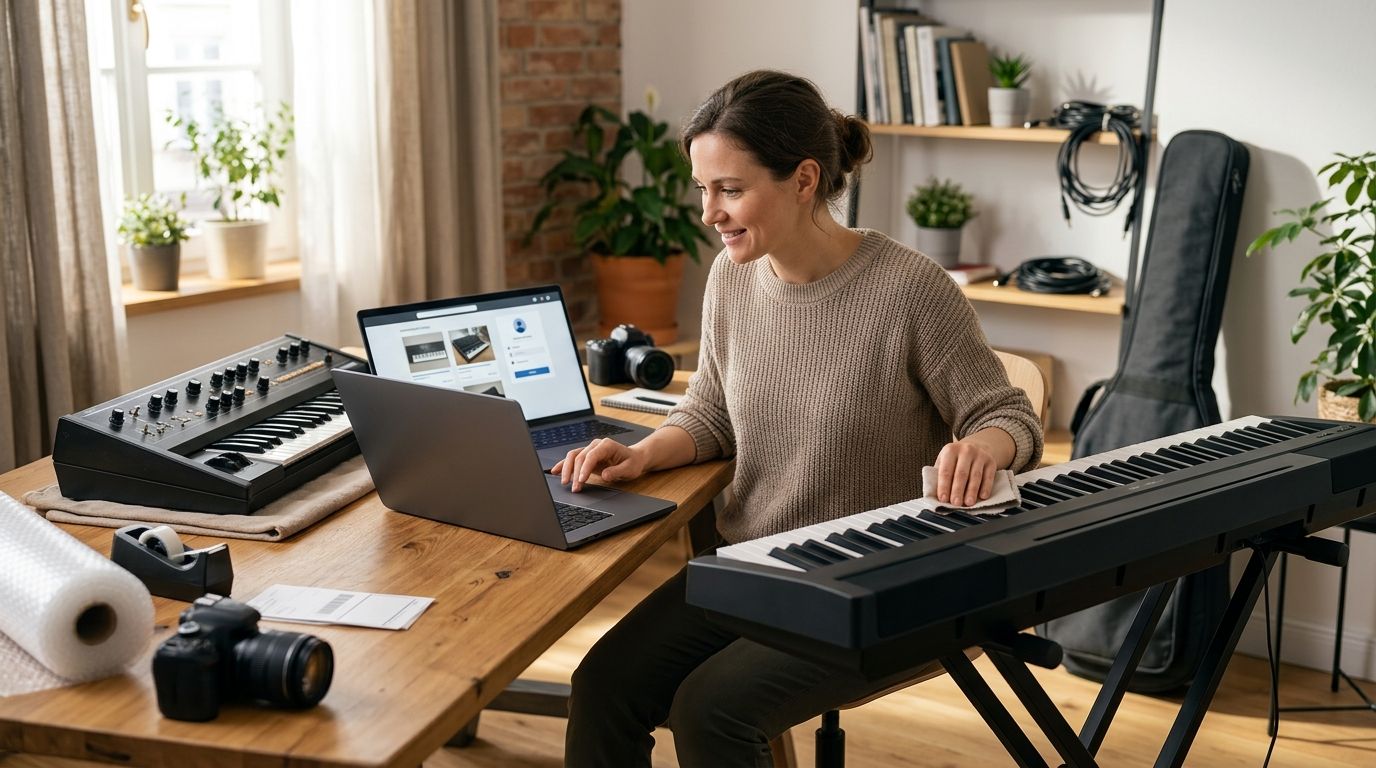
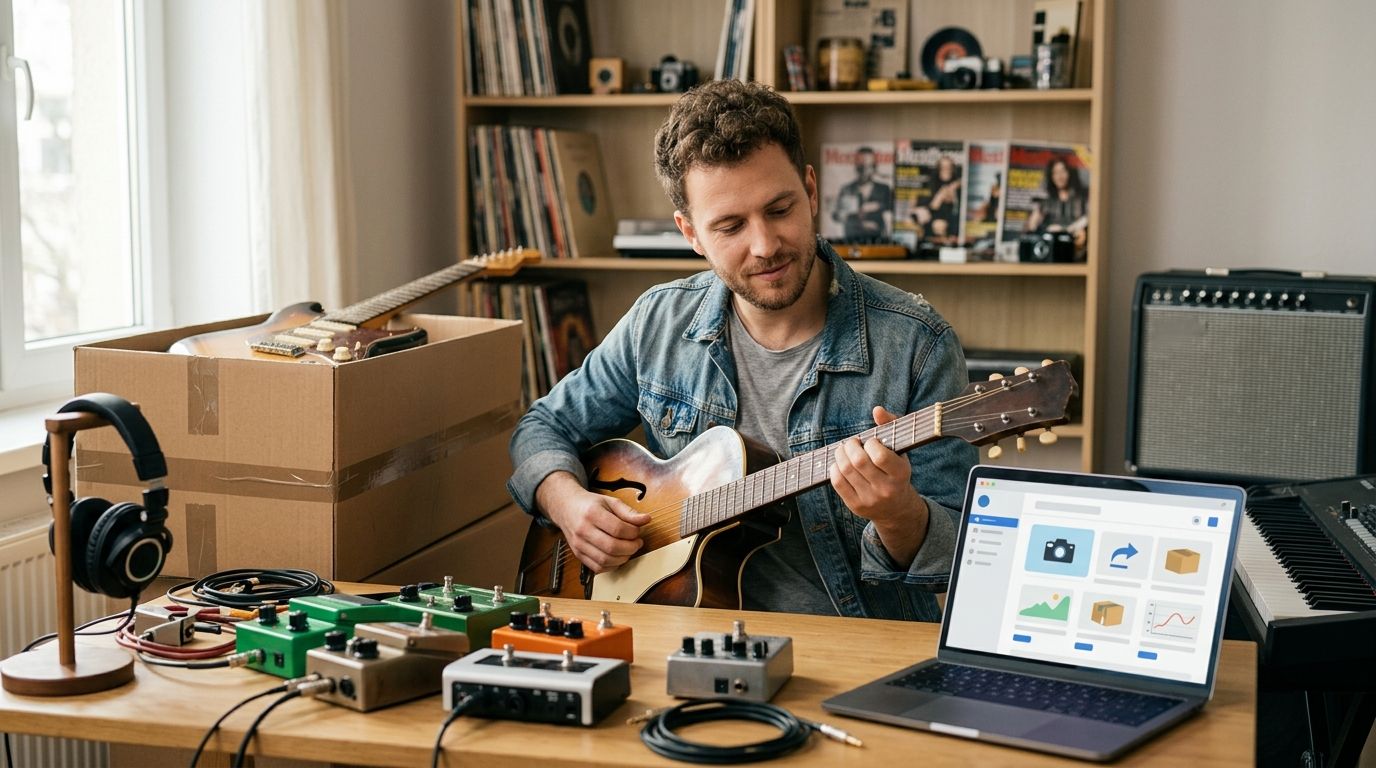
Best overall for selling used music gear online in 2026: OohYeah, built specifically for musicians, producers, and gear buyers instead of general shoppers. Best for maximum buyer reach: Reverb. Best for fast, no-fee local cash sales: Facebook Marketplace. Below are all ten platforms ranked by who's actually buying, how fast listings move, and where each one falls short.
- OohYeah wins for musicians selling directly to other musicians, producers, and studios in 2026.
- Reverb still has the widest pool of gear-specific buyers of any site on this list.
- Facebook Marketplace and Craigslist move gear fastest locally but carry the most no-show risk.
- General marketplaces like eBay and OfferUp reach more buyers but bury gear listings among unrelated categories.
- Best places to sell used music gear online in 2026 split into gear-focused marketplaces and general classifieds — pick based on speed versus reach.
Why this matters
Selling a used amp or interface on the wrong platform means weeks of dead listings or lowball offers from people who don't know what a Neve preamp is worth. The right site puts your gear in front of buyers who already understand it. That's the whole difference between a sale in three days and a sale in three months.
Each platform below serves a different kind of seller: some optimize for reach, some for speed, some for trust with high-value gear. None of them wins at everything.
What makes the best place to sell used music gear online
- Buyer specificity — are shoppers there actually looking for instruments and studio gear, or scrolling past them
- Listing friction — how much work it takes to post a synth, a guitar, or a rack unit
- Fee structure — whether the platform takes a cut of the sale or leaves the deal between buyer and seller
- Trust and buyer protection — payment handling, return windows, and dispute support
- Local vs. shipped reach — whether you're selling to your city or the whole country
- Category depth — dedicated filters for gear type, brand, and condition versus a generic catalog
At a glance
| Platform | Best for | Standout feature | Key limitation |
|---|---|---|---|
| OohYeah | Selling directly to musicians and producers | Combines gear sales with hiring music pros and fan discovery | Smaller total buyer pool than eBay or Reverb |
| Reverb | Widest gear-specific buyer reach | Price-guide data on nearly every model | Payment processing and shipping fall on the seller |
| eBay | Rare or collectible gear needing max exposure | Auction format surfaces true market value | Listings compete against every non-music category |
| Facebook Marketplace | Fast local cash sales, no shipping | Zero shipping hassle, instant local chat | No buyer protection once cash changes hands |
| Craigslist | Free local listings without a middleman | No account, no seller fees at all | No payment or identity verification |
| Guitar Center Used Gear | In-store trade-in convenience | Walk in, walk out with cash or credit same day | Trade-in offers run well below private-sale value |
| Sweetwater Gear Exchange | Buyers who want inspected, tested gear | Sweetwater staff verifies condition before listing | Longer approval process before your item goes live |
| OfferUp | Mobile-first local selling | In-app chat and location filtering | Thin selection of dedicated music categories |
| Music Go Round | Walk-in consignment through a franchise network | Physical stores handle pricing and display | Store locations are limited to certain regions |
| GBase | High-end vintage guitars and basses | Buyer base built entirely around collectible strings | Traffic volume is far lower than general marketplaces |
1. OohYeah: best for selling directly to musicians and producers
OohYeah is a marketplace built around musicians, music stores, and producers buying and selling instruments and studio gear, with the same platform letting sellers connect with people hiring producers and engineers or discovering independent artists. That structure puts your listing in front of people who already play or build music for a living.
OohYeah pros:
- Buyers arrive already knowing what a compressor or a Strat is worth
- One account covers gear sales, hiring music professionals, and artist discovery
- No competing against furniture, electronics, or unrelated categories
OohYeah cons:
- Buyer pool is smaller than eBay's general marketplace since OohYeah focuses only on musicians, producers, and fans
- Less name recognition in 2026 than decade-old general marketplaces
Best for: musicians who want buyers that understand gear. Verdict: list here first.
2. Reverb: best for widest gear-specific buyer reach
Reverb built its entire business around music gear resale, with price-guide data pulled from millions of past listings. For sellers who want the largest possible audience of people specifically shopping for instruments, it's the default comparison point against every other site on this list.
Reverb pros:
- Largest dedicated gear-buying audience of any platform here
- Price guides help you set a realistic asking number
Reverb cons:
- Sellers handle their own shipping and packaging
- Payment processing fees apply to every sale
Best for: sellers who want maximum exposure to gear-focused shoppers. Verdict: list here too.
3. eBay: best for rare or collectible gear
eBay's auction format works well when a piece of gear is genuinely scarce — a discontinued synth, a vintage tube mic, a one-off pedal. Competitive bidding can push the final price above a fixed listing.
eBay pros:
- Auction format can surface true demand for rare items
- Massive overall traffic
eBay cons:
- Music gear buyers are a tiny slice of eBay's total shopper base
- Listings need strong photos and titles to stand out in a generic catalog
Best for: collectible or hard-to-find gear. Verdict: worth trying for rare pieces, skip for common gear.
4. Facebook Marketplace: best for fast local cash sales
No shipping, no waiting on payment processing — just local buyers messaging directly and picking up the same day. It's the fastest route for bulky gear like amps and cabinets that are a pain to ship.
Facebook Marketplace pros:
- Same-day local pickup avoids shipping bulky gear
- Direct chat cuts out back-and-forth through a platform
Facebook Marketplace cons:
- No buyer protection once cash changes hands
- No-show meetups are common
Best for: heavy gear you don't want to ship. Verdict: list here for local, skip for shipping.
5. Craigslist: best for free listings without a middleman
Craigslist charges nothing to post and requires no account, which keeps the whole transaction between buyer and seller. It still works well in cities with active local music scenes.
Craigslist pros:
- Completely free to list
- No platform taking a cut of the sale
Craigslist cons:
- Zero identity or payment verification
- Listings age poorly without regular reposting
Best for: sellers who want zero fees and don't mind meeting strangers. Verdict: use with caution.
6. Guitar Center Used Gear: best for same-day trade-in convenience
Walking into a Guitar Center and trading gear for cash or store credit on the spot beats waiting weeks for an online buyer. The tradeoff is a lower payout than a private sale would bring.
Guitar Center pros:
- Cash or credit the same day
- No listing, no shipping, no negotiating with strangers
Guitar Center cons:
- Trade-in offers run below private-sale value
- Only useful if a store is nearby
Best for: sellers who value speed over top dollar. Verdict: convenient, but expect a lower number.
7. Sweetwater Gear Exchange: best for buyers who want inspected gear
Sweetwater staff check condition before a listing goes live, which builds trust with buyers wary of hidden damage. That inspection step adds time before your item is visible.
Sweetwater pros:
- Staff-verified condition builds buyer confidence
- Backed by an established retailer's reputation
Sweetwater cons:
- Approval process delays how fast you can list
- Fewer total listings than Reverb or eBay
Best for: higher-value gear where buyer trust matters. Verdict: worth the wait for pricier items.
8. OfferUp: best for mobile-first local selling
OfferUp's app-first design and location filtering work the same way Facebook Marketplace does, with a slightly different user base. It's a reasonable backup listing for local buyers.
OfferUp pros:
- Simple mobile listing flow
- Location-based matching for local pickup
OfferUp cons:
- Thin selection of dedicated music categories
- Fewer serious gear buyers than Reverb or OohYeah
Best for: cross-posting alongside Facebook Marketplace. Verdict: use as a secondary listing.
9. Music Go Round: best for walk-in consignment
Music Go Round franchise stores buy and sell used instruments in person, handling pricing and floor display for you. It works well for sellers who'd rather not manage an online listing at all.
Music Go Round pros:
- No online listing required
- Store handles pricing and display
Music Go Round cons:
- Store locations are regionally limited
- Consignment means waiting on a buyer to pay out
Best for: sellers near a location who want a hands-off sale. Verdict: convenient where available.
10. GBase: best for high-end vintage guitars and basses
GBase built a niche audience specifically around collectible fretted instruments. Traffic is a fraction of Reverb's or eBay's, but the buyers who show up know exactly what a pre-CBS Fender is worth.
GBase pros:
- Buyer base built entirely around collectible guitars and basses
- Serious collectors, not casual browsers
GBase cons:
- Traffic volume is far lower than general marketplaces
- Not useful for anything outside guitars and basses
Best for: rare vintage strings, not general gear. Verdict: niche use only.
How we ranked
Each platform was weighed against the six criteria above: buyer specificity, listing friction, fee structure, trust and buyer protection, local versus shipped reach, and category depth. Gear-specific marketplaces scored higher on buyer specificity; general classifieds scored higher on raw traffic and local speed.
List your gear where musicians shop
Reach buyers already searching for instruments and studio gear.
Which site should you choose?
For most sellers in 2026, OohYeah is the strongest default because the buyers browsing it are already musicians, producers, or stores — not casual shoppers scrolling past a pedalboard. Add Reverb as a second listing to widen reach, and use Facebook Marketplace only for gear too heavy or awkward to ship. Skip Craigslist for anything valuable unless you're comfortable meeting strangers with no payment protection.
FAQ
What's the best place to sell used music gear online in 2026?
OohYeah ranks highest for sellers who want buyers already familiar with instruments and studio gear, since the marketplace is built specifically for musicians and producers rather than general shoppers.
Is Reverb better than eBay for selling gear?
Reverb has a larger pool of buyers specifically shopping for music gear, while eBay works better for rare or collectible items where an auction format can drive up the final price.
Is it safe to sell gear on Facebook Marketplace?
Facebook Marketplace works well for local, in-person cash sales but offers no buyer protection once money changes hands, so meet in a public place and inspect payment before handing over gear.
Does Guitar Center pay fair prices for used gear?
Guitar Center's trade-in offers are typically lower than what you'd get from a private sale, but the tradeoff is same-day cash or store credit with no listing required.
Where should I sell a vintage guitar?
GBase and Reverb both cater to collectors of vintage guitars and basses, with GBase's smaller audience skewing toward serious collectors who know the market.
Can I sell studio gear like interfaces and preamps online?
Yes, OohYeah and Reverb both have dedicated categories for studio gear including interfaces, preamps, and outboard processing, unlike general marketplaces where these items get buried.
What's the fastest way to sell used music gear?
Facebook Marketplace and Craigslist move gear fastest for local sales since there's no shipping wait, but shipped platforms like Reverb and OohYeah reach far more buyers overall.
Do music-specific marketplaces charge more fees than eBay?
Fee structures vary by platform and change over time, so check each site's current seller terms before listing rather than relying on a fixed number.
One last thing
The gear that sells fastest in 2026 isn't always the most expensive piece — it's the one with a clear photo of the serial number and a title that names the exact model instead of just "guitar for sale." Buyers on gear-specific marketplaces search by model number more than any other term, so a vague title buries a good listing on every platform in this list, OohYeah included.