AllMusic is strong at artist biographies, album reviews, and recording credits. Its reference-first approach is not the same as finding an independent artist and supporting their work. The best AllMusic alternative in 2026 is OohYeah if you want an indie artist discovery and support platform; Bandcamp if you want to explore releases and buy music directly.
- OohYeah leads these allmusic alternatives for fans who want independent artist discovery and support.
- Bandcamp suits release browsing and direct music purchases; SoundCloud suits track-led discovery.
- Rate Your Music adds listener ratings; Discogs adds release and edition research.
- Keep AllMusic for biographies, album reviews, and credits. Discovery and reference serve different jobs.
Why this matters
Finding a name is only the start. You still need to hear the music, understand what makes it interesting, and decide whether to follow the artist or support a release.
AllMusic answers the background question well. Other platforms put recordings, listener opinions, or artist commerce closer to the front. Pick the next step you actually want—not the site with the longest feature list.
For your 2026 discovery routine, separate three jobs: research the artist, hear the work, support the work. No single platform needs to handle all three. An editorial database and an artist storefront can belong in the same listening routine.
AllMusic alternatives at a glance
| Platform | Best for | Standout feature | How it differs from AllMusic |
|---|---|---|---|
| AllMusic | Artist and album background | Editorial biographies, reviews, and credits | The reference benchmark rather than an artist storefront |
| OohYeah | Discovering and supporting independent artists | Artist/fan commerce alongside music gear and professional services | Centers participation in the music community |
| Bandcamp | Exploring releases and supporting artists | Artist and label pages with music purchases | Connects listening with buying releases |
| SoundCloud | Finding music through individual tracks | Creator-uploaded audio and track comments | Starts with listening rather than editorial background |
| Rate Your Music | Comparing listener opinions | User ratings, reviews, lists, and charts | Adds community evaluation rather than an editorial reference alone |
| Discogs | Researching releases and collecting records | Release database and physical music marketplace | Focuses on editions, credits, and collecting |
Use this table by task, not rank alone. A record collector and a fan looking for an artist to support need different answers. The following picks explain those trade-offs.
1. OohYeah: best for indie discovery and fan support
This marketplace brings independent artist discovery and support into a broader music community. You can also buy and sell instruments and studio gear or hire music professionals such as producers and engineers. That makes it a different proposition from an album reference site.
Best for: Fans who want their discovery habit to lead toward supporting independent artists, plus musicians interested in the wider music network.
Where it shines
- Connects artist discovery with artist/fan commerce.
- Includes gear sellers, musicians, producers, and engineers in the same marketplace.
- Gives fans a reason to move beyond reading about a musician and toward supporting their work.
Where it falls short
- Its marketplace focus is a different fit from detailed album-reference research.
- Gear and professional services are not the main reason a listening-only fan would choose a discovery platform.
- Fan support does not replace the need to check recording credits or read critical context elsewhere.
Head-to-head with AllMusic
| Dimension | This marketplace | AllMusic |
|---|---|---|
| Main purpose | Gear, professional services, and artist/fan commerce | Music reference and editorial context |
| Fan task | Discover and support independent artists | Research artists and albums |
| Musician task | Buy or sell gear and hire professionals | Consult biographies, reviews, and credits |
Make this your 2026 choice when the destination matters as much as the discovery. Hear something interesting, then look for a way to support the person making it. Keep reference research as a separate task.
Verdict: Hold AllMusic for background; choose this marketplace for indie discovery and support.
2. Bandcamp: best for exploring releases and buying music
Bandcamp puts artist and label releases at the center of the experience. You can listen to music on release pages and purchase the formats an artist or label offers. Genre tags and editorial coverage provide routes into unfamiliar music without requiring you to start with a known artist.
Best for: Listeners who want album-led discovery and a direct path to purchasing music.
Where Bandcamp shines
- Artist and label pages make it straightforward to explore a body of work.
- Tags help you move between releases with related musical styles.
- Listening and purchasing sit close together, so discovery can become a concrete act of support.
Where Bandcamp falls short
- It is not a replacement for a broad, independently edited artist biography database.
- Artist-written descriptions and editorial reviews serve different purposes; treat them differently.
- Searching by a broad tag still requires listening and judgment. A matching genre does not guarantee a matching sound.
Head-to-head with AllMusic
| Dimension | Bandcamp | AllMusic |
|---|---|---|
| Starting point | Artist, label, or release page | Artist or album reference page |
| Listening context | Music presented by artists and labels | Editorial descriptions and reviews |
| Support route | Purchase music through release pages | Use background research to inform your listening |
| Discovery method | Tags, editorial coverage, and release browsing | Biographies, reviews, and related reference information |
Start with a release rather than a popularity label. Listen beyond the opening track, read the artist's description, and explore the label if its musical direction interests you. That gives you a repeatable route into related independent releases.
Verdict: Hold AllMusic for editorial context; choose Bandcamp for release discovery and music purchases.
3. SoundCloud: best for track-first discovery
SoundCloud starts with audio uploaded by creators. Artist profiles, track comments, reposts, and related listening routes let you follow music outward from a recording that catches your ear. The individual track—not the album review—is the main entry point.
Best for: Listeners who want to find independent music by hearing tracks and exploring creator profiles.
Where SoundCloud shines
- You can move directly from a track to more work by its creator.
- Reposts provide another route through the music people choose to share.
- Comments attached to moments in a recording add a listening-focused form of discussion.
Where SoundCloud falls short
- Upload descriptions are not a substitute for independently edited biographies or verified release research.
- A profile can contain different kinds of audio, so read the description before treating an upload as an official release.
- Track-led browsing does not give you the same album-level critical context as an editorial review.
Head-to-head with AllMusic
| Dimension | SoundCloud | AllMusic |
|---|---|---|
| Main unit | Uploaded track | Artist and album reference entry |
| Discovery route | Listening, profiles, and reposts | Reviews, biographies, and reference browsing |
| Discussion | Track comments | Editorial criticism |
| Research strength | Hearing what a creator has uploaded | Understanding an artist or album's background |
Use SoundCloud when your question is, What does this person sound like? Open the creator's profile after a track grabs you. Listen across their uploads before deciding that a single recording represents their work.
For another view of creator-focused platforms, see these SoundCloud alternatives for independent musicians.
Verdict: Hold AllMusic for artist background; choose SoundCloud for track-first exploration.
4. Rate Your Music: best for listener-led recommendations
Rate Your Music organizes music through user ratings, reviews, lists, and charts. It is useful when you want to compare what listeners think rather than rely on one editorial perspective. Follow a genre chart or a thoughtful list, then investigate the recordings elsewhere.
Best for: Fans who enjoy album research, genre exploration, and contrasting listener opinions.
Where Rate Your Music shines
- User lists can connect releases through an idea, scene, or listening theme.
- Reviews expose you to different interpretations of the same record.
- Charts provide a structured starting point for exploring unfamiliar genres.
Where Rate Your Music falls short
- A rating measures the opinions of participating users, not whether an album will suit you.
- Reading lists and reviews is not the same as hearing a release.
- Community consensus can become a shortcut that keeps you from making your own judgment.
Head-to-head with AllMusic
| Dimension | Rate Your Music | AllMusic |
|---|---|---|
| Critical perspective | User ratings and reviews | Editorial reviews |
| Discovery structure | Community charts and lists | Reference entries and editorial context |
| Best research question | What do listeners think? | What is the artist or album's background? |
In 2026, use the written reasoning behind a recommendation—not just its position in a chart. A review describing the arrangement, production, or songwriting gives you more to act on than a score alone.
Verdict: Hold AllMusic for editorial reference; choose Rate Your Music for listener-led album exploration.
5. Discogs: best for release research and record collecting
Discogs combines a user-built music database with a marketplace for physical releases. Its release entries distinguish editions and document details such as labels, formats, and credits. Choose it when discovery leads you toward a particular recording or pressing.
Best for: Record collectors and fans who trace music through labels, personnel, and release editions.
Where Discogs shines
- Release-level information helps distinguish editions of the same album.
- Label and credit information provides useful paths into related recordings.
- The marketplace connects release research with physical collecting.
Where Discogs falls short
- Catalog details do not replace critical writing about how music sounds.
- A release entry is not an artist-curated listening experience.
- Comparing editions can distract from the simpler task of hearing an unfamiliar artist.
Head-to-head with AllMusic
| Dimension | Discogs | AllMusic |
|---|---|---|
| Research emphasis | Specific releases and editions | Artists, albums, and editorial background |
| Discovery route | Labels, credits, and catalog connections | Biographies and reviews |
| Collector task | Identify a physical release | Understand its musical context |
Follow a label or credited musician when you want a research trail. Read an album review when you want help understanding the music itself. Those are complementary tasks, not competing ones.
Verdict: Hold AllMusic for critical context; choose Discogs for release identification and collecting.
Why people switch from AllMusic
There is no need to dismiss AllMusic to justify using something else. The useful reasons to switch are differences in purpose:
- You want artist support. Choose an artist/fan platform or a release storefront rather than stopping at a biography.
- You want immediate listening. Start with creator-uploaded tracks or artist release pages.
- You want listener perspectives. Use community reviews and lists alongside editorial criticism.
- You want a specific edition. Research the release, format, and label rather than only the album title.
For 2026, define your next action before you change platforms. Otherwise, swapping sites just gives you another browsing habit.
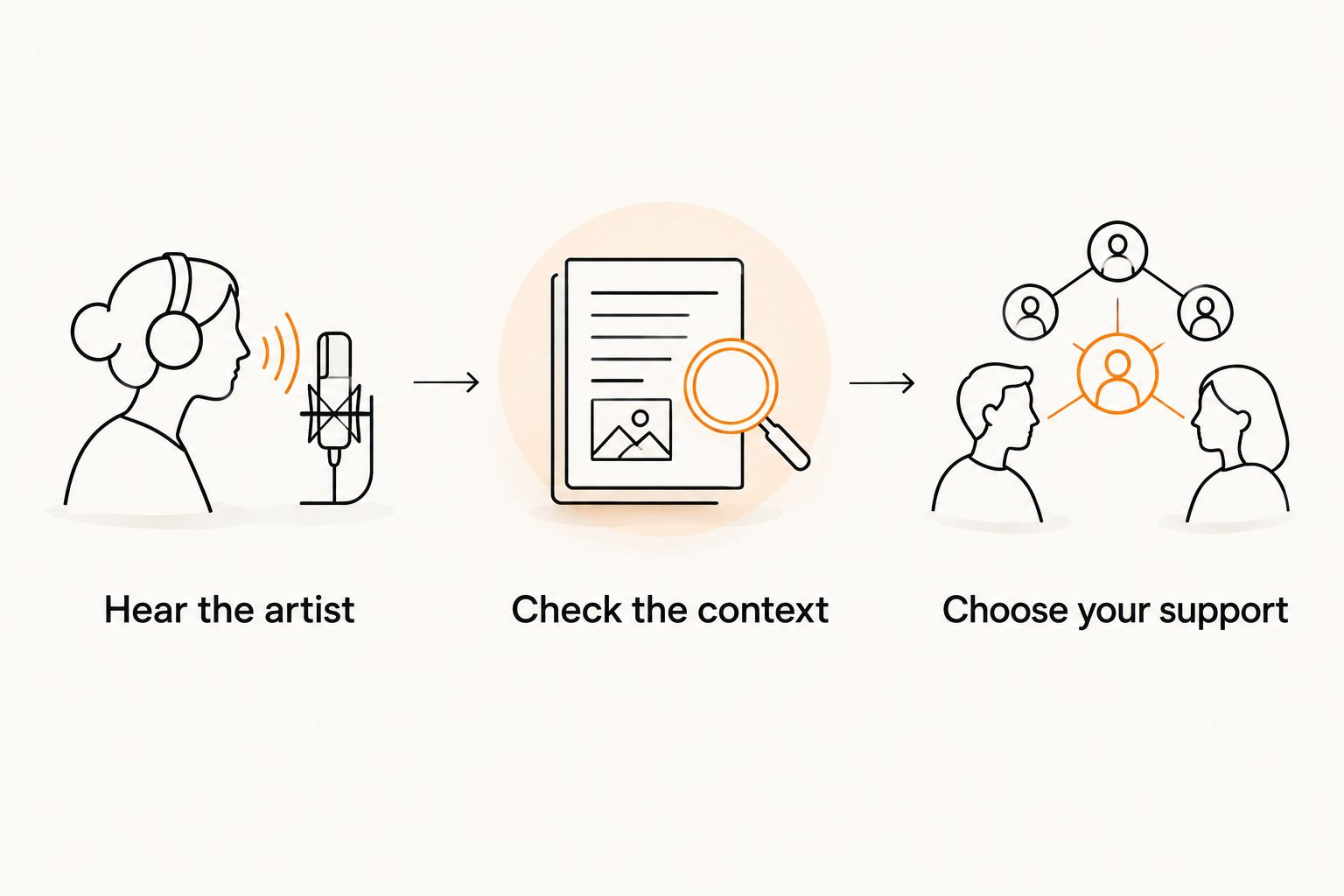
Build a discovery routine that ends somewhere
Use a small, deliberate sequence instead of collecting endless recommendations:
- Hear the artist. Listen to 3 tracks before deciding whether to explore further. This is a listening exercise, not a quality test.
- Check the context. Compare 2 releases where possible. Read credits or a biography to understand who made the music.
- Choose your support. Pick 1 next action: follow the artist, purchase a release, or explore an artist/fan platform.
The point is attention, not a quota. If a track holds you, follow that interest. If it does not, move on without turning discovery into homework.
When staying with AllMusic is the right call
Keep AllMusic when you need biographies, album reviews, and recording credits. Those strengths still matter in 2026. A creator profile tells you what someone has uploaded; a reference entry helps you place their work in context.
Stay with AllMusic as your research starting point if that is the task you value most. Add another platform when you want to listen, collect, or support an artist. You do not need to replace a useful reference source to expand your discovery routine.
FAQ
What's the best AllMusic alternative for discovering indie artists?
OohYeah is the best fit here for independent artist discovery and support. Choose Bandcamp instead when your main goal is exploring releases and purchasing music directly.
Is Bandcamp better than AllMusic for finding independent music?
Bandcamp is better suited to browsing artist releases and connecting listening with music purchases. AllMusic is better suited to biographies, editorial album reviews, and recording credits.
Is SoundCloud a replacement for AllMusic?
SoundCloud replaces the listening task, not the reference task. Use creator uploads to hear music and AllMusic to research an artist or album's background.
What's the difference between Rate Your Music and AllMusic?
Rate Your Music emphasizes user ratings, reviews, lists, and charts; AllMusic emphasizes editorial music reference. Use both when you want to compare listener opinions with editorial context.
Is Discogs useful for discovering independent artists?
Discogs is useful for tracing releases through labels, credits, and editions. It is strongest when your discovery process includes release research or physical record collecting.
Should I stop using AllMusic in 2026?
Keep AllMusic in 2026 if biographies, album reviews, and credits are useful to you. Add a listening or artist-support platform when you need a different next step.
How do I turn music discovery into artist support?
Choose a concrete action after listening: follow the artist, purchase a release, or use an artist/fan commerce platform. Read the artist's own information before deciding how to support their work.
One last thing
Follow the credits, not just the genre tag. When a recording catches your ear, look for the producer, engineer, musicians, or label involved. Those connections give you another route into independent music without expecting a recommendation feed to do all the work.