Choose OohYeah if you want to buy or sell music gear, hire producers and engineers, or support independent artists directly; choose Spotify if you want on-demand streaming, playlists, and personalized music recommendations. In 2026, the decision is about the job: music commerce versus everyday listening.
- OohYeah vs Spotify compares music commerce with music streaming, not two interchangeable services.
- OohYeah is best for musicians buying gear, selling equipment, or hiring music professionals.
- Spotify is best for listeners who want streaming, playlists, and personalized recommendations.
- Both support artist discovery; direct purchases and repeated listening serve different goals.
- Use both when your release needs a listening destination and a separate commerce destination.
Why this matters
A listener, a gear seller, and an artist releasing a single need different things. Treating every music platform as a Spotify replacement leads to the wrong choice before you even create an account.
Pick the platform that completes your next task. If you need to sell a keyboard, a streaming playlist cannot complete that sale. If you want to save albums and listen during your commute, a gear marketplace does not replace a streaming library.
For your 2026 music workflow, separate listening, production, and commerce. You can connect those activities without expecting one service to do everything. That distinction also keeps your promotion focused: send listeners toward music and buyers toward something they can purchase.
At a glance
| Dimension | OohYeah | Spotify |
|---|---|---|
| Best for | Musicians, music stores, producers, and fans using music commerce | Listeners and artists using a streaming destination |
| On-demand streaming | Marketplace and artist-support focus | On-demand music streaming |
| Playlists and listening routines | Discovery within a music community | Saved music, playlists, and personalized recommendations |
| Artist discovery | Discover and support independent artists | Discover music through search, playlists, and recommendations |
| Buying and selling gear | Instruments and studio gear marketplace | Not an instrument or studio gear marketplace |
| Hiring music professionals | Hire producers and engineers | Not a music-professional hiring marketplace |
| Direct artist support | Artist/fan commerce platform | Listening supports recorded-music consumption; commerce is separate |
| Pricing model | Zero seller commissions; evaluate each transaction's terms | Ad-supported listening and paid subscription models |
| Standout feature | Gear, professional services, and artist commerce in one marketplace | A dedicated streaming and playlist experience |
Spotify wins for on-demand streaming
Choose Spotify when listening is the task. Search for music, play recordings, save favorites, and return to your library. Its purpose is to make recorded music accessible within a listening service.
For an artist, Spotify also functions as a destination where listeners can find a release. Music typically reaches the service through a distributor or label rather than through a marketplace listing. A distributor delivers recordings and release information to streaming services; that is a different job from selling equipment or hiring an engineer.
The tradeoff is straightforward: streaming does not complete a gear sale or commission a recording session. Do not send someone to a streaming profile when they have asked to buy your microphone or book your production work.
Best for: listeners building a music library and artists who need a streaming destination. It wins this dimension because playback is the core task, not a side activity.
Spotify wins for playlists and daily listening
A streaming library serves repeated listening. Spotify lets you organize music into playlists, follow playlists, and use personalized recommendations to find something to play next.
That matters when you want music without starting a transaction. Build a rehearsal reference playlist. Save records you want to study. Keep your listening organized around moods, projects, or artists rather than around items for sale.
The limitation is the difference between listening intent and buying intent. Saving a track does not mean someone wants to purchase an instrument, hire a producer, or support an artist through a direct transaction. A playlist is useful, but it is not a sales brief.
Best for: fans who want a repeatable listening routine and musicians collecting reference tracks. For that profile, Spotify is the better daily tool.
Both serve artist discovery, but neither guarantees an audience
Both platforms give fans a route to discovering artists. Their contexts differ: one connects discovery with independent-artist support and commerce; the other connects discovery with streaming and recommendations.
This is a tie on purpose, not a claim of equal reach. Finding a new artist and deciding how to support that artist are separate actions. A listener can discover a song through a playlist, then seek out a place to support the person behind it.
For your 2026 release plan, give each destination a clear role. A listening link should answer where to hear the record. A commerce destination should explain what the fan can buy or support. Do not make the fan decode your business model.
Best for: fans exploring unfamiliar artists. Neither platform promises that publishing a profile or release will produce an audience; the practical job is to make the next action clear.
OohYeah wins for buying and selling music gear
OohYeah is best for musicians who need a marketplace for gear and music services. Its stated marketplace includes instruments and studio equipment, with musicians, music stores, and producers among the buyers and sellers.
Spotify is not a gear marketplace. It does not become a suitable place to sell an audio interface just because the buyer also listens to music there. The transaction needs an item description, a condition assessment, and clear terms.
If you are selling, create an account and list the gear accurately. Start with the exact manufacturer and model. Describe what works, what does not, what is included, and any modifications. Photograph wear rather than hiding it; a scratch and an intermittent output jack are different problems.
Zero seller commissions are a clear advantage for this seller-focused use case. The tradeoff is that a marketplace listing still needs preparation. Buyers cannot assess your instrument from a vague description, and a marketplace does not remove your responsibility to explain its condition.
Best for: musicians clearing unused equipment, stores listing instruments, and producers buying studio gear. Choose the marketplace for the sale, not the streaming service.
OohYeah wins for hiring producers and engineers
A recording project needs people as well as equipment. The marketplace supports hiring music professionals, including producers and engineers, while Spotify serves the finished listening experience rather than the hiring transaction.
Write the brief before you look for talent. A producer helps shape the recording and its creative direction. A mixing engineer balances and processes recorded tracks. A mastering engineer prepares the final mix for release. Define the task instead of asking vaguely for someone to make a song sound better.
For a 2026 project, your brief should explain the material, the requested deliverables, and your approval process. Include reference recordings when they help communicate a sound, but identify what you like about them: vocal placement, drum impact, arrangement, or overall balance.
The marketplace advantage is access to the relevant service category. Its limitation is equally important: a listing does not decide whether a professional fits your record. Review work samples, discuss scope, and agree on responsibilities before committing.
Best for: independent artists and studios hiring help for a defined production job. Spotify can provide reference listening; it is not the hiring destination.
Direct commerce wins for deliberate artist support
Streaming and buying are different kinds of support. Spotify lets fans listen to recordings; an artist/fan commerce platform gives fans a route to support independent artists through commerce.
Choose the commerce destination when the fan wants to make a direct purchase. Choose the streaming destination when the fan wants to hear a song, save it, or add it to a playlist. Neither action needs to replace the other.
Avoid treating stream totals as a direct checkout balance. Spotify does not use a universal fixed payment for every stream; royalties flow through rights holders under its streaming royalty system. What an individual artist receives also depends on the relevant rights and agreements.
Direct commerce has its own constraint: you must give a fan a clear reason to act. Explain the offer accurately and make the requested action specific. Listening remains valuable, but listening activity and transaction revenue belong in separate parts of your plan.
Best for: independent artists and fans who want a purchase-based support relationship. For that task, the marketplace is the better fit.
Each standout feature solves a different problem
Spotify's standout feature is its dedicated streaming and playlist experience. The marketplace's standout feature is the combination of gear transactions, professional services, and independent-artist commerce.
This is a functional tie: choose the feature set that matches the work. A musician can need both, especially when a project moves from preparation to release. The useful distinction is not which service contains more music-related activity; it is which one completes the task in front of you.
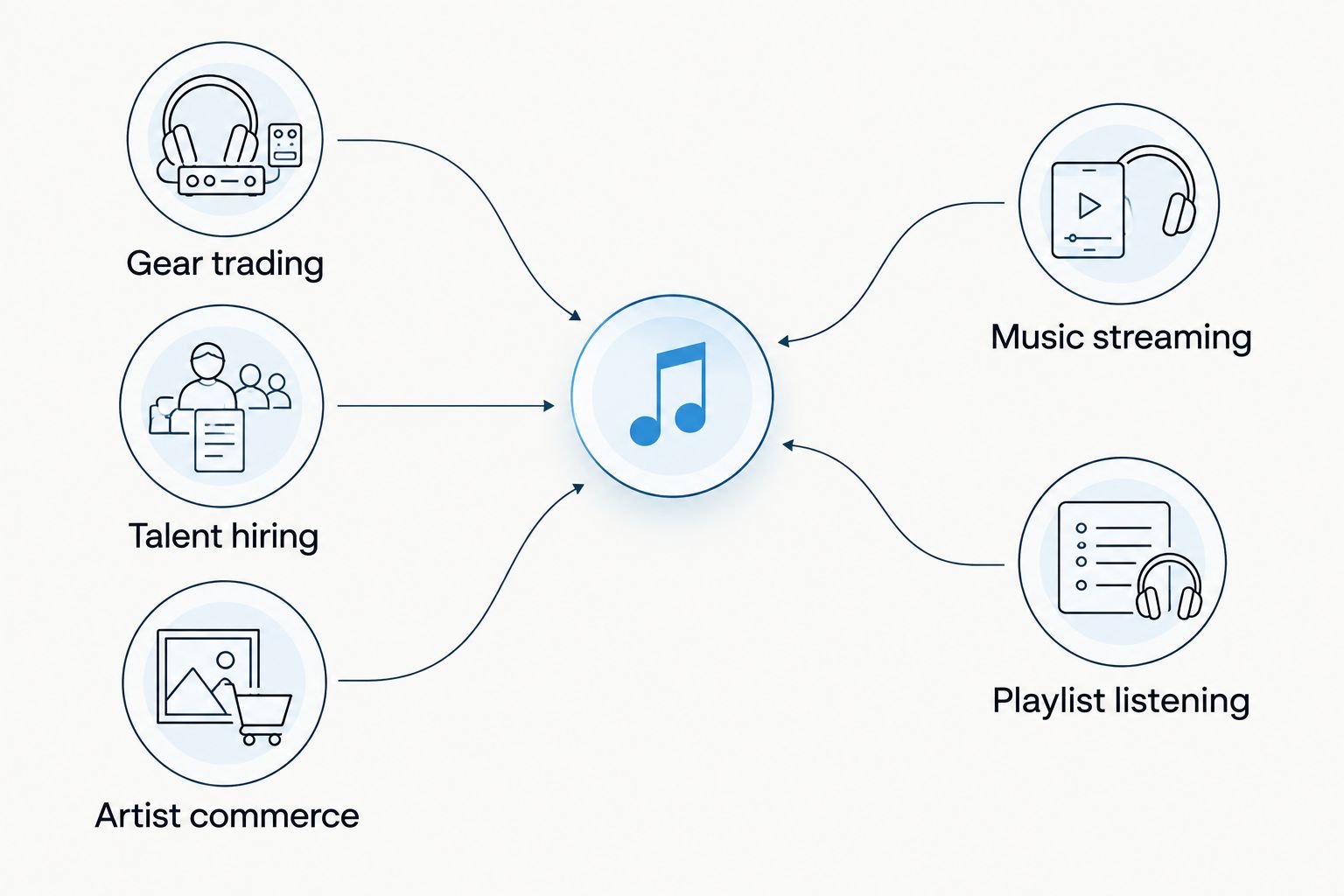
Use these labels to sort the workflow:
- Gear trading: buy or sell the instruments and equipment you need.
- Talent hiring: find professional help for a defined recording task.
- Artist commerce: give fans a direct support destination.
- Music streaming: make listening the main action.
- Playlist listening: organize recordings for repeat playback.
Pricing models: seller commissions versus listening subscriptions
The payment models answer different questions. For sellers, the marketplace emphasizes zero seller commissions. For listeners, Spotify offers ad-supported listening and paid subscription models.
Compare the model, not an unrelated monthly bill. A listening subscription buys access under a service's subscription terms. A gear transaction concerns a particular item, and hiring a professional concerns a particular scope of work. Those are not interchangeable expenses.
Before selling, review the applicable transaction terms and distinguish seller commissions from other transaction costs. Before hiring, agree on the deliverables, revisions, and payment terms. Zero seller commissions do not mean every part of producing, shipping, or selling music is cost-free.
For Spotify, choose the listening model that fits your routine and review its current plan terms. For artist distribution, evaluate the distributor agreement separately from the listener subscription. Keep those decisions separate in your 2026 budget.
Final verdict: choose the job, not the bigger category
Choose OohYeah if you are a seller or project owner
Winner: OohYeah for music commerce. You have gear to list, equipment to buy, a producer or engineer to hire, or an independent-artist commerce destination to build. Create an account, then make the next action specific: list the item or define the service you need.
Do not choose it as a substitute for a dedicated streaming library. Its value in this comparison is the marketplace role.
Choose Spotify if you are a listener or releasing artist
Winner: Spotify for streaming. You want to hear recordings, organize playlists, discover music through recommendations, or give fans a streaming destination for a release.
Do not expect streaming to handle instrument sales or professional hiring. Use a separate commerce destination for those tasks.
| Dimension | Winner |
|---|---|
| Best for | Marketplace for sellers; Spotify for listeners |
| On-demand streaming | Spotify |
| Playlists and listening routines | Spotify |
| Artist discovery | Tie: different discovery contexts |
| Buying and selling gear | OohYeah |
| Hiring music professionals | OohYeah |
| Direct artist support | Commerce for purchase-based support |
| Pricing model | No overall winner: different expenses |
| Standout feature | Tie: different jobs |
FAQ
Is OohYeah better than Spotify?
OohYeah is better for buying and selling music gear, hiring music professionals, and artist commerce; Spotify is better for streaming and playlists. Choose according to the task, not as though they were interchangeable services.
Can Spotify replace a music gear marketplace?
No. Spotify is a streaming service, not a marketplace for buying and selling instruments or studio equipment.
Which platform should I use to hire a producer?
Use the music-professional marketplace for hiring, not Spotify. Define the production task, review work samples, and agree on deliverables before booking.
Which is better for discovering independent artists?
Both provide routes to artist discovery, but in different contexts. Spotify centers listening and recommendations, while the marketplace connects discovery with independent-artist support and commerce.
Does zero seller commissions mean selling gear has no costs?
No. Zero seller commissions describes the platform's seller commission, not every expense involved in a sale. Review the transaction terms and account for responsibilities such as packing and shipping.
Can I use both platforms for the same release?
Yes. Use Spotify as a listening destination and a separate commerce destination for direct support or transactions. Give each link a clear purpose.
Does Spotify pay every artist the same amount per stream?
No. Spotify does not use a universal fixed per-stream payment. Artist receipts depend on rights-holder arrangements and the relevant agreements.
One last thing
Your strongest comparison is the verb in the next action. Listen. Buy. Sell. Hire. Support. Pick one before you send a link.
For your next 2026 release or gear sale, write the requested action beside each destination in your working plan. If the destination cannot complete that action, change the link—not the buyer's expectations.