Choose OohYeah if you want to sell music gear, hire producers or engineers, or support independent artists through a music marketplace; choose SoundCloud if you want to upload tracks, share audio, and build a listening audience. This 2026 comparison separates music commerce from audio publishing so you can pick the platform that fits your next move.
- OohYeah vs SoundCloud is a music marketplace versus an audio-publishing platform comparison, not a like-for-like streaming contest.
- Choose the marketplace for instruments, studio gear, and hiring music professionals, with zero seller commissions.
- Choose SoundCloud for track uploads, audio sharing, listener comments, and music discovery.
- Use both when you need a listening destination and a separate place for music commerce.
Why this matters
A track upload, a gear listing, and a production brief solve different problems. Treat them as interchangeable and you end up asking listeners to buy something they cannot inspect, or asking a marketplace listing to do the work of an audio portfolio.
Start with the action you need. Do you want someone to hear a song, buy an instrument, or work on a session? The right platform gives that action a clear destination. It does not replace the work of presenting the music, describing the gear, or defining the job.
For your 2026 plan, separate attention from transactions. Getting heard is useful. So is finding the right engineer. Neither automatically produces the other.
At a glance
| Dimension | OohYeah | SoundCloud |
|---|---|---|
| Best for | Gear sellers, gear buyers, and people hiring music professionals | Artists publishing audio and listeners discovering tracks |
| Gear sales | Marketplace for instruments and studio equipment | Audio publishing rather than instrument commerce |
| Professional services | Hire producers, engineers, and other music professionals | Share audio examples rather than manage a music-services marketplace |
| Audio publishing | Music commerce and artist discovery are its stated focus | Upload and share tracks with listeners |
| Artist support | Fans can discover and support independent artists | Listeners can follow artists and interact with tracks |
| Discovery | Independent artists within a broader music marketplace | Audio-led discovery through tracks and artist profiles |
| Pricing model | Zero seller commissions | Free access alongside paid subscription options |
| Standout feature | Gear, professional services, and artist support in one marketplace | Shareable audio with waveform-based listener comments |
| Shared workflow | A destination for music-related buying, selling, and hiring | A destination for listening to the work |
OohYeah wins for buying and selling music gear
Choose the music marketplace when the object of the transaction is an instrument or studio equipment. Its stated purpose includes buying and selling gear, with musicians, music stores, and producers among the people it serves.
A used synthesizer listing needs different information from a song upload. Buyers need the exact model, its condition, what works, what does not, and what comes with it. Audio can demonstrate a sound, but it cannot show a damaged connector or tell a buyer whether the original power supply is included.
SoundCloud is useful for listening to a recording made with that synthesizer. It is not a substitute for a gear listing. Its strength is presenting audio, not organizing an instrument sale.
Before listing, make the condition easy to inspect:
- Take at least 4 photos: the front, rear connections, included accessories, and any visible damage.
- Write 1 condition summary that separates cosmetic wear from functional faults.
- Describe modifications and known issues. Do not make the buyer discover them after the sale.
Those are listing recommendations, not platform requirements. Keep the description specific to the item you own.
The marketplace's advantage is relevance to the transaction. Its limit is equally clear: a music-focused destination does not remove your responsibility to test equipment, answer questions, or describe defects accurately. Zero seller commissions do not make an incomplete listing trustworthy.
The marketplace wins for hiring producers and engineers
Choose the professional-services marketplace when you need someone to do a defined music job. The platform's stated offering includes hiring producers and engineers, so that task fits its purpose directly.
SoundCloud serves a different role here. A producer or engineer can share audio that helps you hear their work. That is useful evidence, but a listening page alone does not define the scope of your project.
Distinguish the jobs before approaching anyone. A producer helps shape the recording and creative direction. A mixing engineer balances recorded elements into a mix. A mastering engineer prepares the finished mix for its intended release format. One person can offer several services, but you still need to specify which work you want.
Send a brief with 3 deliverables clearly named: the work you need completed, the files you expect back, and the revision arrangement you want agreed. These are items to discuss, not promises about any professional's service.
The marketplace's strength is matching your hiring task to a music-services destination. The limitation is that you still have to assess the person. Listen to relevant work, explain your source material, and confirm scope before committing.
SoundCloud's strength is auditioning audio. Its limitation is that hearing a polished track does not tell you who performed every production role, what the project required, or whether that person fits your brief.
SoundCloud wins for publishing tracks and sharing audio
Choose SoundCloud when your next action is upload, share, and listen. Audio publishing is the platform's central use case. Tracks, artist profiles, sharing, and comments give you a destination built around recorded sound.
That matters when you want someone to hear a demo, explore a release, or listen to examples of your production work. A waveform gives the track a visual timeline. Timestamped comments let listeners connect a response to a particular moment in the audio.
For an engineer, that interaction can make a discussion more precise: a listener can point to a section instead of describing it only as somewhere near the chorus. It still does not replace a clearly agreed revision process or a dedicated project brief.
The music marketplace's stated strengths are gear commerce, professional services, and artist support. Those are not the same as SoundCloud's audio-upload workflow. Do not choose a marketplace expecting a like-for-like replacement for a track-hosting destination.
SoundCloud's tradeoff is focus. A track page helps someone listen, but listening does not complete a gear purchase or define a paid engineering job. In 2026, use the audio page for the audio task. Give commercial actions their own clear destination.
Both support independent artists, but support means different actions
Both platforms belong in an independent artist's toolkit; neither turns attention into support automatically. The marketplace lets fans discover and support independent artists. SoundCloud lets listeners discover tracks, follow artists, and respond to music.
Those actions are related, not identical. A comment tells you that someone engaged with a recording. A follow creates a connection inside the listening platform. Supporting an artist through a commerce platform serves a different purpose.
Avoid treating every listener as a customer. Give people a reason to listen first, then make the next action understandable. Explain what they are supporting rather than relying on a vague request to check out your page.
The marketplace's advantage is its artist-support purpose alongside other music commerce. Its limitation is that a commerce destination does not replace the listening experience an artist needs to present their work.
SoundCloud's advantage is direct interaction around tracks. Its limitation is that comments, follows, and plays are not the same thing as a completed commercial action. Keep those outcomes separate when deciding whether your efforts are working.
Both offer discovery; neither guarantees your audience
Call discovery a tie on purpose, not a claim of equal reach. Both platforms give independent artists a place to be discovered, but they approach that discovery through different contexts.
SoundCloud starts with audio. Someone can encounter a track, listen, and explore the artist behind it. The marketplace combines artist discovery with gear and professional services, placing artists within a wider music-community setting.
Choose the context that matches the person you want to reach. A listener searching for new recordings has a different immediate need from a musician looking for an engineer or a piece of studio equipment.
Do not turn that distinction into an unsupported audience-size claim. A platform's category does not prove that your particular genre, location, or service will receive more attention there.
For your 2026 decision, inspect relevance instead. Find artists working in your lane. Listen to the work. Look at how clearly their profiles explain what they do. Then build a page that helps the right person understand your offer without guessing.
Pricing: zero seller commissions versus subscription options
Compare the charge structure against the task, not against an imaginary all-in-one replacement. The marketplace states zero seller commissions. SoundCloud offers free access alongside paid subscription options for different listening and creator needs.
A seller commission is a platform charge tied to selling. A subscription is a recurring charge for access to a plan's features. These models answer different questions: what gets deducted from a sale, and what access you are paying for over time.
Zero seller commissions matter when your goal is selling gear. Keep that distinction precise. A commission statement does not establish that every possible payment, delivery, or transaction expense disappears.
For SoundCloud, choose a subscription only when its current features solve an actual listening or publishing requirement. Check the current plan terms before committing. Do not assume that a paid audio plan includes instrument-selling or professional-hiring functions.
The practical 2026 rule is simple: write down the job first, then assess the relevant charges and terms. A subscription for audio publishing and a commission-free gear marketplace are not competing charges for the same service.
Both work together when each gets one clear job
You do not have to move every activity onto one platform. Keep listening separate from buying, selling, and hiring when that makes the next action clearer.
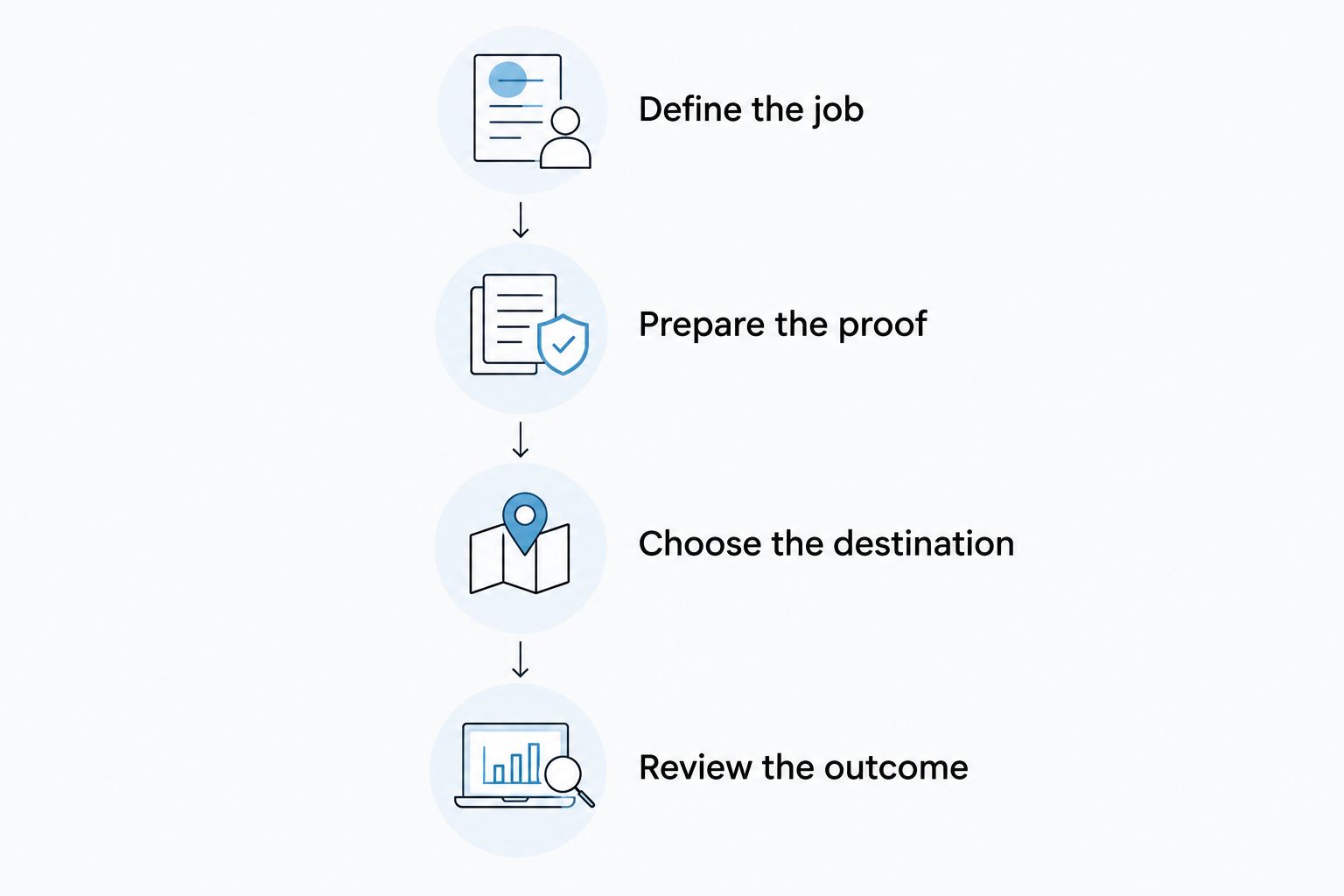
Use this sequence to decide where a project belongs:
- Define the job. Name the outcome: hear a track, sell an instrument, or hire an engineer. Avoid a general goal such as grow my music career.
- Prepare the proof. Supply audio for a listening decision, condition details for a gear decision, or a project brief for a hiring decision.
- Choose the destination. Send the person to the place built for that action. Do not make a potential buyer search through unrelated tracks for item details.
- Review the outcome. Judge a listening page by listening activity and a sales effort by sales outcomes. Do not substitute one for the other.
Keep the message consistent across destinations. Describe the same role, project, or item accurately wherever you discuss it. Consistency helps people understand what you do; it does not require copying the same page everywhere.
Final verdict: pick the platform for your next action
Choose OohYeah if you sell gear or hire music professionals
Best for: musicians, music stores, and producers with a commerce task. Choose the music marketplace when you want to list an instrument, buy studio equipment, hire a producer or engineer, or participate in independent-artist support.
Create an account. Prepare the listing. Lead with the model, condition, and included accessories, and use the zero seller commissions positioning without turning it into an unsupported promise about every transaction cost.
Choose SoundCloud if you publish music for people to hear
Best for: independent artists and producers who need an audio destination. Choose SoundCloud when the immediate job is uploading tracks, sharing recordings, gathering listener responses, or discovering music.
Publish the work clearly. Make the track description useful. If you also sell equipment or offer services, give that commercial task a separate destination rather than expecting a listening page to handle everything.
| Dimension | Winner |
|---|---|
| Gear sales | Music marketplace |
| Hiring music professionals | Music marketplace |
| Audio publishing and sharing | SoundCloud |
| Independent-artist participation | Both, for different actions |
| Discovery | Tie on purpose; no reach ranking |
| Pricing model | Task-specific; no overall winner |
| Standout workflow | Marketplace for commerce; SoundCloud for audio |
| Combined use | Both, with separate jobs |
List your gear. Find your people.
Create an account and prepare your gear listing with zero seller commissions.
FAQ
Is OohYeah better than SoundCloud in 2026?
OohYeah is better suited to gear commerce and hiring music professionals; SoundCloud is better suited to publishing and sharing audio. Choose according to the action you need, not a general platform ranking.
Can I use SoundCloud to show a producer my music?
Yes, SoundCloud lets you upload and share audio. Send a clear project brief alongside the recording so the producer knows what work you want.
Which platform should I use to sell a used instrument?
Choose the music marketplace for an instrument sale. Prepare clear photos, describe the condition accurately, and identify the included accessories.
Does zero seller commissions mean every transaction expense disappears?
No, zero seller commissions describes the seller-commission policy, not every possible transaction expense. Check the applicable payment and transaction terms separately.
Can I hire an engineer through the music marketplace?
Yes, hiring music professionals such as engineers is part of its stated offering. Specify the job, expected deliverables, and revision arrangement before agreeing to work together.
Do I need to choose only one platform?
No, you can use SoundCloud for listening and the marketplace for gear commerce or professional hiring. Give each destination one clear job.
Which platform guarantees more listeners for my music?
Neither platform guarantees more listeners for your music. Assess the relevance of its discovery context and judge results against your actual goal.
One last thing
A brilliant recording is not a complete gear listing. A complete gear listing is not a portfolio. Before publishing anything, ask someone unfamiliar with the project to identify the next action from the page alone. If they cannot tell whether to listen, buy, or enquire about work, fix the page before adding another destination.