Choose OohYeah if you want to buy or sell instruments and studio gear, hire music professionals, or support independent artists; choose Discogs if you want to identify, collect, buy, or sell recorded music by its specific release. This 2026 comparison separates those jobs so you pick the right marketplace before writing a listing or contacting a seller.
- OohYeah vs Discogs is a music gear marketplace versus a recorded-music database and marketplace comparison.
- OohYeah is best for musicians buying gear, selling instruments, or hiring producers and engineers.
- Discogs is best for record collectors identifying specific releases and buying or selling recorded music.
- OohYeah has zero seller commissions; Discogs uses sales commissions.
- Both require accurate descriptions: gear buyers need functional details, while record buyers need release identification and condition grading.
Why this matters
A microphone and a collectible pressing need different listings. The microphone buyer needs to know whether the capsule works, which accessories are included, and whether the connector is damaged. The record buyer needs the correct release, pressing details, and separate descriptions of the record and sleeve.
Choose the marketplace around the transaction, not around the word music. Selling a synthesizer, booking an engineer, and finding a particular pressing are different jobs. A platform suited to one does not automatically suit the others.
For your 2026 decision, start with what you need to accomplish. Then check the information that makes that transaction possible. Marketplace features matter only when they help you describe, find, or purchase the thing you actually want.
At a glance
| Dimension | OohYeah | Discogs |
|---|---|---|
| Best for | Musicians, music stores, producers, and independent-artist supporters | Record collectors and recorded-music buyers and sellers |
| Instruments and studio gear | Marketplace for buying and selling gear | Recorded-music marketplace, not a gear-selling destination |
| Hiring music professionals | Hire professionals such as producers and engineers | Not a professional-services marketplace |
| Identifying recorded releases | Artist discovery and support | Database organized around recorded releases and editions |
| Collection planning | Gear, professional services, and artist/fan commerce | Collection and Wantlist tools for recorded music |
| Condition information | Functional details and physical condition matter | Media grading and sleeve grading matter |
| Purchase checks | Read the listing and clarify transaction details | Match the release and clarify transaction details |
| Pricing model | Zero seller commissions | Sales commissions |
| Standout feature | Gear, music professionals, and artist support in one marketplace | Release database connected to record collecting and trading |
OohYeah wins for instruments and studio gear
Best for: musicians, studios, and music stores buying or selling equipment. A music gear marketplace fits transactions involving guitars, keyboards, microphones, and other studio equipment. Discogs centers its marketplace on recorded releases rather than instruments or recording hardware.
For a gear listing, lead with the exact item and its working condition. Separate cosmetic wear from functional faults. A scratched enclosure and an intermittent output are not interchangeable problems, and a buyer needs to understand both before agreeing to a purchase.
Build the description around practical questions:
- Identity: What is the exact make and model?
- Function: Which controls, inputs, and outputs have you checked?
- Condition: What wear, damage, or repairs should the buyer know about?
- Included items: Which cables, cases, adapters, or other accessories are part of the sale?
- Delivery: What shipping or handover arrangements are stated in the listing?
The advantage is the fit between the item and the marketplace. The limitation is that a marketplace does not write an accurate description for you. You still need useful photographs, clear disclosure, and answers to buyer questions.
Discogs wins elsewhere in this comparison, but not here. A release database cannot replace a gear listing that explains whether an instrument or recording device works. For a broader look at this distinction, read the guide to Discogs alternatives for buying and selling used gear.
OohYeah wins when you need a producer or engineer
Best for: musicians hiring help with a recording project. Hiring a professional is a service transaction, not a record purchase. You need to discuss the work, the files, the deliverables, and who is responsible for each part of the project.
The distinction between roles matters. A producer can help shape a recording's creative direction; an engineer handles technical audio work. Actual responsibilities vary by project, so agree on the scope rather than assuming a job title covers everything you need.
Before contacting a professional, write a short brief:
- Name the task: recording, editing, mixing, or another clearly defined job.
- Describe the material you already have and what remains unfinished.
- State the deliverables you need, including the intended file formats.
- Ask how feedback, revisions, and final approval will work.
- Confirm permissions for any audio you supply.
A good brief makes the conversation concrete. It also exposes mismatches before work starts: hiring someone to mix finished recordings is different from asking someone to produce an unfinished song.
The marketplace's professional-services scope is the useful distinction. It does not replace checking a professional's work or agreeing on terms. Discogs offers a different kind of music transaction, so it is not the right choice for booking production or engineering work.
Discogs wins for identifying a specific record release
Best for: collectors who care which edition they are buying. Discogs connects its recorded-music marketplace to a release database. That matters when the artist and album title alone do not identify the record you want.
A release can differ by label, catalog number, format, country, or pressing details. Match the physical item to the relevant database entry rather than picking the first result with familiar cover art. The wrong entry can turn an apparently clear listing into the wrong purchase.
Start with the identifiers printed on the item. For vinyl, inspect the label and the runout area, where stamped or etched markings can help distinguish pressings. Compare those details with the release information before relying on the listing title.
Playback speed is another detail to check. 33⅓ rpm and 45 rpm describe rotation speed, not record diameter or collector value. Do not assume every record of a particular size plays at the same speed. Read the label and release details.
Discogs' strength is release specificity. Its limitation is that identifying the edition does not establish the condition of the seller's particular copy. Database information describes a release; the listing still needs to describe the actual item being sold.
Artist discovery and support serve another purpose. They help you connect with music and its creators, but they do not replace pressing-level identification when that is your buying requirement.
Discogs wins for managing a record collection and Wantlist
Best for: collectors tracking owned releases and future purchases. Discogs offers Collection and Wantlist tools tied to its release database. You can organize records around the editions you own or want rather than keeping only a list of album titles.
That distinction helps when your collection contains different editions of the same recording. An album-level note can hide those differences. A release-level entry keeps the collecting task focused on the version you mean.
Use the tools deliberately:
- Add the release that matches your physical copy.
- Keep condition notes separate from release identity.
- Put the specific edition you want on your Wantlist.
- Recheck identifiers when a potential purchase appears.
The benefit is organization, not a guarantee that every listing matches your requirements. You still need to read the seller's description and compare the details that matter to you. A database match does not remove the need for judgment.
A gear buyer or musician hiring an engineer has a different workflow. Equipment suitability and project scope matter more than a record collection entry. Discogs wins this dimension because its collection tools match the collector's job.
Both need honest condition descriptions
Best for: buyers and sellers who want fewer misunderstandings. Neither transaction works well when the listing hides the information that determines whether the item is suitable. This is an honest tie: accurate disclosure matters on both sides, even though the details differ.
For gear, describe function first. Say what you checked, what failed, and what remains untested. Do not describe equipment as fully working when you have only confirmed that it powers on.
For records, keep media condition and sleeve condition separate. A clean sleeve does not establish quiet playback, and a playable record can come in damaged packaging. Discogs uses grading terminology for those separate parts of the item.
| Listing subject | Useful disclosure | What it does not establish |
|---|---|---|
| Instrument | Controls, structural condition, and known faults | Suitability for every playing style |
| Studio equipment | Tested functions, connectors, and included accessories | Compatibility with every setup |
| Recorded music | Release identity, media grade, and sleeve grade | The condition of another copy of that release |
Write the fault plainly. A buyer can evaluate disclosed wear or damage; vague reassurance makes that decision harder. Photographs should support the description, not substitute for it.
Both need transaction checks before you commit
Best for: anyone comparing a specific listing or service offer. Neither platform choice replaces checking what the transaction includes. In 2026, the useful comparison is still the actual offer in front of you, not an assumption about every seller on the platform.
For gear, confirm the item's identity, disclosed faults, included accessories, and delivery arrangements. For a record, confirm the release match, media and sleeve condition, and packaging arrangements. For services, confirm scope, deliverables, and approval terms.
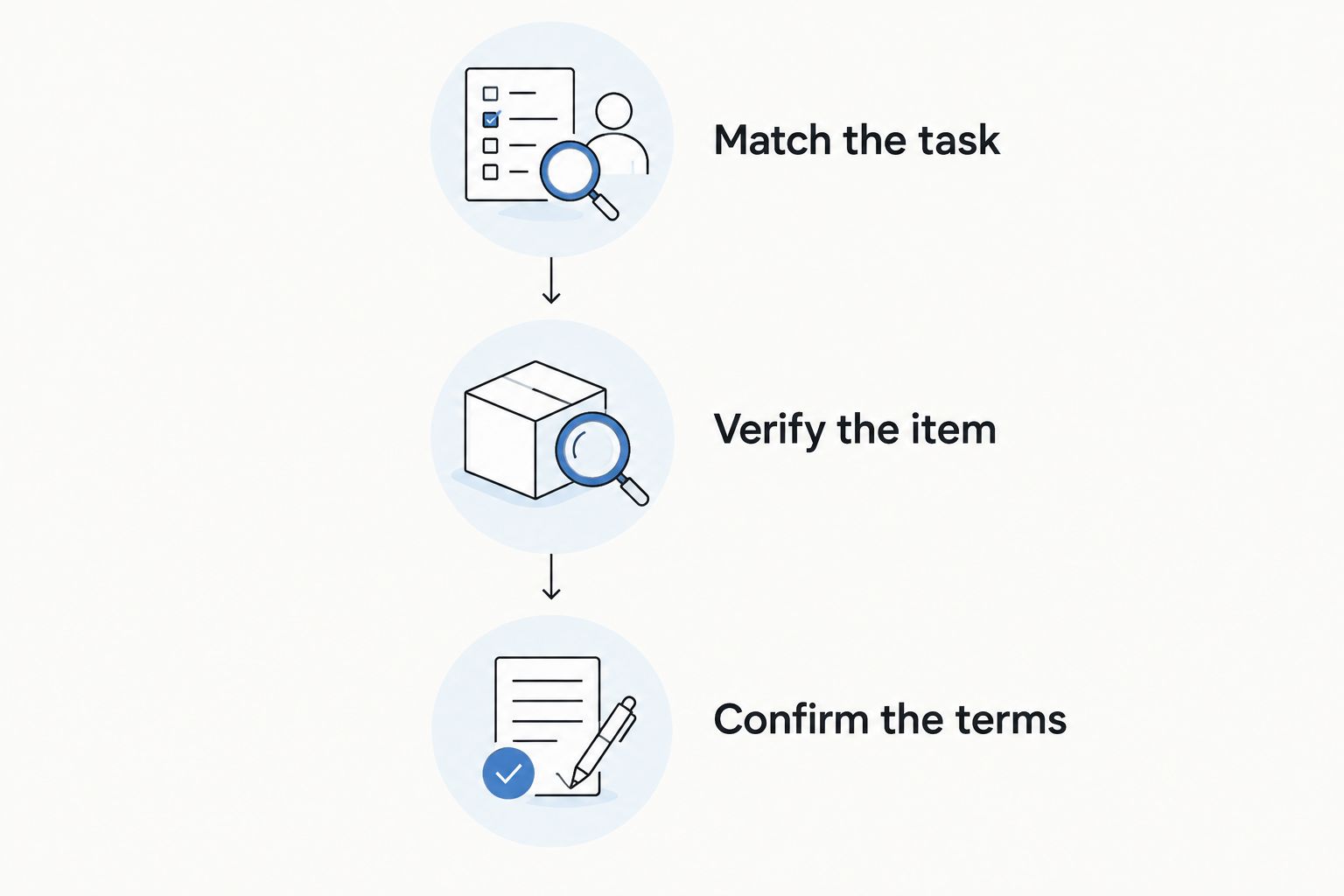
Keep the decision sequence simple:
- Match the task: Gear, professional work, or a recorded release?
- Verify the item: Does the description identify exactly what you need?
- Confirm the terms: What is included, and what have you agreed to?
Keep important agreements in writing. If a detail changes your decision, ask about it before committing rather than interpreting silence as confirmation. This is especially important when a photograph cannot show the issue, such as an intermittent fault or the agreed scope of a mix.
Pricing models: seller commissions separate the two
OohYeah has zero seller commissions; Discogs charges sales commissions. That is a clear difference for sellers in this 2026 comparison. One model does not deduct a marketplace seller commission from the sale; the other ties marketplace commission to the transaction.
Zero seller commissions do not mean every part of a sale has no cost. Shipping, packaging, payment-related charges, and any other applicable costs are separate questions. Check the current terms that apply to your transaction rather than treating the commission policy as an all-in cost promise.
For Discogs, review the current fee terms before listing recorded music. Do not build your selling decision around an old fee summary. For either marketplace, separate the platform's charges from expenses involved in preparing and delivering the item.
For gear sellers, start with the zero-commission marketplace that matches the item. For record collectors, weigh the commission model alongside release identification and collecting tools. Category fit still matters: a favorable fee structure does not make a marketplace suited to every music-related sale.
Put your gear up for sale
Create an account and list instruments or studio gear with zero seller commissions.
Final verdict: choose by the job
Choose OohYeah if you are making music or selling gear
Winner for: the working musician, gear seller, or studio operator. Choose this music gear marketplace when you need instruments, recording equipment, or access to professionals such as producers and engineers. It also serves fans discovering and supporting independent artists.
Create an account. List the gear accurately. If you need professional help, write the brief before reaching out. Those actions match what the marketplace offers.
Choose Discogs if you are collecting recorded music
Winner for: the release-focused record collector or recorded-music seller. Choose Discogs when you need to identify a particular edition, manage a record collection, build a Wantlist, or trade recorded releases.
Match the database entry. Inspect the condition description. Ask about anything that changes whether that specific copy belongs in your collection.
For 2026, there is no useful overall winner across unrelated tasks. OohYeah is best for musicians buying gear, selling instruments, or hiring music professionals; Discogs is best for release-focused record collectors.
| Dimension | Winner |
|---|---|
| Instruments and studio gear | OohYeah |
| Hiring music professionals | OohYeah |
| Identifying recorded releases | Discogs |
| Collection and Wantlist tools | Discogs |
| Honest condition descriptions | Tie: essential on both |
| Transaction checks | Tie: check the specific offer |
| Seller commission policy | OohYeah: zero seller commissions |
FAQ
Is OohYeah better than Discogs for buying music gear?
OohYeah is the better fit for buying instruments and studio gear. Discogs centers on recorded releases, so its database and marketplace serve record collecting rather than equipment shopping.
Is Discogs better for collecting vinyl records?
Discogs is the better fit for release-focused vinyl collecting. Its release database, Collection tools, and Wantlist help collectors distinguish and organize specific editions.
Can I hire a producer or engineer through Discogs?
Discogs is not a marketplace for hiring producers or engineers. OohYeah includes music professional services, so use that route for a recording project and agree on scope before work starts.
Does zero seller commission mean selling gear has no costs?
Zero seller commission does not mean the entire transaction has no costs. Check shipping, packaging, payment-related charges, and any other applicable terms separately.
What should I check before buying a used record on Discogs?
Check the release identity, media condition, and sleeve condition before buying a used record on Discogs. Compare the catalog number and other relevant identifiers, then clarify any unclear condition details with the seller.
What should I include when listing used studio equipment?
Include the exact make and model, tested functions, known faults, physical condition, and included accessories. Distinguish equipment that powers on from equipment whose relevant functions you have actually tested.
Should I use both marketplaces in 2026?
Use both marketplaces in 2026 if you have both gear-related and record-collecting needs. Route equipment and professional-service tasks to OohYeah, and release identification and recorded-music collecting to Discogs.
One last thing
Before writing a listing, finish this sentence: The buyer needs to verify… For an audio interface, finish it with working functions and included accessories. For a record, finish it with release identity and condition. For an engineer, finish it with scope and deliverables.
That sentence tells you which marketplace fits—and what your listing or brief needs to say. Do that first. Then sell the gear, book the help, or find the record.