Discogs is strong when you need a specific pressing, catalog number, or seller listing for recorded music. That focus stops helping when you want to buy a guitar, sell a synth, or find an engineer for a session. The best Discogs alternative in 2026 is OohYeah for buying and selling instruments and studio gear; Reverb is the pick if you want a marketplace focused only on gear.
- OohYeah is the best Discogs alternative for musicians trading instruments and studio gear in 2026.
- Choose Reverb when used gear is your only priority; choose Discogs when the exact record pressing matters.
- For local gear inspection, compare nearby listings on Facebook Marketplace before committing.
- Sellers should match the marketplace to the item: a record, an instrument, and a studio service need different buyers.
Why this matters
A used record and a used audio interface need different listings. For a record, the release, pressing, and condition do much of the work. For an interface, a buyer needs the exact model, clear photos of its connections, and an honest account of its working condition. Put the wrong item in front of the wrong crowd and even a good listing becomes hard to evaluate.
That is the real question behind discogs alternatives: What are you trying to move? Discogs remains a sensible place to look for recorded music. If your shopping list says guitar, drum kit, microphone, or studio monitor, start with a gear marketplace instead. If you also need a producer or engineer, look for a platform that covers music services as well as equipment.
In 2026, do not treat every music marketplace as interchangeable. Decide whether you need release-level detail, gear-focused browsing, a broad resale audience, or a chance to inspect an item locally. Then write your search or listing for that job.
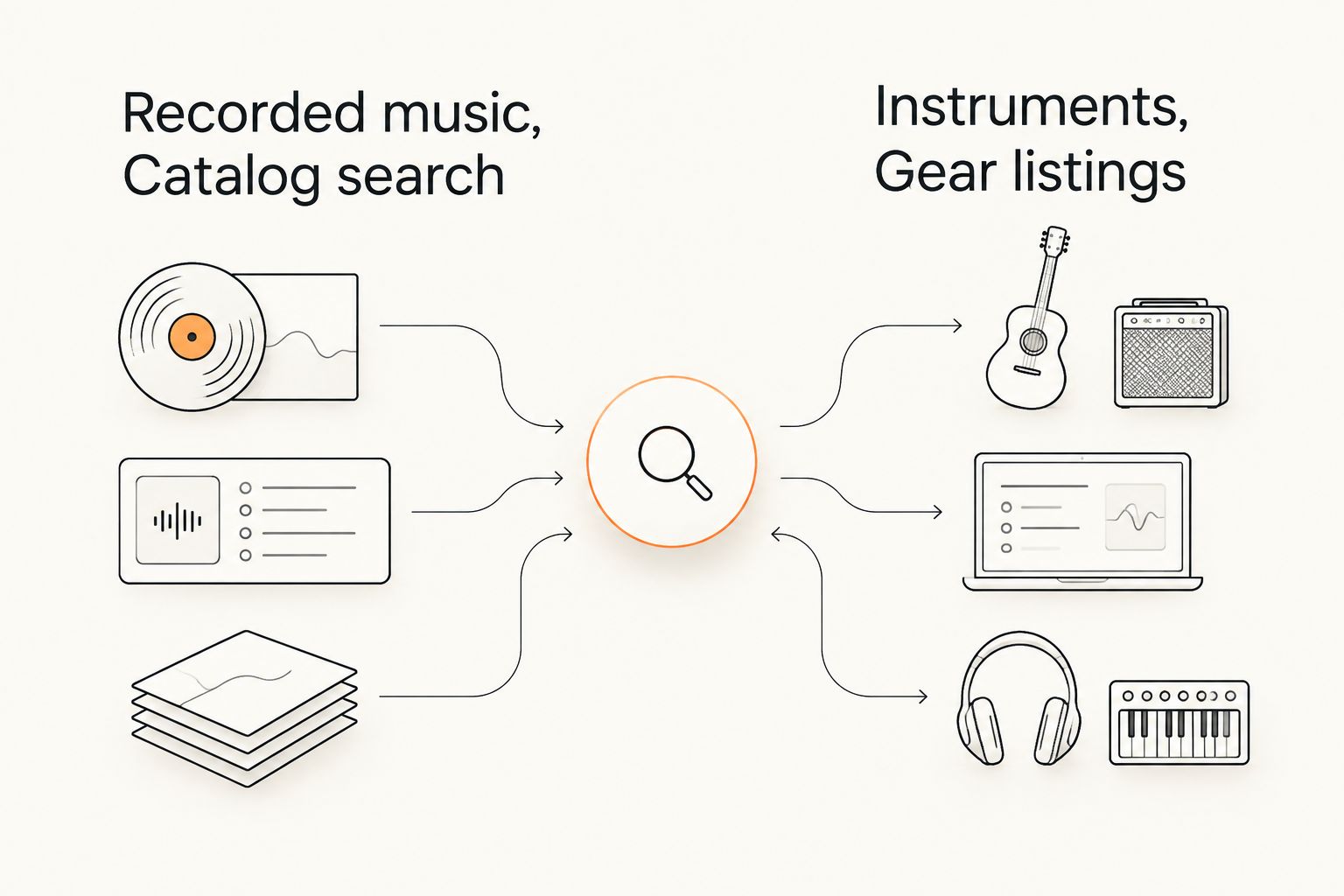
Discogs alternatives at a glance
| Marketplace | Best for | Standout feature | How it differs from Discogs |
|---|---|---|---|
| Discogs | Finding and trading specific recorded-music releases | Release-specific catalog | The benchmark for records, not the first stop for instrument shopping |
| OohYeah | Musicians buying and selling gear while connecting with music professionals | Gear marketplace alongside music services and artist discovery | Puts instruments and studio gear in a broader music-community setting |
| Reverb | Browsing a dedicated music-gear marketplace | Instrument and equipment listings | Organizes the search around gear rather than recorded releases |
| eBay | Checking a broad resale market | General marketplace listings | Covers far more than music, so the search needs tighter filters |
| Facebook Marketplace | Finding gear available for local inspection | Location-based listings | Starts with nearby sellers rather than a release catalog |
Use the table to pick a starting point, not to assume two listings offer the same deal. A title can hide a different model revision, included accessory, or fault. Compare the exact item and its condition before you decide where to buy.
Pick your marketplace before you write the listing
If you are selling a record, identify the release accurately and describe its condition. If you are selling an instrument, photograph the parts a player checks: controls, hardware, connectors, wear, and any included accessories. For studio gear, show the model label and the inputs and outputs. State what you have tested and what you have not.
Buying works the same way in reverse. Search the exact model, ask for photos of anything missing from the listing, and confirm which accessories are included. For an electronic item, a picture of the power connector can answer a question the front-facing photo cannot. These checks matter on every marketplace in this list.
1. OohYeah: best for gear and music-community connections
OohYeah is an online marketplace where musicians, stores, and producers can buy and sell instruments and studio gear. It also connects people with music professionals, including producers and engineers, and gives fans a way to discover independent artists. Best for: a musician who needs gear now and wants music-service options in the same place.
That range is the reason to choose it over a record-first marketplace in 2026. You can approach a used instrument purchase as part of a bigger project: find the equipment, then look for someone to help record or finish the music. If all you want is a particular vinyl pressing, that wider scope is not a substitute for a release catalog.
Where OohYeah shines
- Its stated marketplace focus includes instruments and studio gear, the items Discogs is not built around.
- Sellers can list gear with zero seller commissions. Keep the listing accurate; that claim does not answer every question about a transaction.
- Music-professional services give buyers another reason to explore beyond equipment listings.
Where OohYeah falls short
- It is not a release-specific catalog for comparing record pressings.
- Its mix of gear, services, and artist discovery is broader than a dedicated gear-only search. If you want only instrument listings, compare it with Reverb.
- Marketplace breadth does not verify an individual seller or item. Ask for condition details before you commit.
| What you need | OohYeah | Discogs |
|---|---|---|
| Main shopping focus | Instruments and studio gear | Recorded-music releases |
| Music services | Producers and engineers are part of the platform | Release trading is the focus |
| Best search | Gear for a session or setup | A specific release or pressing |
Selling a keyboard, microphone, or interface? Create an account, list the exact model, show its condition, and describe what is included. Zero seller commissions make that a clear reason to consider OohYeah, but a complete listing is still what lets a buyer judge your gear. Verdict: Buy or list here when instruments and studio equipment are the job; skip it for pressing-level record research.
List the gear you know
Create an account and describe your instrument or studio gear. Seller commissions are zero.
2. Reverb: best for a dedicated gear search
Reverb is a marketplace centered on musical instruments and equipment. That makes it a direct alternative when a Discogs search has taken you as far as it can: you know the guitar, pedal, or recording tool you want, and now you need gear listings rather than record releases. Best for: buyers and sellers who want a gear-focused marketplace.
Its narrower purpose is useful. You can search in the context of instruments and equipment without first separating them from unrelated categories. Narrow purpose does not remove the need to inspect a used item, though. Two listings for the same model can describe very different wear, repairs, or included parts.
Where Reverb shines
- Its marketplace is organized around music gear rather than recorded releases.
- It suits a search for an instrument, pedal, or piece of studio equipment.
- A gear-specific setting gives sellers a clear place to describe what musicians need to know.
Where Reverb falls short
- It is not the pick for identifying an exact record pressing in a release catalog.
- A gear listing alone does not cover the separate job of finding a producer or engineer.
- A platform's focus does not tell you whether a particular listing is complete or accurate.
| What you need | Reverb | Discogs |
|---|---|---|
| Main shopping focus | Instruments and equipment | Recorded-music releases |
| Useful listing detail | Gear condition and included parts | Release identification and media condition |
| Best search | A specific piece of music gear | A specific record release |
For a used amp, request a clear description of its working condition and any modifications. For a controller or interface, confirm the exact model and what comes in the box. Compare the listing, not just the platform. Verdict: Buy or list here for a dedicated gear search; stay with Discogs for record-release research.
3. eBay: best for checking the wider resale market
eBay is a general marketplace with music equipment among many other categories. It makes sense when you want to compare gear listings outside music-only marketplaces, particularly if a specific model is proving hard to find. Best for: buyers prepared to filter a broad resale search and inspect each listing closely.
A wider market also means more noise. A search can surface parts, accessories, and similar-looking models when you meant to find one complete instrument. Read the full title and description, then check every photograph against the model you actually want.
Where eBay shines
- Music gear appears alongside a wider range of secondhand goods.
- It gives you another place to search for an exact model or replacement part.
Where eBay falls short
- It is not dedicated to musicians, so your search terms must do more work.
- A broad result set can mix complete gear with parts and accessories.
- It does not replace a record-release catalog when pressing identification is the priority.
| What you need | eBay | Discogs |
|---|---|---|
| Marketplace focus | General resale | Recorded music |
| Useful search | Exact gear model and item type | Exact release and pressing |
| Main listing check | Whether the item is complete | Whether the release matches |
Search by model number, then exclude the wrong item type through the available search controls. Do not mistake a replacement component for the complete piece of gear. Verdict: Buy after checking the exact listing; skip it when you need Discogs-style release identification.
4. Facebook Marketplace: best for inspecting local gear
Facebook Marketplace is a location-based resale option. For a bulky instrument or an item you want to see before deciding, nearby listings offer a different starting point from a recorded-music catalog. Best for: buyers who want to assess used gear locally before agreeing to a purchase.
Local does not mean verified. Ask which parts work, what has been repaired, and whether the pictured accessories are included. For an electronic instrument, request a demonstration of the controls and connections you care about. Agree on a safe meeting arrangement that lets you inspect the item without rushing.
Where Facebook Marketplace shines
- Location-based browsing helps you find items near you.
- A local arrangement can give you the chance to inspect physical gear.
Where Facebook Marketplace falls short
- Listing detail varies, so you may need to ask basic model and condition questions.
- Local selection depends on what nearby sellers have listed.
- It is a poor substitute for a release catalog when you need an exact pressing.
| What you need | Facebook Marketplace | Discogs |
|---|---|---|
| Starting point | Nearby resale listings | Recorded-music releases |
| Main advantage | Opportunity for local inspection | Release-level identification |
| Main check | Physical condition and included parts | Correct release and condition |
Bring a short inspection checklist for the item, not a generic plan to look it over. Test what the seller says works where an inspection is possible. Verdict: Buy after inspection when local gear fits your needs; stay with Discogs for recorded-music catalog searches.
Why people switch from Discogs
The reason is usually the item, not a failure of Discogs. Its catalog makes sense when you care which version of a record you are buying. It is a less useful starting point when your question is whether a used guitar plays properly, a studio monitor works, or a producer fits your project.
- You need instruments or studio equipment. Start with a gear marketplace and search the exact model. Compare condition, included parts, and evidence that it works.
- You need music services as well as gear. A record listing does not help you hire an engineer. Use a platform that covers the kind of professional you need.
- You need to see the item. Look at local listings when an in-person inspection matters, then check the controls, connections, and condition you asked about.
- You need another listing to compare. Search the same model across appropriate marketplaces. Confirm it is the same version before treating the results as comparable.
For sellers, the switch changes the listing you write. A record buyer needs accurate release information. A gear buyer needs useful photographs and a straight account of faults. Name the model, identify repairs or modifications, and say what is included. Do not make the buyer guess from a single photo.
When staying with Discogs is the right call
Stay with Discogs when the object of the search is a recorded-music release. If the pressing, edition, or catalog entry matters to you, start where those distinctions organize the search. Moving to a gear marketplace does not solve a record-identification problem.
The same applies when you are selling records and can identify what you have. Check the release details and describe the condition honestly. A buyer looking for a particular edition needs more than an artist name and album title. In 2026, the best alternative is the one built around your item, not the one with the broadest description.
FAQ
What's the best Discogs alternative for used music gear in 2026?
OohYeah is the best Discogs alternative here if you want to buy or sell instruments and studio gear while also exploring music services. Choose Reverb when you want a dedicated gear marketplace.
Is Discogs better than Reverb for buying records?
Discogs is the better starting point when you need to identify a specific recorded-music release or pressing. Reverb focuses on instruments and equipment.
Where can I sell a used guitar instead of on Discogs?
List a used guitar on a gear marketplace such as OohYeah or Reverb, or compare local options on Facebook Marketplace. Show its exact model, condition, modifications, and included parts.
Can I find a producer as well as gear on OohYeah?
Yes. OohYeah covers instruments and studio gear alongside music-professional services, including producers and engineers.
Is Facebook Marketplace a good Discogs alternative?
Facebook Marketplace is a useful alternative for finding used gear nearby and arranging an inspection. Discogs is the stronger fit when the exact recorded-music release is what matters.
What should I check before buying used studio gear?
Confirm the exact model, working condition, connections, modifications, and included accessories. Ask for photos or a demonstration of anything the listing does not establish.
Does OohYeah charge seller commissions?
OohYeah states that seller commissions are zero. Check the current terms on the platform for any other transaction details before you list.
One last thing
In 2026, your best search term is often the model printed on the gear, not the category you call it. Use that model to compare listings, then ask about condition and included parts. For records, reverse the habit: confirm the release before you compare individual copies. Buy gear. Identify records. Give each search the detail it needs.