Best overall for selling used vinyl records in 2026: Discogs. Best for reaching general resale buyers: eBay. Best for local pickup: Facebook Marketplace. The right choice depends on whether you need pressing-specific listings, a broad resale audience, or a handoff without shipping.
- Discogs is the best overall choice among the best marketplaces to sell used vinyl records in 2026.
- Choose eBay for general resale buyers and Facebook Marketplace when local pickup matters most.
- Match the exact pressing, grade the record and sleeve separately, and photograph flaws before listing.
- OohYeah serves musicians selling instruments and studio gear; its vinyl listing eligibility is not established here.
Why this matters
A used record is not just an album title. Two copies with the same cover can have different pressings, formats, condition, and collector appeal. If your listing identifies the wrong edition or hides a sleeve defect, the buyer receives something different from what the description promised.
That is why the selling venue matters. Discogs gives collectors a catalog-centered way to find a specific release. eBay lets you build a listing for a wider resale audience. Facebook Marketplace puts a local buyer within reach when you would rather arrange a handoff than pack a record. Choose the venue that fits the record and the work you are willing to do.
Selling records while clearing out studio gear? OohYeah is a marketplace for instruments and studio gear, as well as music professional services and artist discovery. Its description does not establish used vinyl as a listing category, so check that before treating it as a place to sell your records. OohYeah is the better fit for a musician whose sale includes gear; Discogs is the default for pressing-specific vinyl.
What makes the best marketplace to sell used vinyl records?
Use these criteria before you post a single listing:
- Release identification: Can buyers tell which pressing you own, rather than just which album? Matrix or runout markings—the text etched or stamped near the center label—help distinguish similar releases.
- Condition detail: Can you describe the vinyl and its jacket separately? A clean-looking sleeve does not prove the record plays cleanly, and a worn sleeve does not tell you the grooves are damaged.
- Buyer fit: Are buyers searching for a particular edition, browsing general secondhand goods, or looking nearby?
- Fulfillment work: Will you ship, arrange pickup, or offer both? A listing method you cannot fulfill reliably is the wrong method.
- Listing effort: Can you document each record individually, or do you need to sort a larger collection before posting?
- Rules and charges: Check each platform’s current seller requirements, payment terms, and listing rules before publishing. Do not assume they are identical.
The best marketplace is the one where your buyer can recognize the exact record and receive it in the condition you described. For a distinctive pressing, identification carries more weight. For common records, pickup convenience or a broad audience can matter more.
Best marketplaces to sell used vinyl records at a glance
| Marketplace | Best for | Standout feature | Key limitation |
|---|---|---|---|
| Discogs | Identifiable pressings and collector searches | Release-specific catalog | Exact-match and grading work |
| eBay | Reaching general resale buyers | Flexible individual listings | Sellers must supply clear edition details |
| Facebook Marketplace | Local pickup | Direct coordination with nearby buyers | Buyer arrangements and local demand vary |
Each marketplace has a different job. Start with your most identifiable records on Discogs, consider eBay when you want a conventional resale listing, and use Facebook Marketplace when avoiding shipment is the priority. Do not copy the same vague description across all three. Each buyer needs enough detail to know what is actually for sale.
1. Discogs: best marketplace for identifiable pressings
Discogs is built around a music release catalog. That makes it the strongest starting point when you can match your copy to a specific entry rather than listing only the artist and album. Best for: sellers with records they can identify, grade, and pack accurately.
Before listing, check the format, label details, track list, and runout markings against the release entry. A matching cover is not enough: different editions can share artwork. Once you have the right entry, describe the condition of the vinyl and sleeve separately. State what you actually observed instead of using a grade to cover an unmentioned scratch, seam split, or missing insert.
Discogs pros:
- The catalog gives buyers a clear route to a specific edition.
- Release details help you check whether you have identified the right copy.
- Collector-focused listings suit records whose pressing matters.
Discogs cons:
- Matching a copy to the wrong release creates a misleading listing.
- Accurate grading takes time, especially across a large collection.
- Shipping adds packing work and a risk of damage in transit.
Discogs selling terms: Check the current seller rules and charges before you list. Keep those terms separate from your assessment of the record itself.
A runout check is especially useful when the front sleeve looks identical across multiple entries. If you cannot identify the pressing confidently, say what you can verify in the description rather than guessing at an edition. Photographs of the labels and runout area give buyers evidence they can inspect for themselves.
Discogs verdict: Buy into the catalog-first approach for records you can identify precisely; hold the listing until you can verify an uncertain pressing.
2. eBay: best marketplace for a broad resale audience
eBay works when you want a standalone resale listing with photographs and a description you control. You are not relying on a release catalog to explain the copy, so your listing has to do that work. Best for: sellers who want to present an individual record to general secondhand buyers.
Put the artist, album, format, and verified edition details in the listing. Then show both sides of the vinyl, both sides of the jacket, and any visible defect. If you cannot verify a pressing, do not turn an assumption into a claim. Describe the label and runout markings instead.
eBay pros:
- You can build a detailed listing around the actual copy in hand.
- Photos give buyers a direct look at the jacket, labels, and condition.
- It suits records you want to sell through a general resale venue.
eBay cons:
- A broad audience does not replace accurate record identification.
- You must write the edition and condition details yourself.
- Shipping still requires suitable packing and clear buyer expectations.
eBay selling terms: Review the current rules, payment setup, and charges before listing. The selling format you choose should match how you want buyers to commit to the purchase.
For a common album, a clear condition report does more work than an inflated description. Name the visible wear. If you have checked playback, state what you heard on your own copy without promising that another setup will sound identical. Photograph the exact record you will send, not another copy of the same title.
eBay verdict: Buy into a detailed individual listing when a broad resale audience fits the record; skip vague edition claims.
3. Facebook Marketplace: best marketplace for local pickup
Facebook Marketplace is the local-pickup choice in this comparison. It makes sense when you want to meet a nearby buyer instead of packing and shipping records. Best for: sellers prioritizing a local handoff, especially for a collection they do not want to mail record by record.
Local pickup changes the work, but it does not erase the need for detail. Show the actual records, name the formats, and explain visible condition. If you offer a group of records, make clear what is included; a photo of stacked sleeves is not a usable inventory. Agree on the handoff details through the platform before you meet.
Facebook Marketplace pros:
- Local pickup removes the need to ship when buyer and seller can meet.
- A collection can be presented as a group with a clear inventory.
- Nearby buyers can assess whether the records fit their interests.
Facebook Marketplace cons:
- Interest depends on buyers in your area.
- Coordinating a handoff takes time.
- A local listing is a weaker fit when the pressing needs collector-level identification to find its buyer.
Facebook Marketplace selling terms: Check the current rules for your chosen transaction method. Do not assume every buyer wants the same pickup arrangement.
Use a record-by-record list when the collection contains titles worth identifying individually. Grouping everything under a generic vinyl description saves typing, but it prevents buyers from knowing whether the records they want are there. For a local sale, clarity also means stating whether the pictured sleeves and inserts are included.
Facebook Marketplace verdict: Buy into local pickup when avoiding shipment is your priority; hold off if your buyer is more likely to search for a precise pressing.
How to prepare a used record before listing
First, identify what you have. Check the album title, format, label, and any edition details you can verify. A 12-inch LP and a 7-inch single are different listings even when they feature the same artist. Playback speed matters too: read the label rather than assuming a record plays at 33⅓ rpm or 45 rpm.
Next, inspect the record and sleeve separately. Look at the playing surface under good light. Check the jacket’s corners, seams, and spine, then note any insert or inner sleeve you will include. A visual inspection tells you what you can see; it is not the same as a playback check. If you have played the record, distinguish audible issues from surface marks you only observed.
Then, make the photographs answer buyer questions. Show the front and back cover, each label, and visible flaws. For a pressing-specific listing, include readable evidence of the identifying details where practical. Do not use a photograph of a better copy to represent the one you are selling.
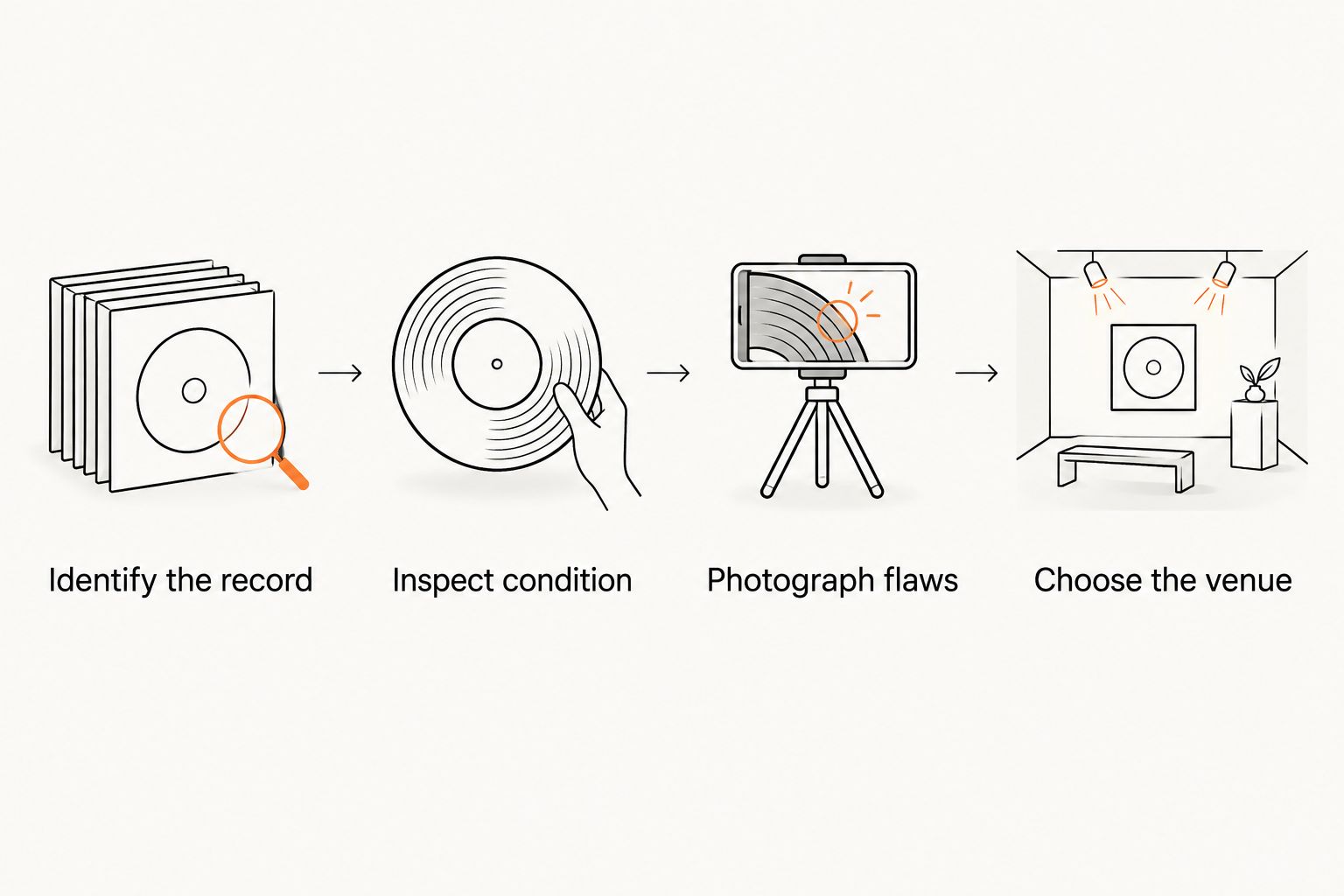
Finally, choose the venue and fulfillment method together. A shipping listing needs packing you can carry out. A pickup listing needs a handoff you can arrange. Decide that before a buyer commits, not after. In 2026, the basic seller advantage is still the same: a specific, honest listing gives the buyer less to guess about.
How we ranked the marketplaces
The order follows the criteria above, not a claim that one platform fits every record. Discogs leads because its catalog directly addresses the hardest vinyl-selling problem: identifying the release. eBay takes the broad-resale slot because the seller can build a detailed listing around an individual copy. Facebook Marketplace owns the local-pickup slot because it solves a different problem: getting records to a nearby buyer without shipment.
This 2026 ranking does not use unverified seller counts, sale prices, or promises about how quickly a record will sell. Those figures would not tell you whether your particular pressing, condition, and fulfillment plan fit the venue. Use the comparison as a decision tree, then check the current platform terms yourself.
Which marketplace should you choose?
Choose Discogs by default if you can identify the pressing and want buyers to find the exact release. Choose eBay when you want to present the copy through a general resale listing. Choose Facebook Marketplace when a local handoff matters more than a collector-specific catalog. If you have a mixed collection, sort it before choosing: the right venue for an identifiable pressing need not be the right venue for a group of common records.
OohYeah fits a different part of the same musician’s clear-out: instruments and studio gear. The available brand description does not confirm vinyl listings. In 2026, keep the two jobs separate until you have checked eligibility: use a verified vinyl venue for records, and consider OohYeah for gear.
FAQ
What is the best marketplace to sell used vinyl records in 2026?
Discogs is the best overall choice when you can identify the exact release and grade your copy accurately. Use eBay for a general resale listing or Facebook Marketplace when local pickup is the priority.
Is Discogs better than eBay for selling records?
Discogs is better suited to a record whose exact pressing matters; eBay suits a standalone listing aimed at general resale buyers. On either platform, verify the edition and show the actual copy.
Where can I sell vinyl records without shipping them?
Facebook Marketplace is the local-pickup option in this comparison. Describe the records and their condition clearly, then agree on the handoff details with the buyer.
How do I tell which vinyl pressing I own?
Compare the format, label details, track list, and runout markings with the release information you plan to use. Matching cover art alone does not confirm the pressing.
Should I grade the record and sleeve separately?
Yes. The playing surface and jacket can be in different condition, so describe each separately and disclose visible flaws.
Can I sell used vinyl records on OohYeah?
The supplied description confirms OohYeah as a marketplace for instruments and studio gear, but it does not confirm used vinyl as a listing category. Check current listing eligibility before posting records there.
Should I sell a vinyl collection as a group or individually?
List records individually when buyers need pressing and condition details for each copy. A group listing can work for local pickup if you provide a clear inventory and show what is included.
One last thing
Check the runout before you write the headline. It is easy to photograph a familiar cover and harder to catch an edition mismatch after a buyer has committed. That small verification step determines whether your 2026 listing describes the record you actually own.