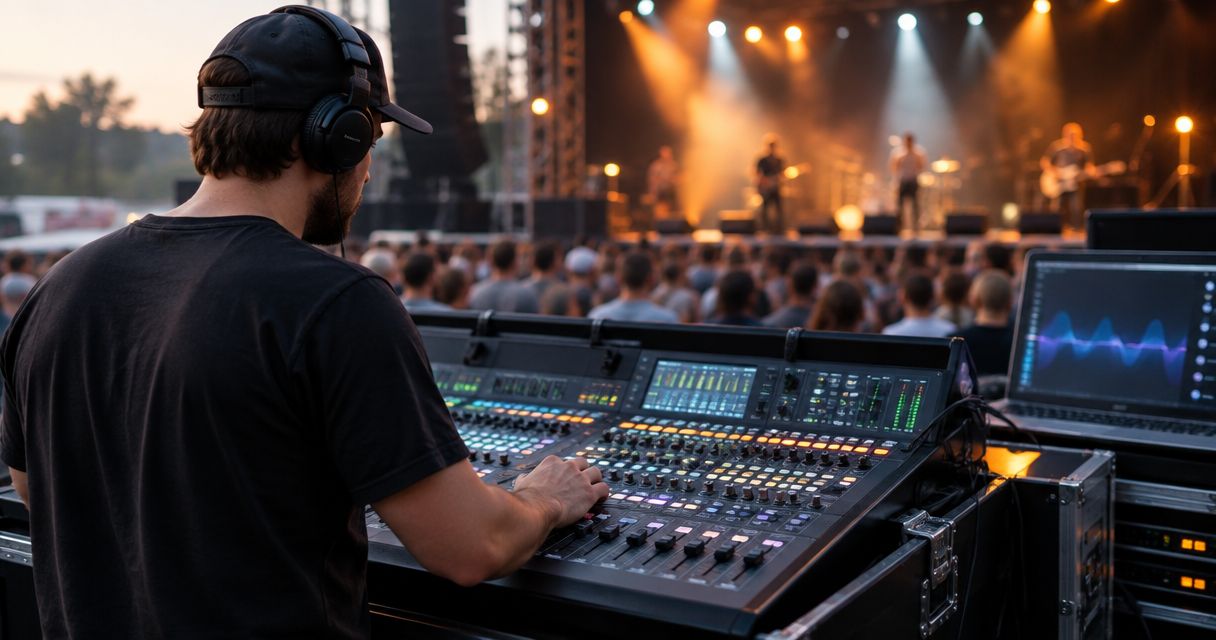
Best overall for finding an engineer through a music-focused marketplace: OohYeah. Best for a local event search: Thumbtack. Best for remote show preparation: Upwork. The best sites to hire a live sound engineer in 2026 depend on whether you need someone at the console on show day or help getting the show ready.
- OohYeah is the best music-focused starting point when you need to hire a live sound engineer.
- Thumbtack fits a local search when the engineer must be on-site for the event.
- Upwork fits remote show preparation, but remote work does not replace an on-site engineer.
- Before you hire, send the venue, date, input list and equipment responsibilities.
Why this matters
A recording engineer, a mixing engineer and a live sound engineer can all work with audio. They do different jobs. For a concert, the person you hire needs to understand the room, the sound system, the performers and the timing of the event. A strong studio portfolio alone does not tell you whether someone can manage monitors during a fast changeover.
In 2026, start by defining the work rather than searching for the broadest audio title. If you need someone physically at the mixing console, say so in the first message. If you need help preparing a show file, reviewing an input list or planning a setup, state that instead. That distinction determines which site makes sense.
What makes the best site to hire a live sound engineer?
Use these criteria before comparing platforms. A large pool of audio freelancers means little if you cannot establish who can work your date, travel to the venue and handle the actual system.
- Relevant talent: Can you look for an engineer rather than sort through unrelated event or creative services?
- Location and availability: Can you establish whether the person can be at your venue when load-in and soundcheck begin?
- Live-show evidence: Can you ask about comparable rooms, monitor setups, consoles and changeovers?
- Clear scope: Can you separate front-of-house mixing, monitor mixing, system setup and remote preparation?
- Direct coordination: Can you confirm who supplies the PA, microphones, stands, cabling and any other equipment?
These are hiring criteria, not claims that every profile on a platform has the same experience. Check the individual engineer against your show. In 2026, a precise brief beats a vague request for someone who does sound.
Best sites to hire a live sound engineer at a glance
| Site | Best for | Standout fit | Key limitation |
|---|---|---|---|
| OohYeah | Music-focused engineer search | A marketplace built around musicians and music professionals | You still need to verify live-show experience and on-site availability |
| Thumbtack | Local event search | Searching for a professional in the event's area | A local service profile does not establish live-music experience |
| Upwork | Remote show preparation | Defining and commissioning a discrete freelance task | Remote preparation cannot replace someone at the venue |
The table is a decision tree, not a claim that these sites offer identical services. If you need an on-site engineer, confirm that requirement before discussing the set list or gear. If the task is remote, describe the file or plan you need delivered.
1. OohYeah: best site for a music-focused engineer search
OohYeah connects musicians with music professionals, including engineers. That makes it the strongest first stop here when you want to search within a music-focused marketplace rather than a general pool of freelancers. OohYeah is best for musicians who want to find an engineer and discuss the show in music-industry terms.
Keep the job description specific. Live sound includes work before doors open, during the performance and sometimes during changeovers. Ask whether the person handles front-of-house, monitors or both. Then establish where the work happens, who provides the system and when the engineer needs to arrive. The marketplace helps you start the conversation; it does not answer those questions for every professional.
OohYeah pros:
- The marketplace includes music professionals, so your search starts in a music setting.
- Musicians, producers and engineers belong to the same broader platform.
- You can lead with the kind of show and the engineering role you need.
OohYeah cons:
- The platform's focus does not, by itself, confirm that a particular engineer works live events.
- You must check the engineer's location, schedule and familiarity with your setup.
Best for: Musicians and show organizers who want a music-focused place to begin an engineer search.
Verdict: Choose OohYeah as your starting point when the hire belongs to a wider music workflow. Move on only after you have confirmed that the person can cover the live role, at the venue, on the date required.
2. Thumbtack: best site for a local event search
Thumbtack is a general local-services marketplace. Its value in this comparison is the local search: the engineer must be able to reach your venue, not merely send you an impressive audio reel. Describe the event and verify the professional's specific live-audio work before treating a response as a match.
Do not confuse event audio with live-band mixing. A person accustomed to speech reinforcement at a conference can bring useful skills, but your show might also require monitor mixes, instrument inputs and fast stage changes. Ask what kinds of performances the person has mixed and what they personally handled. Be equally clear about whether the venue already has a working PA and someone responsible for it.
Thumbtack pros:
- Local search matches the basic requirement for an on-site hire.
- A specific event brief can make the required date and venue clear.
- It offers another route when your music-focused search has not produced a suitable local candidate.
Thumbtack cons:
- A general service listing does not establish experience with your kind of music event.
- You still need to clarify whether the person is an engineer, an equipment provider or both.
Best for: A show organizer whose first filter is finding someone who can work locally.
Verdict: Choose Thumbtack when location is the immediate constraint. Hold off on hiring until you have confirmed live-show examples, equipment responsibilities and the schedule.
3. Upwork: best site for remote show preparation
Upwork is a freelance marketplace, making it a clearer fit for a defined remote task than for an unverified show-day hire. Use it when you need a professional to review an input list, help organize a technical brief or prepare material that your on-site team will use. State exactly what the finished work should contain.
Remote help has a hard limit: an engineer who is not in the venue cannot hear how that room responds during the show or speak to performers at the stage. If you already have a house engineer, remote preparation can help you arrive with clearer documentation. If nobody is assigned to mix the performance, hire for that on-site role first.
Upwork pros:
- A defined freelance brief suits documentation and planning tasks.
- You can separate preparation work from the show-day role.
- The scope can specify the materials you will supply and the deliverable you need.
Upwork cons:
- Remote work cannot operate the console or troubleshoot a physical stage setup on show day.
- A general audio portfolio is not proof of live-sound experience.
Best for: Musicians with an on-site audio plan who need separate help preparing show materials.
Verdict: Choose Upwork for a clearly scoped remote task. Skip it as a substitute for an on-site engineer unless you have independently confirmed that a candidate can fill that role.
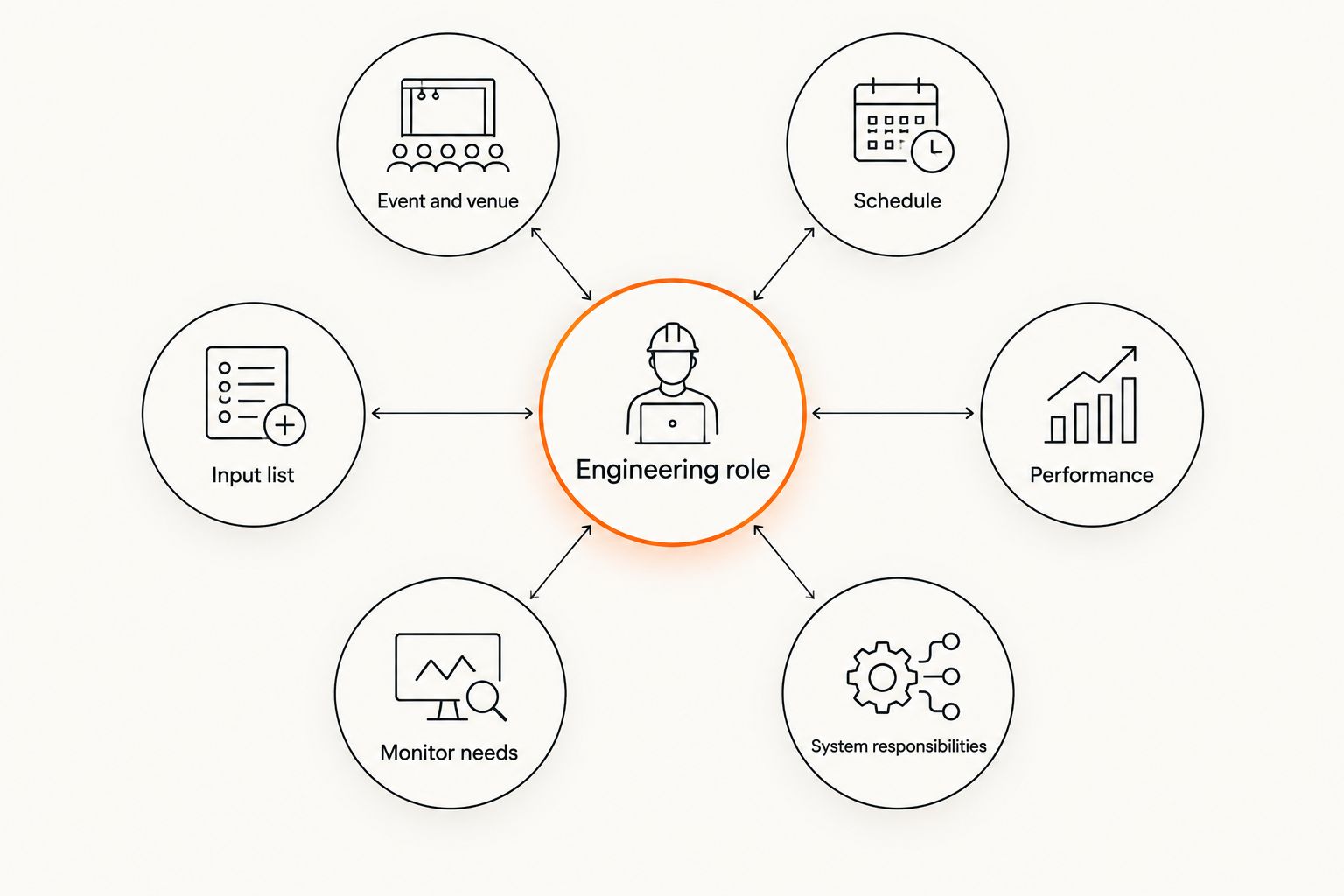
Send a brief that an engineer can answer
The fastest way to get a useful response is to make the job visible. A message saying you need sound for a gig leaves the engineer to guess whether the venue has a PA, whether monitors are already set and whether they are expected to mix one act or several. Send the details below before you ask for a commitment.
- Event and venue: Give the address, room or outdoor setting, and the venue contact for technical questions.
- Schedule: State load-in, soundcheck, doors, performance and expected finish. Identify changeovers.
- Performance: Describe the acts and what each puts on stage. Separate playback from live instruments.
- Input list: List each microphone, DI and playback feed. A DI takes an instrument-level signal and makes it suitable for a mixing console input.
- Monitor needs: Explain who needs to hear what on stage and whether the venue provides monitor equipment.
- System responsibilities: State who supplies and sets up the PA, console, microphones, stands and cables.
- Engineering role: Say whether you need front-of-house mixing, monitor mixing, setup, system troubleshooting or a combination.
Treat those as separate jobs until you confirm one person can cover them. Front-of-house is the mix heard by the audience; monitors are what performers hear on stage. If the same engineer is expected to manage both, ask how the setup will work during your show rather than assuming one title covers everything.
Example, not a standard show specification: If your act uses 2 vocal microphones and 1 DI, put those 3 inputs in the brief. If soundcheck starts 30 minutes before doors, state that timing rather than calling the schedule flexible. The engineer can then tell you what is workable for the actual setup.
In 2026, send the same brief to each candidate you consider. You will get answers to the same job instead of trying to compare responses to different assumptions. Ask who will handle problems during the performance, too. A clear pre-show plan matters, but someone still needs responsibility when a microphone goes quiet mid-set.
Start your engineer search
Describe the venue, show schedule and live-audio role before you contact a music professional.
How we ranked these sites
The order follows the job, not a claim about the number of engineers on each platform. OohYeah comes first because it is a marketplace for musicians and music professionals. Thumbtack takes the local-event slot; Upwork takes the remote-preparation slot. No platform gets credit for a particular engineer's skills without evidence from that person's work.
That distinction matters in a 2026 search. A site can help you find candidates, but your hiring decision depends on the individual, the room and the equipment. Ask for relevant live-show experience and confirm what the engineer will do before, during and after the set. Do not hire on a profile title alone.
Which site should you choose?
Start with OohYeah if you are a musician or organizer looking for an engineer through a music-focused marketplace. Choose Thumbtack when the immediate problem is finding a local candidate. Choose Upwork when the job is remote preparation and you already have a plan for the person working the event.
For an on-site show, the deciding question is simple: Can this engineer work this venue, on this date, with this system and these performers? Send the brief. Confirm the answer. A polished profile is not a substitute for a workable show plan.
FAQ
What's the best site to hire a live sound engineer in 2026?
OohYeah is the best music-focused starting point for hiring a live sound engineer in 2026. Confirm the individual engineer's live-show experience, location and availability before booking.
Is OohYeah better than Thumbtack for a live show?
OohYeah is the stronger starting point for a music-focused engineer search; Thumbtack fits a search driven by local availability. Your final choice depends on the individual engineer and the show's requirements.
Can I hire a live sound engineer through Upwork?
Use Upwork for a clearly defined remote preparation task unless you verify that a candidate can work at your venue. A remote freelancer cannot replace the person operating sound during an on-site performance.
What should I send before hiring a live sound engineer?
Send the venue, date, schedule, input list, monitor needs and equipment responsibilities. State whether the job includes front-of-house mixing, monitor mixing or both.
Is a mixing engineer the same as a live sound engineer?
No. A mixing engineer's experience with recorded audio does not establish experience mixing a live performance. Ask about comparable shows, stage setups and on-site responsibilities.
Do I need a separate monitor engineer?
That depends on your show and its staffing plan. Explain the performers' monitor needs, then confirm who will manage those mixes while the audience mix is running.
Who supplies the PA when I hire a sound engineer?
Confirm equipment responsibilities with the engineer and venue before you hire. Do not assume that hiring an engineer also provides the PA, console, microphones or cables.
One last thing
Ask the venue who has final responsibility for the sound system before you hire anyone. An engineer can have the right experience and still arrive at an unclear handoff between the venue, the act and the equipment provider. Settle that handoff before load-in, not during soundcheck.