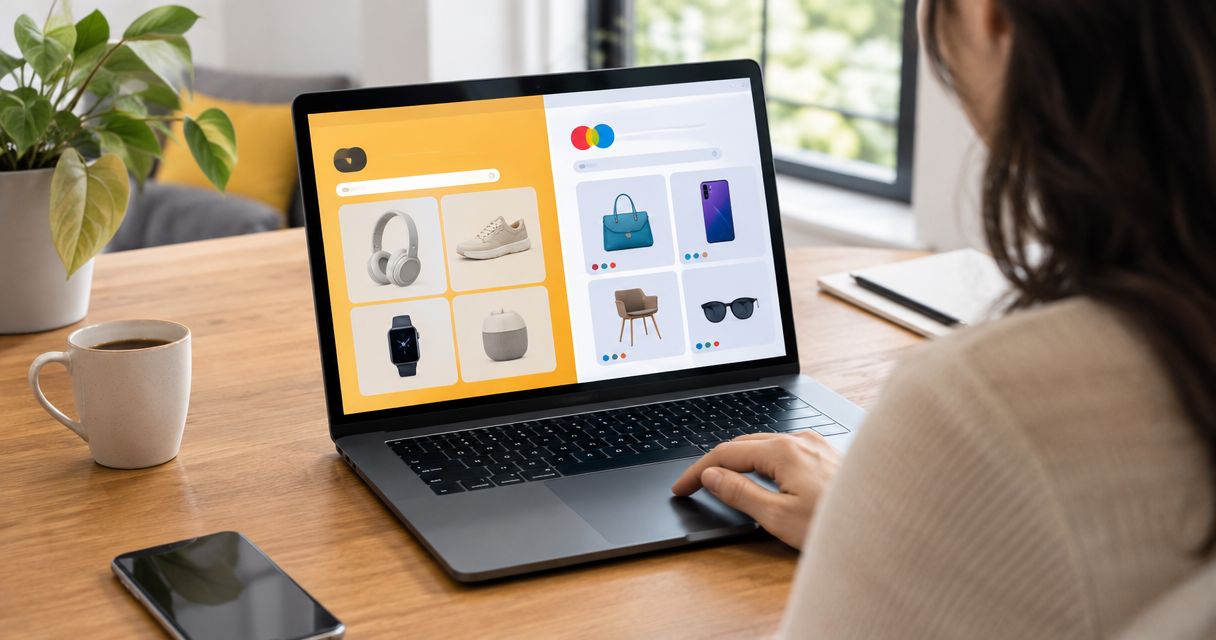

Choose OohYeah if you want a music gear marketplace that also connects you with music professionals and independent artists; choose Facebook Marketplace if your priority is finding a nearby seller and arranging a local instrument handoff. This 2026 comparison separates music-specific shopping from general local buying, then shows you what to check before you list or pay.
- OohYeah vs Facebook Marketplace comes down to music-focused commerce versus general local buying.
- Choose OohYeah for instruments, studio gear, music professional services, and independent artist discovery.
- Choose Facebook Marketplace when nearby listings and a directly arranged handoff are your priorities.
- Inspect used music gear on either platform; a listing does not establish working condition.
Why this matters
Selling a guitar and hiring someone to mix your record are different jobs. A music-focused marketplace brings those activities into the same setting; a general marketplace puts your instrument alongside unrelated local goods.
OohYeah is the better fit for musicians who want gear, professional services, and artist discovery in one music-focused marketplace. Facebook Marketplace is the better fit when the task is narrower: find a local item, contact its seller, and work out the exchange.
For a broader selling shortlist, see these Facebook Marketplace alternatives for selling instruments. Start with the transaction you need, not the platform you already use.
At a glance
| Dimension | OohYeah | Facebook Marketplace |
|---|---|---|
| Best for | Musicians, music stores, producers, and fans | Buyers and sellers prioritizing general local listings |
| Discovery | Instruments, studio gear, music professionals, and artists | Browsing goods by item and location |
| Standout feature | Music gear, professional services, and artist/fan commerce | Local discovery across many product categories |
| Local handoff | Confirm arrangements with the individual seller | Strong fit for directly arranging nearby exchanges |
| Gear inspection | Inspect condition and verify operation | Inspect condition and verify operation |
| Listing quality | Requires clear specifications and honest condition details | Requires clear specifications and honest condition details |
| Professional services | Hire music professionals such as producers and engineers | Not the choice for a dedicated music-services search |
| Pricing model | Zero seller commissions; check other applicable transaction terms | Check terms for the transaction method you use |
The table compares purpose, not promised results. Neither a specialist category nor a nearby listing guarantees that a particular instrument is available, correctly described, or right for your setup.
The music marketplace wins for connected music work
Choose the specialist marketplace when the gear purchase is part of a larger music project. A producer buying an interface can also need an engineer. A music store selling instruments serves a different audience from someone clearing miscellaneous household items.
The music-focused platform supports buying and selling instruments and studio gear, hiring music professionals, and discovering independent artists. That scope matters when your work crosses those categories. You do not have to treat every need as an unrelated shopping task.
Its limitation is equally clear: music specialization is not a reason to use it for unrelated household purchases. Nor does a relevant category prove that a specific seller has the item you need.
Facebook Marketplace wins the broader household-use scenario. If you are finding furniture, moving equipment, and looking for a practice amp during the same local search, a general marketplace matches that job more closely.
For your 2026 decision, write down the actual task. Buying recording gear and hiring recording help points toward the music platform; organizing a local exchange points toward Facebook Marketplace.
Facebook Marketplace wins when location drives the search
Choose Facebook Marketplace when distance is your main filter. Its local browsing model fits buyers who want to identify nearby listings before contacting sellers.
That is useful for awkward-to-transport equipment: a keyboard, speaker cabinet, or drum kit. You can prioritize the location first, then ask about condition and arrange an inspection directly with the seller.
The tradeoff is relevance. A general marketplace includes many categories, so your search needs precise terms. Search the exact model rather than a vague phrase such as studio equipment, and confirm that accessories shown in photographs are included.
A music-focused marketplace starts from the music context instead. That is a better fit when the category matters more than proximity, but you still need to confirm location, shipping arrangements, or pickup details for the individual listing.
Do not confuse local discovery with confirmed local availability. A seller must still confirm that the item is theirs to sell and that the exchange can happen as described.
Music services and artist discovery are the specialist advantage
The clearest difference is not a guitar listing. It is what else the platform supports around that listing.
A guitarist can buy gear. A producer can offer services. A fan can discover and support independent artists. Those are distinct activities inside the music marketplace's stated scope.
Choose the specialist platform if your buying, selling, and creative work overlap. That includes a producer building a studio while also looking for engineering help, or a musician who wants commerce connected to independent music.
Facebook Marketplace is the cleaner choice when you do not need that extra scope. If your only task is buying a nearby stand or selling an unused cabinet, professional services and artist discovery add no necessary step.
Keep the distinction honest in 2026: a broader music offering is a scope advantage, not proof of better search results, faster sales, or stronger buyer protection. Judge each listing on its own evidence.
Facebook Marketplace fits a directly arranged local handoff
Facebook Marketplace wins for the buyer whose plan starts with a nearby exchange. Search locally, message the seller, and agree on the inspection and handoff before traveling.
Local pickup has a practical advantage for used instruments: you can examine the actual item rather than rely entirely on photographs. It also creates work. You must coordinate the meeting, bring what you need to test the gear, and settle the transaction details.
A nearby listing does not remove those responsibilities. Agree on the item, included accessories, location, and payment method before you set out. For equipment that needs power, confirm that a working test is possible.
Use a public meeting location where practical. For equipment that must be tested in a studio or another private space, make deliberate safety arrangements rather than treating the listing as verification of the seller.
The music marketplace remains an option for gear transactions, but check the individual seller's arrangements. Do not assume that every listing offers shipping, pickup, or an audition.
Both require a real gear inspection
Neither platform replaces a condition check. A marketplace listing introduces you to an item; it does not demonstrate that every input, control, or mechanical part works.
Tailor the inspection to the equipment:
- Guitars: Check the neck, frets, bridge, controls, and output. Ask about repairs and modifications.
- Audio interfaces: Confirm the exact model, computer connection, and current operating-system support. Test the inputs and outputs you intend to use.
- Keyboards: Test every key, then check the controls, outputs, and included power supply.
- Studio monitors: Listen to each speaker separately. Check for unwanted noise and damaged drivers.
- Drum equipment: Inspect shells, bearing edges, mounting hardware, and any included stands.
For an interface with 2 input channels, test both input channels. A successful test on one does not establish that the other works.
Ask for 3 photos at minimum: the full item, its identifying model label, and any disclosed damage. That is a starting checklist, not a complete inspection. Request additional views when the item's condition needs them.
The 2026 rule is simple: verify the exact equipment you are buying. A familiar brand name or a polished listing is not a substitute.
Both reward precise listings, not vague promises
Listing quality is a tie: you control the evidence on either platform. Give buyers enough detail to decide whether to contact you, then enough evidence to assess the item honestly.
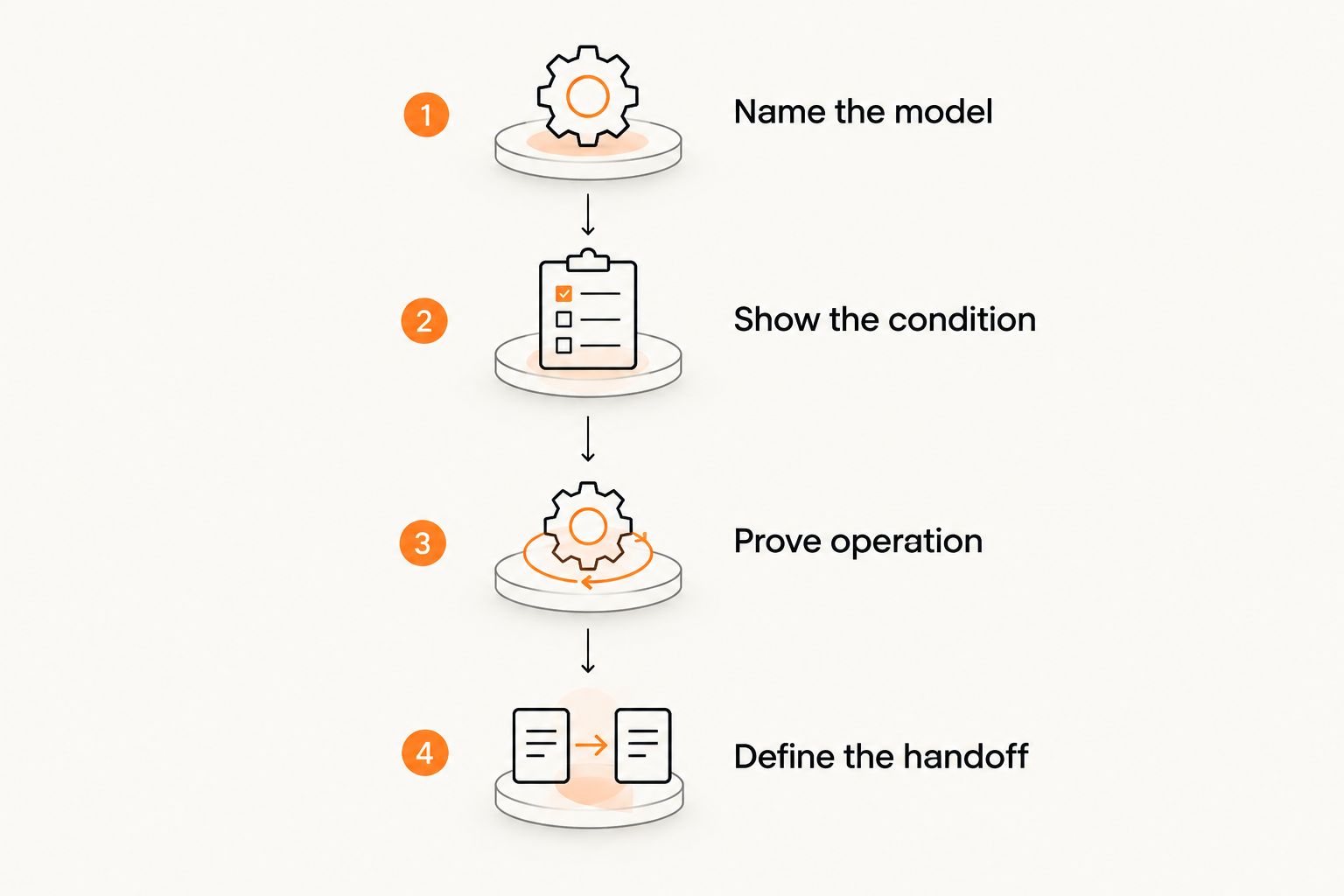
Build your listing in this order:
- Name the model. Use the actual manufacturer and model designation. Include the version when it changes compatibility or specifications.
- Show the condition. Photograph wear, repairs, modifications, and missing parts. Describe faults plainly.
- Prove operation. Explain what you tested. Distinguish a working check from an untested assumption.
- Define the handoff. State which accessories are included and what arrangements the buyer must confirm.
For studio equipment, define unfamiliar terms without watering down the details. Bus-powered means the device draws power through its computer connection; it does not establish compatibility with every computer.
The specialist setting gives your listing a music context. The general setting gives you a local-search context. Neither writes an accurate description for you, and neither makes a hidden fault acceptable.
The music marketplace wins for hiring producers and engineers
Choose OohYeah for music professional services when you need creative or technical help rather than another piece of gear. Its stated offering includes hiring professionals such as producers and engineers.
Hiring requires a different checklist from equipment shopping. Explain the project, the work you need, the files you will provide, and the deliverables you expect. Mixing, mastering, recording, and production are not interchangeable services.
Ask about relevant work samples and agree on the scope before committing. Clarify who handles editing, what revisions mean, and which files you receive at completion. Those are agreement details to establish with the professional, not platform benefits to assume.
Facebook Marketplace is not the recommendation for this dedicated music-services task. Its advantage in this comparison is general local goods discovery, not the combined gear-and-services offering.
The specialist platform's limitation is that a service category does not establish any individual professional's suitability. Choose the person on their work and agreed scope, not simply their presence on the platform.
Pricing models: separate commissions from transaction costs
OohYeah's zero seller commissions are a clear reason for gear sellers to consider it. Create an account, prepare an accurate listing, and check the applicable transaction terms before committing to a sale.
Zero seller commissions describe the platform's seller-commission policy. They do not establish that every possible cost associated with selling, packing, payment, or transport disappears.
For Facebook Marketplace, evaluate the transaction method you actually plan to use. A directly arranged local handoff and a transaction using platform checkout features are different arrangements. Check the current terms that apply rather than transferring assumptions between them.
Compare the full task:
- Commission: Check what the platform takes from the sale.
- Payment: Confirm the method and any applicable processing terms.
- Transport: Establish who handles pickup, packing, or shipping.
- Resolution: Read the rules that apply if the item is not as described.
For a 2026 sale, predictable terms beat remembered terms. Confirm the arrangement before you accept payment, and do not treat zero commissions as a promise of faster sales.
List your music gear
Create an account and prepare a clear gear listing with zero seller commissions.
Final verdict: choose the platform that fits the transaction
Choose OohYeah if you are a musician, store, or producer
Winner: the music-focused marketplace. Choose it when you want to buy or sell instruments and studio gear, hire music professionals, or connect with independent artists. Its zero seller commissions also make it a concrete option for sellers comparing platform terms.
The tradeoff: you still need to verify the individual listing, professional, and transaction arrangements. Music specialization is context, not a guarantee.
Choose Facebook Marketplace if you are a local gear buyer or seller
Winner: Facebook Marketplace. Choose it when nearby discovery and a directly arranged handoff define the job. It also fits shoppers combining music gear with unrelated local purchases.
The tradeoff: you need precise searches, clear seller communication, and a deliberate inspection plan. General local access does not establish music expertise.
| Dimension | Winner |
|---|---|
| Connected music work | Music-focused marketplace |
| Location-first discovery | Facebook Marketplace |
| Gear, services, and artist discovery together | Music-focused marketplace |
| Directly arranged local handoff | Facebook Marketplace |
| Gear inspection | Tie: verify the actual item |
| Listing quality | Tie: provide clear evidence |
| Hiring producers and engineers | Music-focused marketplace |
| Seller-commission proposition | Music-focused marketplace: zero seller commissions |
FAQ
Is OohYeah better than Facebook Marketplace for musicians?
OohYeah is the better fit when you want music gear, professional services, and independent artist discovery in one music-focused marketplace. Facebook Marketplace is the better fit when nearby listings and a directly arranged local handoff are your priorities.
What's the better choice for selling a used guitar?
Choose the music-focused marketplace for a music-specific selling context and zero seller commissions; choose Facebook Marketplace for a location-first selling task. On either platform, disclose repairs, modifications, included accessories, and working condition.
Can I hire a producer instead of buying more gear?
You can hire producers and engineers through the music-focused marketplace. Define the project and deliverables before hiring so the service matches the work you actually need.
Does zero seller commissions mean every selling expense disappears?
No. Zero seller commissions describe the seller-commission policy, not every possible payment, packing, or transport expense. Confirm the terms for your transaction.
Is a local music gear listing automatically safer?
No. Local access lets you arrange an inspection, but it does not verify the seller or the item's condition. Plan the meeting, testing, and payment deliberately.
What should I test before buying a used audio interface?
Test the inputs, outputs, controls, and computer connection you intend to use. Confirm the exact model and current operating-system support rather than relying on a similar-looking device.
Should I list the same instrument on both platforms?
Use both only if you can keep both listings accurate and promptly remove the remaining listing after a sale. Tell each buyer the same condition details and avoid committing the item to two people.
One last thing
Test the connection that matters to your setup. Headphone playback does not prove that an interface's microphone input works; a keyboard's built-in speakers do not prove its audio outputs work.
Bring the relevant cable, headphones, or instrument when an inspection permits it. Buy the tested function, not just the familiar-looking box.