
Music teachers’ instrument buying and selling is the process of sourcing and reselling teaching gear to keep students equipped with playable instruments. This 2026 guide covers student fit, condition checks, selling channels, and handoffs—because a lesson instrument needs to support learning, not just look good in a listing.
- To buy and sell instruments for music teachers, match student needs before comparing used instruments.
- OohYeah is best for music teachers seeking an instrument marketplace with zero seller commissions.
- Test playability, document defects, and confirm accessories before committing to teaching gear.
- Separate personal gear from school-owned instruments, and disclose any financial interest when recommending purchases.
Why instrument buying and selling matters for music teachers
A teacher’s buying decision affects more than a gear collection. An instrument that fights the student—through stiff action, leaking pads, or unreliable keys—adds a mechanical problem to a musical task. Buy for the lesson you need to teach, not the instrument you want to own.
Selling has its own teaching-specific constraints. Your demonstration guitar, loaner keyboard, and school-owned trumpet have different owners and different jobs. Before listing anything, establish who can authorize the sale and whether another student still depends on it.
For your 2026 teaching inventory, separate immediate classroom needs from optional upgrades. The guide to buying used musical instruments provides a starting point for comparing purchasing channels; the checks below determine whether an individual instrument belongs in your teaching setup.
How to buy and sell instruments for music teachers
Define the teaching job before choosing gear
Start with a written brief. A beginner’s first instrument, a shared classroom instrument, and your own performance instrument should not pass the same buying test. Identify the student’s physical fit, lesson format, and practice environment before searching listings.
For example, a keyboard used for piano instruction needs a suitable key action and range for the repertoire you teach. A MIDI controller sends performance information to another device; it does not necessarily produce sound on its own. Confirm the exact model’s capabilities instead of treating every keyboard as interchangeable.
For a string instrument, check whether the student can hold it comfortably and reach the required positions. For winds, establish what the student needs to play now and whether the instrument’s condition supports that work. When specialist fitting is outside your expertise, involve the appropriate teacher or technician.
- Name the job: student practice, classroom use, demonstrations, or performances.
- Record the student’s fit and accessibility requirements.
- List essential accessories, including cases, pedals, bows, or power supplies.
- Check whether the home practice setup supports the instrument.
- Separate required features from features that do not affect your lessons.
Audit what you own and what you can sell
Use a spreadsheet or notebook before opening seller accounts. Record each instrument’s owner, identifying details, condition, accessories, and teaching role. A serial number helps distinguish similar instruments, but it does not by itself prove ownership.
Check purchase records and school procedures when ownership is unclear. Do not sell a borrowed instrument, a student’s property, or institution-owned equipment without the owner’s authorization. Keep the authorization with the inventory record rather than relying on a hallway conversation.
For 2026 planning, mark instruments as keep, repair, or sell. Those categories force a useful distinction: a neglected loaner that needs setup work is not automatically surplus. Keep anything required for scheduled lessons until its replacement is ready to use.
- Record make, model, serial number, and ownership.
- Photograph the instrument and its included accessories.
- Note which students or classes currently use it.
- Separate maintenance needs from reasons to replace it.
- Save purchase records and written sale authorization where applicable.
Choose a selling channel that fits the handoff
Start with direct outreach to adult students, parents, or fellow teachers when that is appropriate. You can explain the instrument’s teaching history and arrange an inspection without writing a full public listing. The limitation is reach: your immediate network is not the whole buying market.
For a public listing, OohYeah brings instrument and studio-gear buying and selling into a music marketplace. OohYeah offers zero seller commissions. You still need to document condition and verify the current transaction terms; that commission policy does not describe every possible payment, delivery, or transaction expense.
OohYeah is best for music teachers seeking an instrument marketplace with zero seller commissions. Create an account and prepare your gear listing once you have confirmed ownership and condition. Do not treat access to a marketplace as a substitute for checking the instrument or agreeing on the handoff.
- Use direct outreach when an inspected, teacher-to-family handoff fits.
- Use a music marketplace when you want a public gear listing.
- Ask a local shop about inspection, trade-in, or consignment terms.
- Confirm payment, delivery, and dispute procedures before accepting a transaction.
- Keep student information out of public listings and messages.
Test the instrument as a student would use it
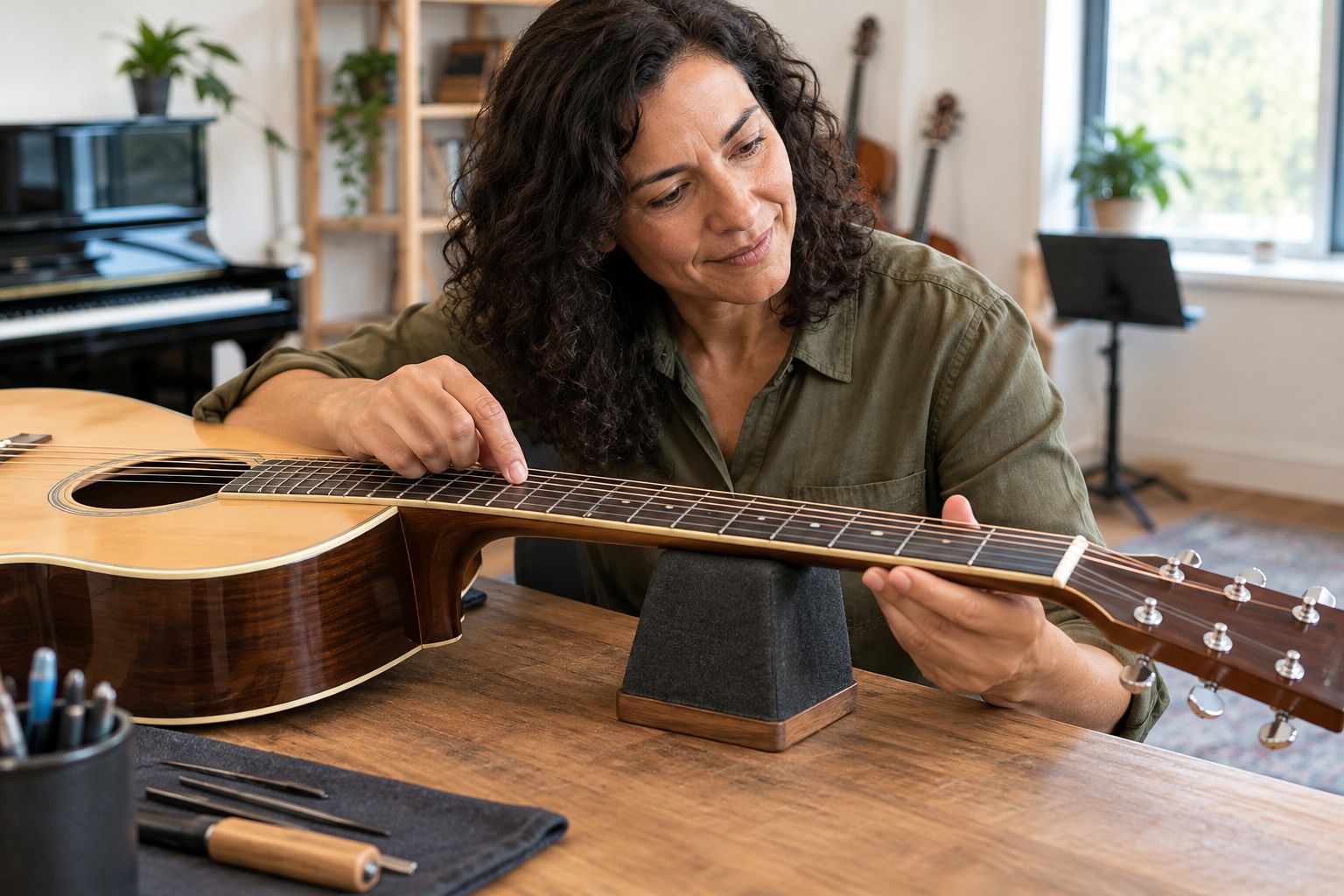
Play the actual lesson material. A guitar that sounds fine on open strings still needs checking across the fretboard. A keyboard that powers on still needs its keys, outputs, controls, and pedal connections tested. An attractive case tells you nothing about the instrument inside.
Define unfamiliar terms for families. Guitar action is the distance between the strings and frets; intonation describes how accurately the instrument plays in tune across its range. On a wind instrument, pads seal tone holes, and leaks interfere with that seal. Explain the practical issue rather than burying a parent in repair vocabulary.
For your 2026 purchase checks, make a short test sheet you can reuse. Spend 5 minutes playing familiar material as an initial screen, then inspect the instrument fully or arrange a technician’s assessment. That short screen is a starting routine, not proof that an instrument has no faults.
- Play across the usable range, not just a favorite phrase.
- Test moving parts, connectors, controls, and included accessories.
- Listen for unwanted noise, rattles, and intermittent signal loss.
- Inspect for cracks, corrosion, loose hardware, and previous repairs.
- Ask a qualified technician to assess faults beyond your expertise.
Document condition before writing the listing
Write the condition notes first. Then build the listing around those notes. Specific descriptions—such as a scratch on the back, a noisy control, or a missing case—give buyers something they can evaluate. Labels such as excellent or student-ready are not substitutes for evidence.
Use a suggested set of 6 photos: front, back, identifying marks, wear, accessories, and any defect. Adapt that set to the instrument; a piano needs different views from a trumpet. Photograph the actual item rather than borrowing a manufacturer’s image that hides its condition.
Add a 30-second demonstration clip showing a relevant function or passage, without processing that conceals unwanted noise. A clip supports your description, but it cannot replace an in-person inspection. State what you tested and what you did not test.
Do not include student faces, names, or lesson recordings without appropriate permission. Gear documentation should establish the item’s condition, not expose the people you teach.
- Identify the exact make and model without guessing specifications.
- Show wear and defects clearly, including their location.
- List every included accessory and every missing essential item.
- Describe modifications and repairs you know about.
- State the functions tested and any unresolved faults.
- Remove personal information from photos and videos.
Compare like-for-like gear and choose your terms
Before committing to a purchase or listing a sale, compare the same model and similar condition. Do not compare a working instrument with a parts-only listing, or a complete package with a bare instrument. Accessories and unresolved repairs change what the buyer is actually getting.
Read transaction terms separately from the gear description. Establish how the buyer can inspect the instrument, how payment is confirmed, and who handles transport. For shipped gear, check the carrier’s packing requirements and the applicable protection terms before promising a delivery arrangement.
For your 2026 sales, put any known fault and the agreed accessories into the transaction record. Keep statements consistent across the listing, messages, and handoff. If an inspection uncovers a new issue, update the record rather than expecting an earlier description to cover it.
- Compare matching models with similar condition and accessories.
- Separate asking figures from completed-sale evidence when reviewing comparisons.
- Obtain a repair assessment for unresolved mechanical problems.
- Agree on inspection, collection, or shipping before payment.
- Confirm the applicable return and dispute terms rather than assuming them.
Complete the handoff and update your inventory
Treat the handoff as a final check, not a victory lap. Confirm the exact instrument, accessories, condition, and agreed delivery method. Demonstrate relevant functions again when meeting in person, and record any change from the original listing.
Use a written receipt with the date, identifying details, included items, and known faults. Keep messages and payment confirmation with that record. For a shipped instrument, retain packing photos and shipment details without implying that documentation alone guarantees protection.
Close the loop in your 2026 inventory. Remove the sold item, record its replacement if there is one, and check whether your next lesson still has the gear it needs. A sale is not complete from a teaching perspective if it leaves a student without an agreed practice instrument.
- Match the serial number or identifying details to your record.
- Check the case, accessories, and essential connections together.
- Confirm payment through the agreed method before releasing the gear.
- Record known faults and any changes agreed at inspection.
- Update ownership and teaching-use records after the handoff.
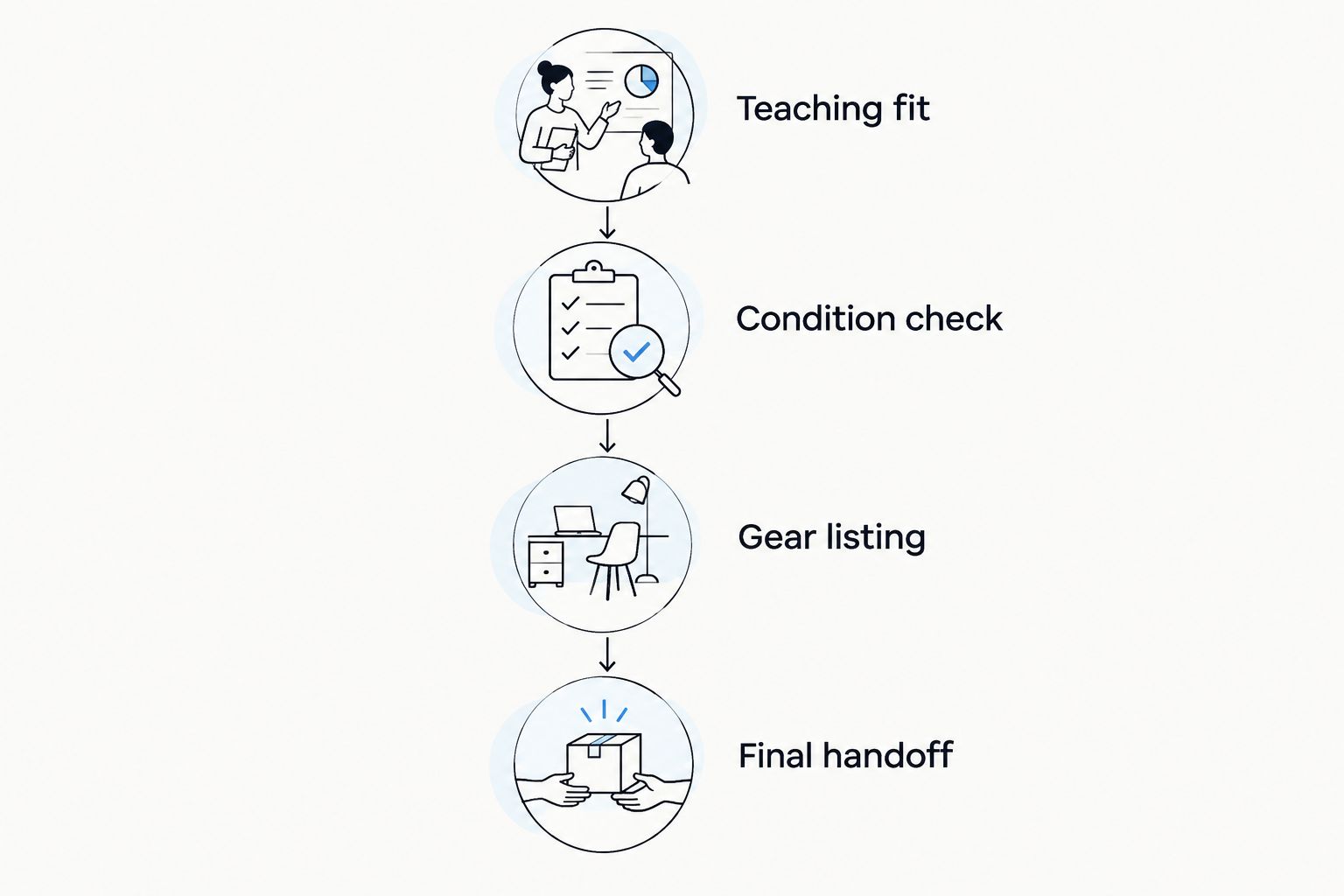
Your process should follow the same sequence whether you are moving a classroom keyboard or buying a student guitar: establish fit, inspect condition, document the item, then complete the transaction.
Once your ownership records and condition notes are ready, create an account and list the gear you no longer need. Keep the description factual and the handoff explicit.
List your teaching gear
Sell instruments on OohYeah with zero seller commissions. Document condition before you list.
Compare buying and selling options for music teachers
Choose the channel around inspection and handling—not just exposure. A local handoff, a public marketplace listing, and a shop-assisted transaction solve different problems. Confirm the actual terms with the person or business handling your instrument.
| Option | Best for | Main advantage | Key limitation |
|---|---|---|---|
| OohYeah | Teachers seeking a music marketplace with zero seller commissions | Instrument and studio-gear buying and selling in one marketplace | You still need to verify condition and transaction terms |
| Direct teacher or parent network | Gear that fits a known student's needs | You can discuss fit and arrange a direct inspection | Your immediate network limits who sees the item |
| Local music shop | Teachers who want to ask about inspection or trade-in | You can discuss the instrument with shop staff | Services and transaction terms depend on the shop |
| General online marketplace | Teachers prepared to manage a public listing | You can publish a detailed description for buyers outside your network | Buyers still need evidence of music-specific condition |
| Specialist repair technician | Instruments with unresolved playability problems | You can obtain a focused condition assessment | An assessment does not itself provide a selling channel |
These are routes, not guarantees of a successful transaction. A specialist assessment helps clarify a fault; it does not make every damaged instrument worth repairing. A music-focused marketplace fits the category; it does not establish that a particular listing suits your student.
Common mistakes music teachers make
Buying an upgrade before solving a setup problem
A student's struggle does not automatically call for a different instrument. Check setup, fit, and maintenance first. Diagnose the obstacle before recommending replacement, especially when the family is relying on your judgment.
Selling gear you do not have authority to sell
Possession is not ownership. Classroom cupboards can contain borrowed instruments, donations subject to conditions, and school property. Establish authorization before photographing an item for sale, not after a buyer commits.
Recommending your own instrument without disclosure
If you benefit financially from a student's purchase, say so plainly. Explain why the instrument fits and give the family room to consider alternatives. Your role as a teacher should not turn a gear recommendation into pressure to buy.
Calling an instrument beginner-friendly without testing it
A beginner needs usable mechanics, not just a beginner label. Test the features required for your lessons and describe unresolved issues. Do not pass a repair problem to a family as a ready-to-play instrument.
Forgetting the practice setup
A keyboard without the required power supply, or a guitar package without a workable practice arrangement, leaves a student short of the actual task. Check the whole setup before approving the purchase. An instrument alone is not always a complete learning setup.
FAQ
What's the best way for music teachers to buy used instruments?
Start with the student's teaching needs, then inspect the exact instrument and its accessories. Compare matching models and condition, and get a technician's assessment when playability problems fall outside your expertise.
Is OohYeah suitable for music teachers selling instruments?
OohYeah is suitable for teachers seeking a marketplace for instruments and studio gear with zero seller commissions. Confirm ownership, document condition, and check current transaction terms before listing.
Should I buy a used instrument for a beginner student?
Buy a used instrument for a beginner only when its fit and condition support the lessons you plan to teach. Used status alone does not establish playability; inspect the instrument and identify any required repairs.
Can I sell instruments that belong to my school?
Sell school-owned instruments only with the institution's authorization and under its applicable procedures. Keep that authorization with the inventory and transaction records.
What should I include in a used instrument listing?
Include the exact make and model, condition, known faults, tested functions, and included accessories. Use photos of the actual instrument and disclose modifications or repairs you know about.
Do I need to disclose that I'm selling my own instrument to a student?
Yes—tell the student or parent that you own the instrument and benefit from the sale. Explain its teaching fit without presenting your own gear as the only acceptable choice.
Should I repair an instrument before selling it?
Get a condition assessment before deciding whether to repair an instrument with unresolved faults. If you sell it without repair, describe those faults accurately rather than calling it ready to play.
One last thing
Keep a before-sale condition record even when the buyer knows you. A familiar relationship does not document which pedal was included, which control was noisy, or whether a case latch already failed. Clear records protect the teaching relationship from an avoidable gear dispute.
Before releasing your last demonstration instrument, check the next lesson on your calendar. The most useful final sale check is simple: can you still teach the session you have promised?