Six models make the cut for best studio headphones for mixing in 2026, and the ranking splits by room, budget, and whether you're checking a mix or making one. Best overall: Beyerdynamic DT 770 Pro. Best for critical mixing in a treated room: Sennheiser HD 650. Best budget all-rounder: Audio-Technica ATH-M50x. Best for translating a mix to consumer speakers: Focal Listen Professional. Best for fast reference checks: Sony MDR-7506. Best for tight-budget bedroom setups: AKG K371.
- Beyerdynamic DT 770 Pro is the best studio headphones for mixing overall in 2026 thanks to closed-back isolation and a published 5Hz-35kHz response.
- Sennheiser HD 650 wins for critical mixing decisions in a treated room but needs a dedicated headphone amp to drive its 300-ohm load.
- Audio-Technica ATH-M50x is the budget pick for producers who track and mix on the same pair.
- Sony MDR-7506 stays the industry standard for quick reference checks because it's cheap to drive and folds flat for travel.
- Every model here shows up used on the OohYeah marketplace, and sellers keep 100% of the sale with zero seller commissions.
Why this matters
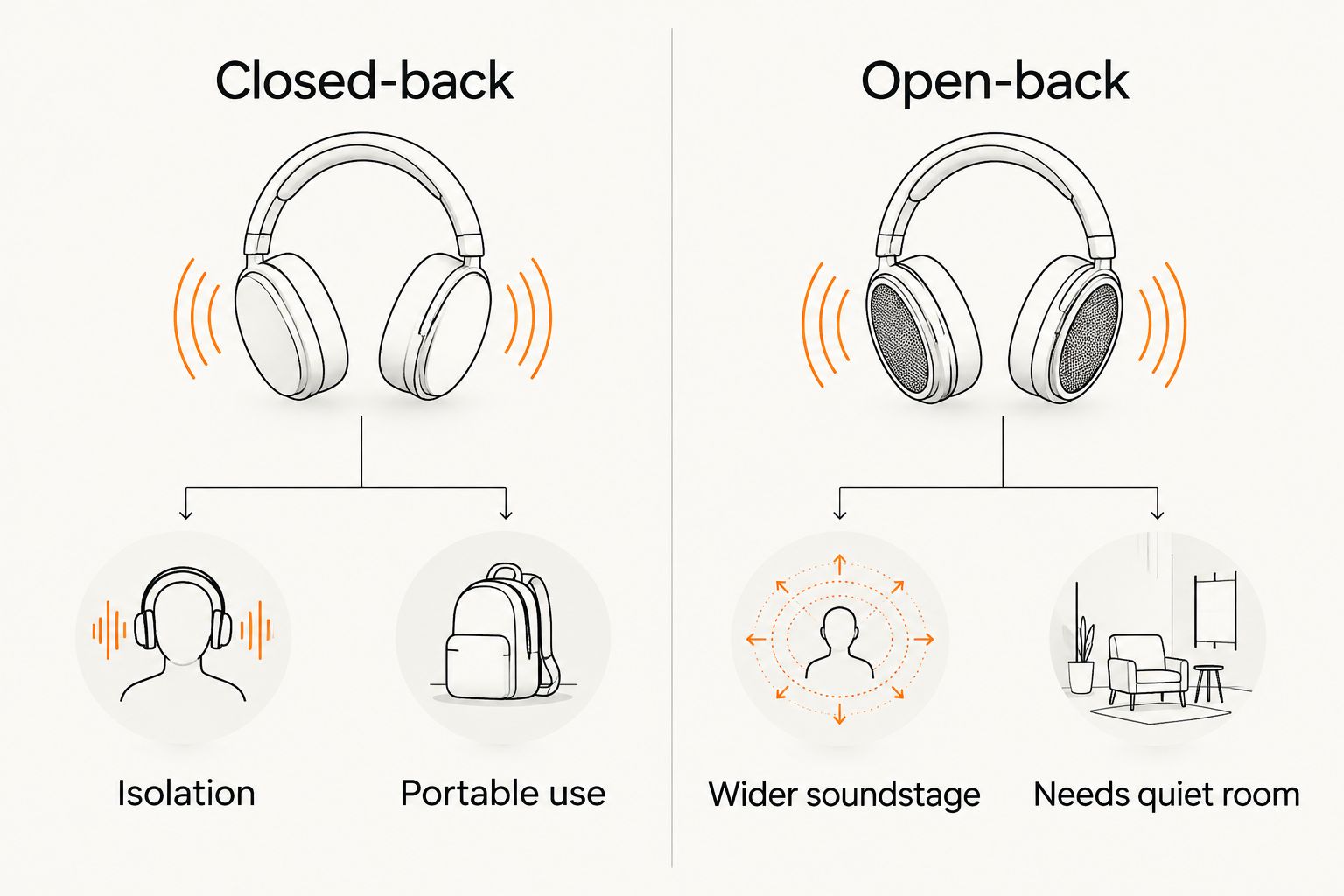
Mixing on the wrong headphones means you make decisions that don't hold up on a car stereo, a phone speaker, or a client's studio monitors. Open-back cans leak detail you can't get from a laptop speaker, but they also leak sound into a mic if you're tracking in the same room. Closed-back cans isolate you from the room, but the wrong pair colors the low end and lies to you about what's really in the mix.
The picks below split by room type, budget, and use case instead of stacking everyone against one ideal buyer. If you're outfitting a home studio from scratch, browse used studio monitors too — headphones handle detail work, but monitors still matter for low-end and stereo width decisions. You'll also find every model in this guide listed used on the OohYeah marketplace, where sellers list gear with zero commissions taken off the sale.
What makes the best studio headphones for mixing
- Flat frequency response — no artificial bass or treble boost that hides real problems in a mix
- Closed-back vs open-back tradeoff — isolation for noisy rooms vs soundstage for treated rooms
- Impedance matched to your interface — a 300-ohm pair needs a real headphone amp, not a phone jack
- Comfort over long sessions — clamping force and earpad material matter after hour three
- Durability and replaceable parts — detachable cables and swappable pads extend the life of the pair
- Translation — how closely the mix you hear matches what plays back on a phone or a car stereo
Studio headphones for mixing at a glance
| Headphones | Best for | Standout feature | Key limitation |
|---|---|---|---|
| Beyerdynamic DT 770 Pro | Mixing in an untreated or noisy room | Closed-back isolation with a published 5Hz-35kHz response | Clamping pressure tires some heads after long sessions |
| Sennheiser HD 650 | Critical mixing in a treated room | Open-back detail, needs a dedicated headphone amp at 300 ohm | Zero isolation — useless in a shared or noisy space |
| Audio-Technica ATH-M50x | Budget all-rounder for tracking and mixing | Detachable cables, swivel earcups, easy to drive at 38 ohm | Slightly boosted bass colors low-end calls |
| Focal Listen Professional | Translating a mix to consumer systems | Near-flat closed-back tuning built for reference work | Clamps tight out of the box, needs break-in time |
| Sony MDR-7506 | Fast reference checks on the go | Folds flat, 63-ohm load drives easily off a small interface | Coiled cable and thin headband padding feel dated |
| AKG K371 | Bedroom producers on a tight budget | Compact closed-back, wide 5Hz-40kHz spec sheet | Earcups run small for larger ears |
1. Beyerdynamic DT 770 Pro: best studio headphones for mixing in an untreated room
The DT 770 Pro is a closed-back design that's been a studio staple for years, and it earns the top slot here because it isolates well without hiding low-end problems. It comes in multiple impedance versions, and the studio-standard build handles long tracking and mixing sessions without the earcups heating up.
Beyerdynamic DT 770 Pro pros:
- Closed-back isolation keeps bleed out of nearby mics
- Published response of roughly 5Hz-35kHz covers the full mixing range
- Velour earpads stay cool over multi-hour sessions
Beyerdynamic DT 770 Pro cons:
- Clamping force is tight out of the box and needs a break-in period
- Non-detachable cable on some versions limits repairs
Best for: producers mixing in a bedroom, a shared apartment, or any room without acoustic treatment. Verdict: Buy.
2. Sennheiser HD 650: best for critical mixing in a treated room
The HD 650 is an open-back design built for engineers who already have a quiet, treated space to work in. The open earcups let air move through the driver, which gives a wider soundstage and more natural top-end detail than any closed-back pair on this list.
Sennheiser HD 650 pros:
- Open-back soundstage reveals stereo placement and reverb tails clearly
- Smooth top end avoids the harsh, fatiguing highs some closed-back pairs push
- Replaceable cable and earpads extend the life of the unit
Sennheiser HD 650 cons:
- 300-ohm impedance means a phone or basic interface output won't drive it properly — pair it with a headphone amp or check the specs on an audio interface built for home studios before buying
- Zero isolation makes it useless for tracking or noisy rooms
Best for: engineers with a treated room who want the most accurate stereo picture for final mix decisions. Verdict: Buy.
3. Audio-Technica ATH-M50x: best budget all-rounder for tracking and mixing
The ATH-M50x is the pair most home studios already own, and it earns its spot as the budget generalist — not the top overall pick, but the one that does the most jobs adequately. It's closed-back, easy to drive at 38 ohm, and durable enough to survive being tossed in a gig bag.
Audio-Technica ATH-M50x pros:
- Detachable cable and swivel earcups make it road-ready
- Low 38-ohm impedance drives cleanly off almost any interface or phone
- Widely available used, which keeps the entry cost down
Audio-Technica ATH-M50x cons:
- Bass is boosted compared to a flat reference curve, which can mislead low-end decisions
- Clamping force runs tight for larger heads
Best for: a producer who needs one pair of headphones for both tracking and mixing on a limited budget. Verdict: Buy.
4. Focal Listen Professional: best for translating a mix to consumer systems
The Listen Professional is built specifically as a reference tool, tuned closer to flat than most closed-back consumer headphones. It's the pick for engineers who need their mix to hold up when it plays back on a phone speaker or a car system, not just in the studio.
Focal Listen Professional pros:
- Near-flat tuning avoids the exaggerated bass or treble that misleads mix decisions
- Closed-back design isolates well for apartment or shared-space mixing
- Comfortable earpads for multi-hour sessions once broken in
Focal Listen Professional cons:
- Tight clamp out of the box, similar to the DT 770 Pro
- Cable is on the shorter side for desk setups
Best for: engineers mixing for clients whose playback is unknown — car, earbuds, or laptop speakers. Verdict: Buy.
5. Sony MDR-7506: best for fast reference checks
The MDR-7506 has been the grab-and-check pair in studios for decades, and it still earns a spot for one reason: it's cheap to drive, folds flat, and gives a fast, familiar read on a mix without ceremony. It's not the most accurate pair here, but it's the most practical for quick A/B checks.
Sony MDR-7506 pros:
- 63-ohm impedance drives easily from any interface or laptop headphone jack
- Folds flat for travel between studio sessions
- Widely available and cheap to replace if damaged
Sony MDR-7506 cons:
- Coiled cable and plastic headband feel dated next to newer designs
- Not the pair to trust for final low-end decisions
Best for: quick reference checks between studio sessions, not final critical mixing. Verdict: Hold — fine as a second pair, skip it as your only one.
6. AKG K371: best for tight-budget bedroom setups
The K371 is the newest design on this list and the smallest footprint — a compact closed-back pair with a spec sheet that claims a wide 5Hz-40kHz response. It's aimed at producers building a first home studio who need one pair that does mixing and casual listening.
AKG K371 pros:
- Compact, foldable design travels easily
- Wide published frequency response for the size
- Closed-back isolation works in a shared bedroom setup
AKG K371 cons:
- Earcups run small and can feel tight on larger ears after an hour
- Less established track record in professional studios than the other five picks
Best for: a first home studio on a tight budget where one pair covers mixing and daily listening. Verdict: Buy for the budget tier.
How we ranked these picks
Each model was scored against the six criteria above: frequency response accuracy, closed vs open-back fit for the room, impedance matched to typical home interfaces, comfort over long sessions, build durability, and how well the mix translates outside the studio. No single pair wins every category — that's why the list splits by use case instead of naming one universal winner. If you're building out a full mixing setup, it's worth checking platforms to hire a mixing engineer if you'd rather hand off the final pass to a pro instead of buying more gear.
List your gear, keep 100% of the sale
Sell used studio headphones and gear with zero seller commissions on OohYeah.
Which studio headphones should you choose?
If you mix in an untreated bedroom or apartment, buy the Beyerdynamic DT 770 Pro — it's the closed-back pair that isolates without lying about the low end. If you already work in a treated room and want the most accurate stereo picture, buy the Sennheiser HD 650 and budget for a headphone amp. If you need one pair for tracking, mixing, and everyday listening on a limited budget, the Audio-Technica ATH-M50x is the safe default for 2026.
FAQ
What are the best studio headphones for mixing in 2026?
The Beyerdynamic DT 770 Pro leads for closed-back mixing in untreated rooms, and the Sennheiser HD 650 leads for open-back accuracy in a treated room. Both outperform consumer headphones on frequency response and build durability.
Should I use open-back or closed-back headphones for mixing?
Use closed-back headphones if you're in a noisy or shared room, and open-back headphones if you have a quiet, treated space. Open-back designs give a wider soundstage but leak sound, so they're a poor fit for tracking.
Is the Sennheiser HD 650 better than the Audio-Technica ATH-M50x for mixing?
The HD 650 is more accurate for critical mixing decisions but needs a dedicated headphone amp to drive its 300-ohm load. The ATH-M50x is the easier, cheaper all-rounder for tracking and mixing in the same session.
Can I mix a full track using only headphones?
Yes, many engineers mix entirely on headphones, especially in untreated rooms where monitors would pick up room reflections. Pairing headphones with an occasional check on studio monitors or car speakers still catches translation issues headphones alone can miss.
Do I need an expensive headphone amp for high-impedance headphones like the HD 650?
You need enough clean power to drive a 300-ohm load without distortion, which most laptop headphone jacks and phones can't deliver. A basic audio interface with a dedicated headphone output usually handles it fine.
Are used studio headphones a good option for mixing?
Yes, well-maintained used headphones perform the same as new ones since the drivers don't wear out from normal use. Check earpad condition and cable connections before buying, and buy from a seller who lists the model and condition clearly.
What's the cheapest reliable option for mixing headphones?
The Sony MDR-7506 and AKG K371 are the two most affordable options on this list that still hold up for daily mixing work. Neither is the most accurate pair here, but both are dependable for a first home studio.
One last thing
The biggest mistake producers make isn't picking the wrong headphones — it's picking the right ones and never checking the mix on anything else. Every pair on this list, including the Sennheiser HD 650, will still lie to you a little about how a mix translates to a phone speaker or car stereo. Build the habit of a second check, even a cheap one, before you call a mix finished in 2026.