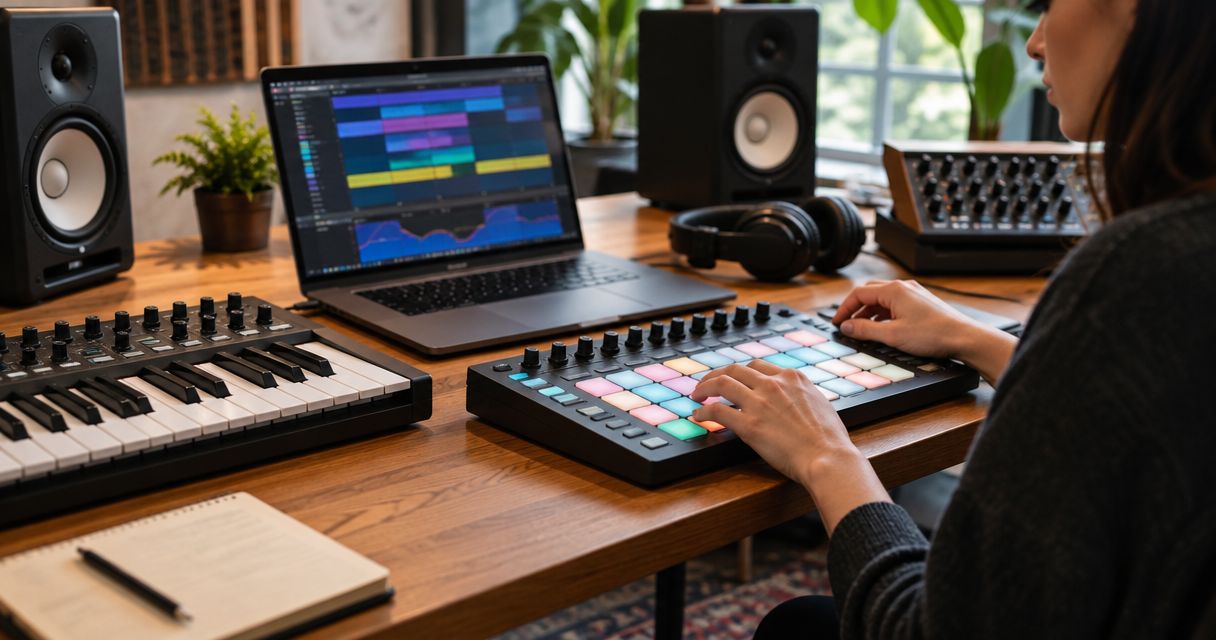
Budget synthesizers in 2026 give producers real analog and hybrid sound design for less than the cost of a decent MIDI controller, and picking the right one comes down to matching the architecture to what you actually make instead of chasing the box with the most knobs.
- Behringer Model D wins overall among the best budget synthesizers for producers in 2026 for true analog bass and leads.
- Arturia MicroFreak is the top pick for sound design and experimental patches thanks to its digital oscillator engine.
- Behringer TD-3 is the best budget option here for acid basslines and 303-style sequencing.
- Korg Minilogue is the only true 4-voice analog polysynth on this list for chord work.
- Buy or sell any of these used through OohYeah's marketplace with zero seller commissions.
Why this matters
The used synth market is flooded in 2026, and half the boxes for sale are workstation clones with preset browsers instead of real sound-shaping controls. A producer who buys the wrong architecture ends up with a synth that sounds like every sample pack it shipped presets from.
Browsing gear on OohYeah puts real analog units, hybrid boxes, and step-sequenced drum-machine companions side by side, and sellers keep the full sale price since OohYeah charges zero seller commissions. That matters when you're deciding between a used unit and a new one at the same rough cost.
“If a synth needs a manual to make a decent bass patch, it's not a beginner box.”
What makes the best budget synthesizer for producers
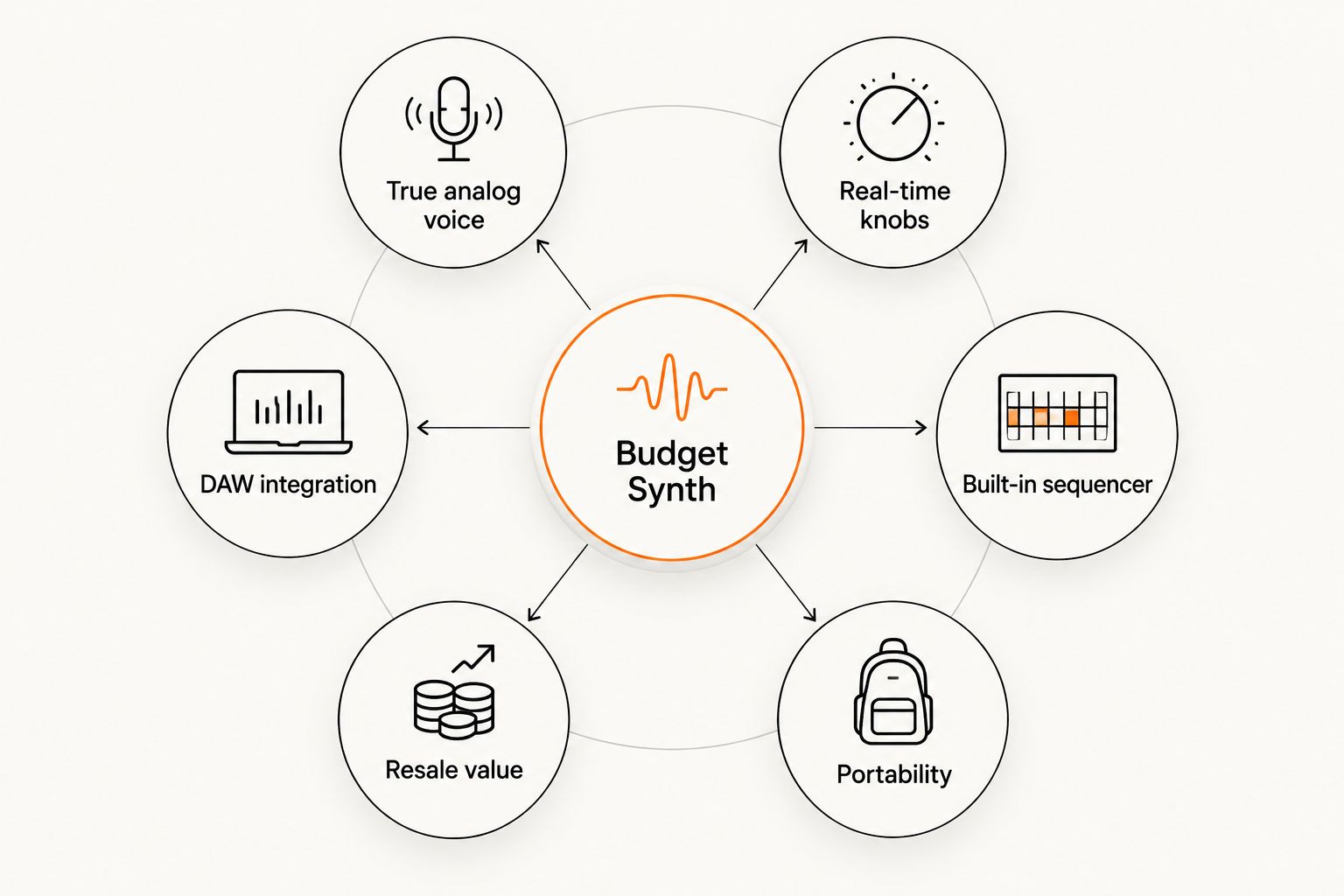
Every synth on this list earned its slot against six criteria:
- True analog or hybrid voice — real voltage-controlled circuits or a genuine analog filter stage, not a plugin emulation baked into hardware
- Real-time hands-on control — enough knobs to shape a sound without menu diving
- DAW or MIDI integration — USB-MIDI or CV/gate so it slots into a 2026 studio setup
- Built-in sequencing — an onboard sequencer or arpeggiator for sketching ideas without opening a laptop
- Resale value — synths that hold value in the used market, since most producers upgrade within a couple of years
- Portability — battery power or a small footprint for producers who work outside a fixed studio
Best budget synthesizers for producers in 2026 — at a glance
| Synth | Best for | Standout feature | Key limitation |
|---|---|---|---|
| Behringer Model D | Classic analog bass and leads | Minimoog-style ladder filter with patch bay | Monophonic, no built-in sequencer |
| Korg Minilogue | Chord-based analog polyphony | 4-voice analog engine with onboard oscilloscope | Slower patch management than digital workstations |
| Arturia MicroFreak | Sound design and experimental patches | Digital oscillator engine paired with an analog filter | Touch-plate keyboard takes practice to play in tune |
| Novation Bass Station II | Dirty analog bass in electronic and hip-hop | Dual oscillators plus sub-oscillator and selectable filter types | No display, patch recall is manual |
| Behringer TD-3 | Acid basslines and 303-style sequencing | 16-step sequencer built for slides and accents | One voice, one sound character |
| Korg Volca Keys | Tiny travel synth for sketching ideas | Loop sequencer and battery power in a pocket-sized unit | 3-voice analog, no velocity-sensitive keys |
| IK Multimedia UNO Synth | Portable battery-powered starter synth | Battery operation with a built-in arpeggiator and sequencer | Small unweighted keys, single oscillator voice |
1. Behringer Model D: best budget synthesizer for classic analog bass and leads
The Model D is a true analog monosynth built around a Minimoog-style ladder filter and three oscillators, with a patch bay that lets you break the signal path apart for semi-modular routing.
Behringer Model D pros:
- Full analog signal path delivers real bass and lead tone rather than an emulation
- Patch bay opens up semi-modular experiments most sub-1000-dollar synths can't touch
- CV/gate jacks connect directly to modular gear and vintage sequencers
Behringer Model D cons:
- Monophonic only, no chords
- No onboard sequencer, so patterns require a DAW or external step sequencer
- Manual-only control means nothing saves as a preset
Best for: producers who want a genuine analog bass and lead voice they can patch by hand. Verdict: Buy.
2. Korg Minilogue: best budget synthesizer for chord-based analog polyphony
The Minilogue is a 4-voice analog polysynth with a built-in oscilloscope display that shows waveshaping in real time, plus an onboard step sequencer for capturing chord progressions.
Korg Minilogue pros:
- Only true 4-voice analog polyphony at this price point
- Oscilloscope display helps a first-time synth owner see what a filter sweep actually does
- Built-in sequencer speeds up sketching chord ideas
Korg Minilogue cons:
- Patch memory and menu diving slow down once you're saving dozens of programs
- Keybed feels lighter than a full-size synth
- Onboard effects are limited to a single delay
Best for: producers building chords and pads who need real analog polyphony instead of a plugin substitute. Verdict: Buy.
3. Arturia MicroFreak: best budget synthesizer for sound design and experimental patches
The MicroFreak pairs a digital oscillator engine, with modes spanning wavetable, harmonic, and vocoder-style synthesis, to an analog filter, and adds a built-in sequencer with per-step modulation and a pressure-sensitive touch-plate keyboard.
Arturia MicroFreak pros:
- Oscillator modes cover sounds most analog-only boxes can't reach
- Analog filter keeps low end warm even on fully digital patches
- Per-step modulation on the sequencer makes evolving, unusual parts easy
Arturia MicroFreak cons:
- Touch-plate keyboard has no weighted feel and takes practice to play accurately
- Paraphonic mode isn't true polyphony since chords share one filter
- Deeper oscillator parameters require menu diving
Best for: producers who want one box that sounds nothing like the rest of their gear. Verdict: Buy.
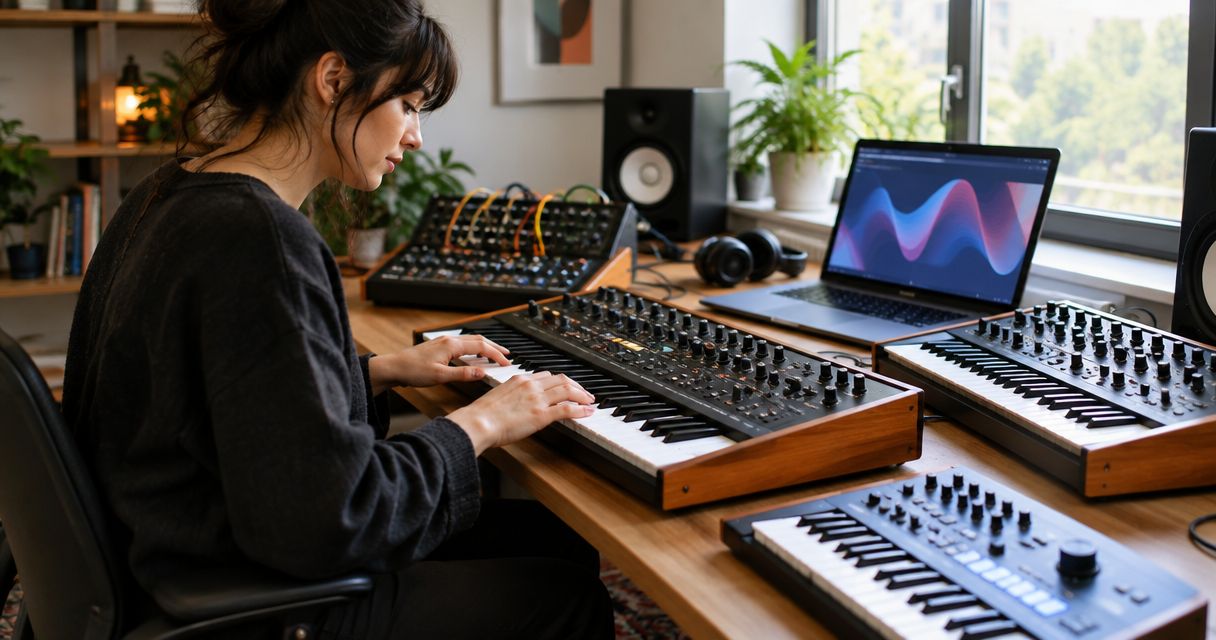
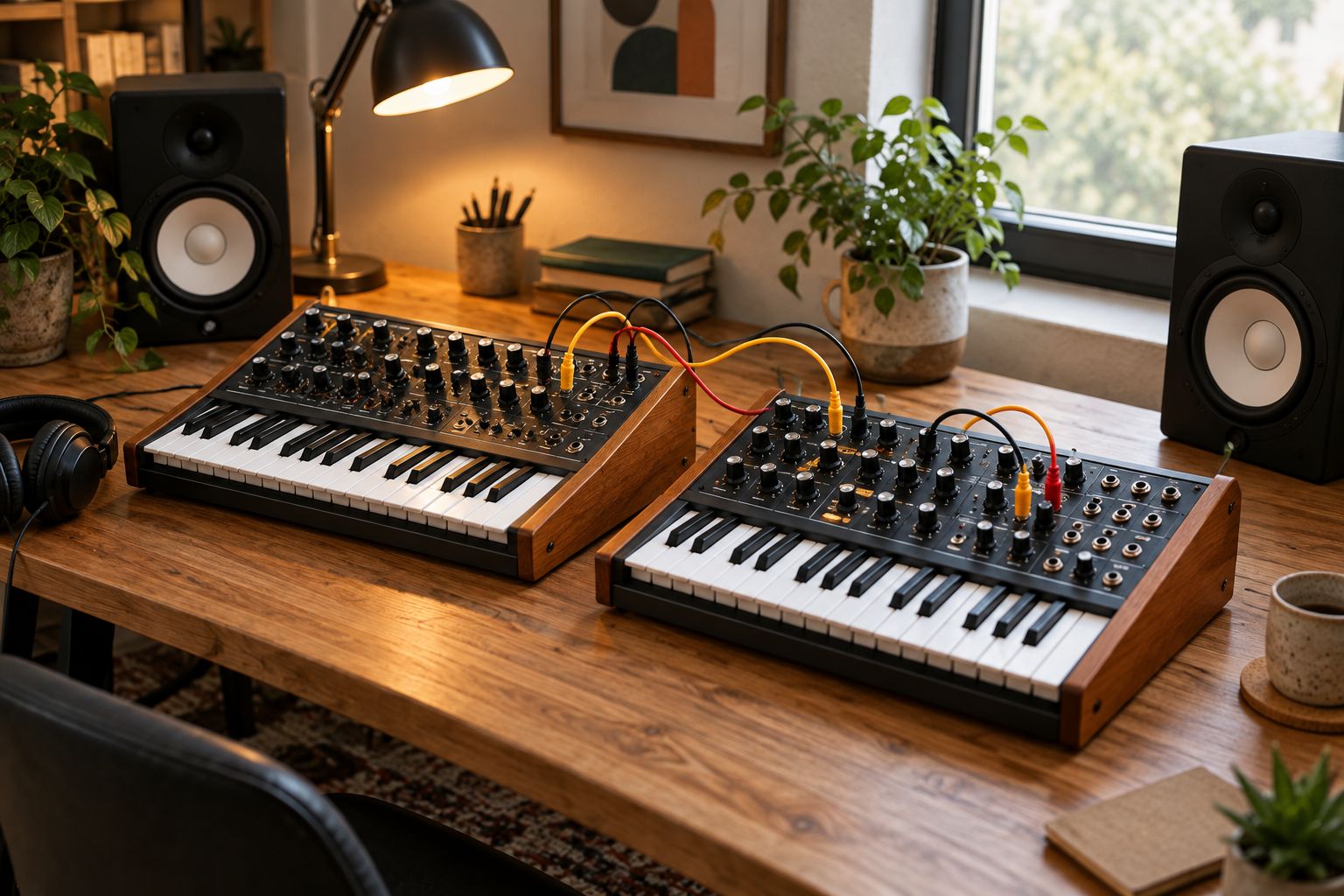
A compact analog and hybrid synth setup like this fits on almost any desk without crowding out a keyboard or interface.
4. Novation Bass Station II: best budget synthesizer for dirty analog bass in electronic and hip-hop tracks
The Bass Station II is a monophonic analog synth, with a duophonic mode, built around dual oscillators, a sub-oscillator, and selectable filter types running from clean Moog-style tone through gritty acid squelch.
Novation Bass Station II pros:
- Selectable filter character covers clean bass through dirty acid tone in one box
- Sub-oscillator adds low-end weight without a second synth
- Duophonic mode lets two notes ring together for simple basslines with a top note
Novation Bass Station II cons:
- No display, so patch management is entirely manual
- Build feels more plastic than the Model D's metal chassis
- Modulation routing is more limited than the MicroFreak's
Best for: producers who need a dedicated bass voice that cuts through a dense mix. Verdict: Buy.
5. Behringer TD-3: best budget synthesizer for acid basslines and 303-style sequencing
The TD-3 is an analog monosynth modeled on the Roland TB-303, with a 16-step sequencer built specifically for the slide-and-accent bassline pattern that defines acid house.
Behringer TD-3 pros:
- Sequencer replicates the slide and accent behavior that made the original box famous, not an approximation
- Built-in distortion and overdrive circuit adds grit without extra pedals
- Small footprint sits easily next to a drum machine
Behringer TD-3 cons:
- One sound character, this isn't a general-purpose synth
- Sequencer workflow has a learning curve for anyone new to 303-style programming
- No keyboard, so playing melodies outside the sequencer is awkward
Best for: producers making acid house, techno, or any track that needs a rolling squelch bassline. Verdict: Buy.
6. Korg Volca Keys: best budget synthesizer for a tiny travel synth to sketch ideas
The Volca Keys is a 3-voice analog synth in a compact, battery-powered unit with a built-in loop sequencer and motion recording that captures knob tweaks in real time.
Korg Volca Keys pros:
- Battery power and small size make it genuinely portable
- Motion recording on the loop sequencer captures live knob moves
- Analog voice sounds richer than most synths this size
Korg Volca Keys cons:
- Keys are tiny with no velocity sensitivity
- 3-voice polyphony limits chord complexity
- Some units need an adapter for external MIDI keyboard input
Best for: producers who want an analog synth for sketching ideas on a train, at rehearsal, or away from the studio. Verdict: Buy.
7. IK Multimedia UNO Synth: best budget synthesizer for a portable, battery-powered starter box
The UNO Synth is an analog monosynth with a built-in arpeggiator and step sequencer, battery-powered, and built around a simple one-knob-per-function layout aimed at a first analog synth purchase.
IK Multimedia UNO Synth pros:
- Battery power and small size make it the most travel-ready analog synth on this list
- Built-in arpeggiator and sequencer mean full patterns without opening a DAW
- One-knob-per-function layout is easy to learn on
IK Multimedia UNO Synth cons:
- Keys are small and unweighted, better for sequencing than live playing
- Fewer modulation options than the MicroFreak or Minilogue
- Single oscillator voice limits tonal range next to dual-oscillator boxes
Best for: a producer's first analog synth, especially one who wants to learn sound design without a big commitment. Verdict: Buy — best budget option.
How we ranked these
Each synth got weighed against the same six criteria: real analog or hybrid architecture, hands-on control, DAW/MIDI integration, onboard sequencing, resale value, and portability. Items that only won on one axis, like the Volca Keys on portability, kept their spot because that axis is exactly what some producers are shopping for in 2026, not a knock against the others.
Which budget synthesizer should you choose in 2026?
If you only buy one synth this year, the Behringer Model D covers the widest range of bass and lead work and holds resale value well on the used market. Producers chasing unusual textures should go straight to the Arturia MicroFreak, and anyone building house or techno tracks needs the Behringer TD-3 on the desk before anything else.
Buying used through a marketplace built for musicians means you're not guessing about condition from a stranger's classifieds post, and selling your old gear afterward doesn't cost you a commission on the sale.
List your old gear on OohYeah
Sell synths, keys, and studio gear with zero seller commissions.
FAQ
What's the best budget synthesizer for producers in 2026?
The Behringer Model D is the best overall pick for analog bass and leads in 2026. Producers focused on sound design should look at the Arturia MicroFreak instead.
Is a used synthesizer worth buying instead of new?
Yes, analog circuits don't need firmware updates and hold their sound over time. Check the pitch stability and filter response before buying, and buy from a marketplace that lets you message the seller directly.
What's the difference between analog and digital budget synths?
Analog synths generate sound with real voltage-controlled circuits, while digital synths calculate waveforms in software. Hybrid boxes like the Arturia MicroFreak use a digital oscillator engine through an analog filter for the best of both.
Do I need a MIDI keyboard with a monophonic synth like the Model D or TD-3?
Both have limited or no playable keys, so most producers pair them with an external MIDI controller or a step sequencer. The TD-3's onboard sequencer covers basslines without any external keyboard at all.
Which budget synth works best for acid house and techno?
The Behringer TD-3 is built specifically for the slide-and-accent bassline pattern that defines acid house. Its 16-step sequencer handles the pattern style directly, no extra sequencer needed.
Can I sell my old synthesizer instead of letting it sit unused?
Yes, listing gear on a musician-focused marketplace like OohYeah keeps 100% of the sale price since there are no seller commissions. That makes upgrading to a new budget synth cheaper in practice.
How much polyphony do I need for chords on a budget synth?
At least 4-voice polyphony, like the Korg Minilogue offers, is enough for basic chord progressions. Anything below that forces you to layer chords with a DAW instead of playing them live.
Are Behringer synth clones as good as the vintage originals?
The Model D and TD-3 use analog circuits built to replicate the original Minimoog and TB-303 architecture rather than digitally modeling the sound. Most gear reviewers treat them as functionally close enough for studio and live use in 2026.
One last thing
Most producers buy a budget synth and never touch the patch bay or CV jacks, which is exactly where the Model D and MicroFreak earn their price back — feeding one synth's output into the other's filter turns two budget boxes into a sound neither one makes alone. Try it before you assume you've outgrown either one.